
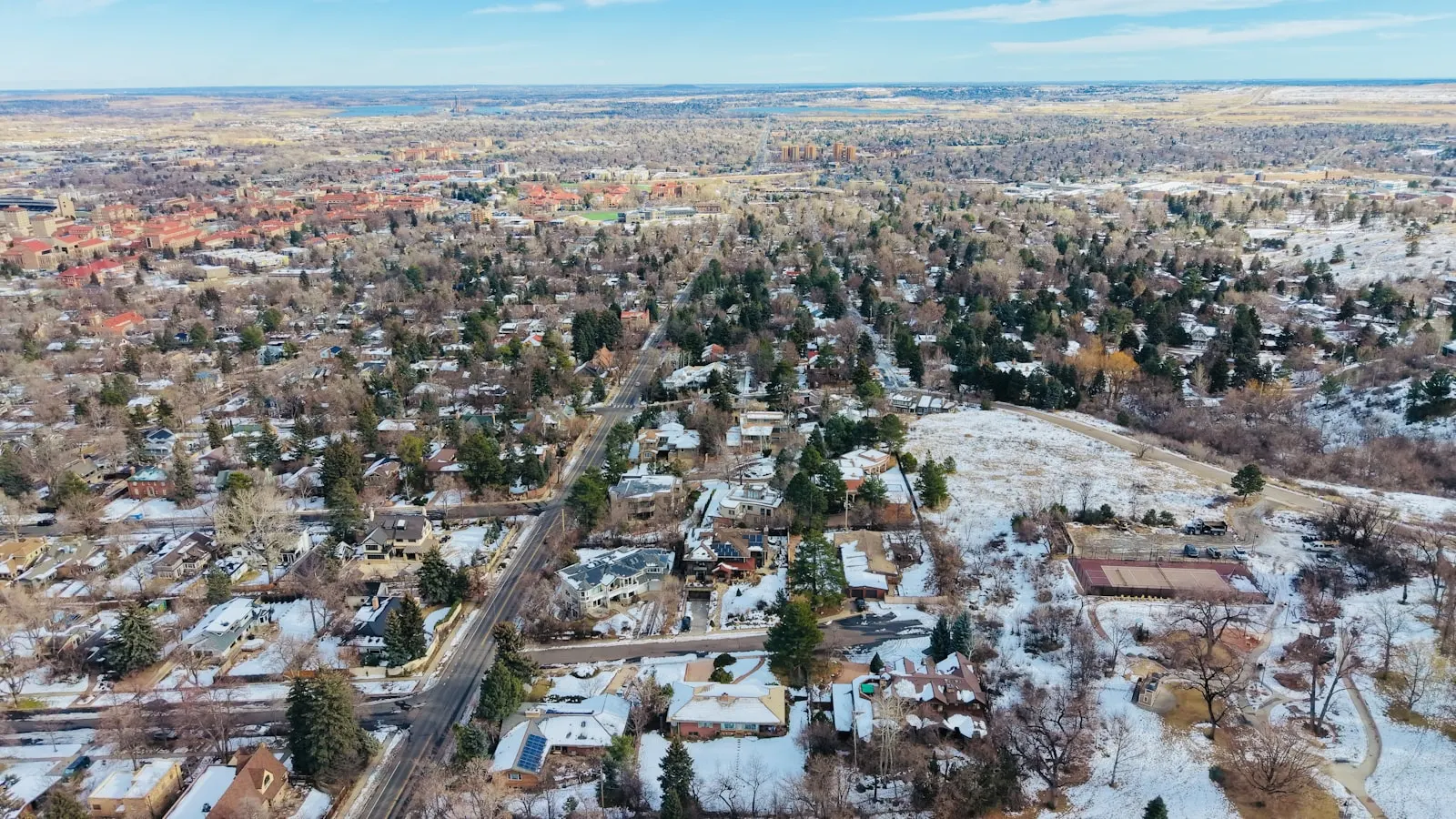
Freeze guidance for Brighton, Colorado
Frozen Pipe Repair Brighton CO
Pipe Thawing, Burst Repair & Freeze Prevention
Brighton doesn't need record cold to freeze a pipe. It needs an ordinary cold night and the wind this open ground never runs out of. Crawlspaces without skirting, yard hydrants that quit draining, stock tanks: this page covers thawing them and keeping them from freezing twice.
- Wind-driven freeze risk
- Yard hydrant rescues
- Bare crawlspace lines
- October to May season
Frozen pipe repair in Brighton is mostly a wind story
On paper, Brighton looks like it should freeze gentler than Denver: 4,984 feet, nearly 300 feet lower, no foothill weather to wrestle. The paper is wrong. This is open plains with nothing between your crawlspace and Wyoming, and wind strips heat from a house's underside faster than any still cold ever will. Frozen pipe repair in Brighton follows that physics. A calm night at 20 degrees is survivable for most marginal pipe runs. The same runs on a 10-degree night with a north gale are ice by morning, and the freeze season here stretches from the first freeze around early October clear to the last one near early May.
The chinook cycle sets the trap. A warm wind thaws everything mid-winter, people relax, hoses go back on bibs, and then the cold slams back overnight. What actually splits the pipe isn't the ice plug itself: it's the pressure that builds in the trapped water between the plug and a closed faucet. Which is why the humble move of opening a tap can save a wall.
The elevation numbers undersell the exposure for one more reason: there's no tree cover doing you favors. The windbreaks that matter on this ground are the ones somebody planted, and plenty of the new subdivisions are still waiting for theirs to grow up. A two-story house on an open lot east of town takes weather on all four walls, and its plumbing is only as safe as the coldest run in it.
The usual victims: hydrants, tanks, and bare crawlspaces
Frost-free yard hydrants are built to survive winter by draining their standpipe into a gravel bed below the frost line every time they close. Brighton's hydrants freeze when that drain path fails: a weep hole plugged with the same sediment that gets into everything here, a gravel bed crushed by decades of hooves and truck tires, or a worn plunger that keeps the pipe wet. Stock tanks add their own failure mode, since a dead tank heater announces itself only when the surface is already solid and the animals are annoyed.
Under the farmhouses, the classic casualty is the kitchen or bathroom line running through a crawlspace with zero skirting insulation. The wind blows straight under the house, the floor above can't donate enough heat, and the north-side run freezes while the rest of the house stays comfortable and oblivious.
Garages deserve a mention too. Water heaters, softener loops, and laundry lines routed through attached garages freeze on the night somebody leaves the overhead door cracked, and on the hobby farms the shop bathroom is usually plumbed with more optimism than insulation. If a building's warmth depends on remembering to close a door, its pipes are one distracted evening from trouble.
Thawing it right, and what the work costs
If you catch a freeze early, you can often finish it yourself before breakfast. Open the faucet the line feeds, then warm the pipe with a hair dryer or a heat gun on low, working from the faucet back toward the plug so melting water has somewhere to go. Never open flame, and never a torch in a dusty crawlspace. Professional thawing along the Front Range commonly lands between $200 and $600 depending on access, and it's cheap next to the alternative: once a line bursts, the pipe repair is the small line item under the drywall, flooring, and everything the water touched.
The judgment call rides on the pipe material. PEX in the new subdivisions stretches and forgives a freeze it probably shouldn't. Old copper and galvanized in the farmhouse stock split instead of stretching, and every aggressive thaw is a gamble against a hidden crack already waiting.
Space heaters in crawlspaces deserve their own warning: plenty of house fires start life as pipe-thawing projects. If warm air is your method, use the house's own heat. Open the crawlspace hatch and the cabinet doors, and let the furnace do the reaching. Slower, yes. But slower with a house still attached is the better trade.
- If a faucet still tricklesopen it wide and warm the run: you're early
- If it's frozen solid in old copperthaw slow and gentle, or hand the job off
- If it's already burstmain off first, then work the emergency steps
Dealing with this in Brighton?
Start a quoteFreeze-proofing on a plains schedule
The calendar does half the work if you obey it. By late September, hoses come off, interior stops to the bibs close, and every yard hydrant gets the listen test: close it and wait for the gurgle of the standpipe draining. Silence means the weep is plugged, and you want to know that in shirtsleeve weather. Heat tape goes on the wind-side runs, foam covers on the bibs, tank heaters get bench-tested, and if your crawlspace is open to the weather, skirting and rigid foam on the windward side pay for themselves in one avoided repair.
Stock tanks get their own routine: heaters bench-tested in September, cords run where hooves and hay equipment can't find them, and a spare element on the shelf, because they fail on the coldest night of the stretch by what feels like appointment. A dry hydrant and a live tank heater are the difference between morning chores and a morning rescue.
And keep the guard up in spring, because the last freeze here hangs on until about early May, long after the first warm weekends make everyone careless. If a line does let go, the Brighton emergency guide walks the shutoff-first playbook. Thornton fights a tamer version of the same wind on its own frozen pipe page, and the rest of our Brighton plumbing guides cover the other ways winter collects.
Keep exploring
More for Brighton and nearby
All Brighton plumbing guides Frozen Pipe Repair across the Front Range Commerce City Thornton
Questions we actually get
Frozen Pipe Repair in Brighton: quick answers
Can I thaw a frozen pipe myself?
Often, if you caught it early and can reach the run. Open the faucet it feeds, then warm the pipe with a hair dryer or heat gun on low, working from the faucet back toward the plug. No open flame, ever, and no torches in a dusty crawlspace. If nothing moves in an hour, or the pipe is old copper or galvanized, stop and get help before it splits.
Why do my pipes freeze at 15 degrees when they survived zero before?
Wind. A calm zero-degree night lets the ground and the house shelter your pipes. A 15-degree night with a hard north wind strips that shelter away, especially under farmhouses with open crawlspaces and no skirting insulation. Brighton's flat ground gives the wind a running start. Watch wind chill and direction, not just the thermometer, and protect the windward runs first.
How do I keep my yard hydrant from freezing?
A frost-free hydrant survives winter by draining its standpipe into gravel below the frost line every time you close it. They freeze when that drain path fails: a crushed gravel bed, a weep hole plugged with sediment, or a leaky plunger that keeps the pipe wet. Test it in September by listening for the drain-down gurgle after closing. Silence means fix it now, not in January.
Frozen line? Wind's not sorry.
Tell us what's frozen and where it runs, and a real person will route your request to someone who can thaw it without splitting it.
Get My Free Quote