
Plumbing guidance for Frederick, Colorado
Plumbers Frederick CO
Emergency Plumbing, Drain Cleaning & Water Heater Repair in Frederick
Two Fredericks share one water main. There's the old grid around Crist Park, where coal-camp houses have been patched for a century, and there's Wyndham Hill, where the pipe is younger than the trees. We write for both, and we route your quote to someone who reads it.
- Coal-era downtown, 2020s subdivisions
- Hard Central Weld water
- October 1 freeze average
- Mine-country ground, honest answers
Frederick plumbing runs on two clocks
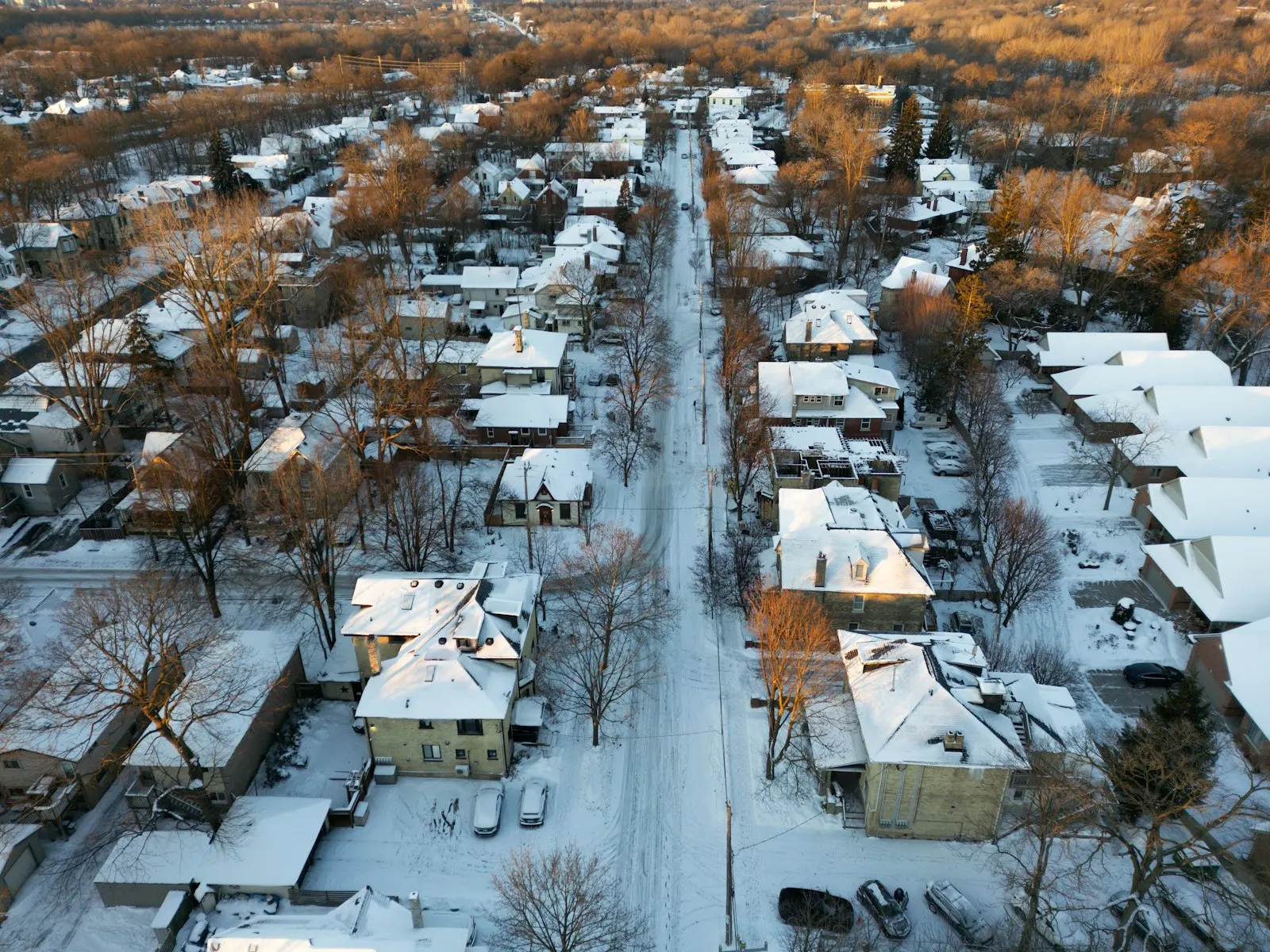
Frederick plumbing runs on two clocks, and the Miners Memorial is a decent place to stand while you work out which one your house keeps. This town came up as a coal camp, and the blocks around Crist Park still hold houses built for miners in the early 1900s: small footprints, deep basements, galvanized supply that was modern once, cast iron stacks that have absorbed every remodel a century could hand them. Drive a few minutes and the era flips. Wyndham Hill and the rest of the 2000s boom run PEX, PVC, and ABS, in houses framed after most of us were already carrying cell phones. Same water district. Same wind. Completely different ways of failing.
In between sits the part nobody photographs: the scattered mid-century houses that filled in while the mines were closing and long before the subdivisions showed up. Copper supply, maybe. Clay or cast iron underground, probably. Those are the addresses where a plumber's first ten minutes should go to looking instead of quoting, because a 1958 ranch on the old grid can easily have inherited a coal-era lateral from whatever stood there first. We read quote requests from all three Fredericks, and the ones that go smoothest come from homeowners who already know roughly when their house went up.
| Era | Typical materials | What usually goes first |
|---|---|---|
| Coal-camp original, early 1900s | Galvanized supply, cast iron stacks | Scale-choked pipe, drain bellies, brittle joints |
| Mid-century infill | Copper supply, clay or cast lateral | Root-found joints, pinhole leaks in copper |
| Early boom, 2000s | Copper or first-generation PEX, PVC drains | Fitting failures, settling under a slab |
| Newest builds, 2010s-20s | PEX manifolds, PVC and ABS drains | Builder-grade valves, scale on new fixtures |
Hard water is the tax every address here pays
The Central Weld supply that serves this town is hard. Not unusual for this side of the county, but hard enough that it shows up in your appliances on a schedule you could almost mark on a calendar. Scale plates out inside a water heater tank, crusts every aerator in the house, shortens the life of anything with a small valve in it, and leaves a chalky film on glass shower doors that no squeegee ever fully wins against. Softeners are common here for exactly that reason, and the ones worth having are sized to the household rather than set to a factory default. If you want the full argument for and against treatment, the filtration overview lays it out.
Downtown adds a second variable. Older service lines and older interior pipe give the hardness more surface to work on, and decades of mineral buildup inside a galvanized line narrows it from the inside like plaque in an artery. That's the house where the upstairs shower went weak so gradually that nobody noticed until a guest mentioned it. If your pressure has been quietly dropping for years in a house near Crist Park, the city main is probably not the problem. Your own pipe is. Our water heater page for this town gets into what the same water does to a tank, and it isn't gentle.
Neighborhood coverage
Where we get called in Frederick
Plumbing problems cluster by neighborhood, because housing eras do. These are the Frederick areas and nearby communities our guidance is written around.
Outside these? The whole city is covered. Neighborhood names simply help us guess your pipes before you finish typing.
Climate, elevation, timing
October arrives early on the Carbon Valley floor
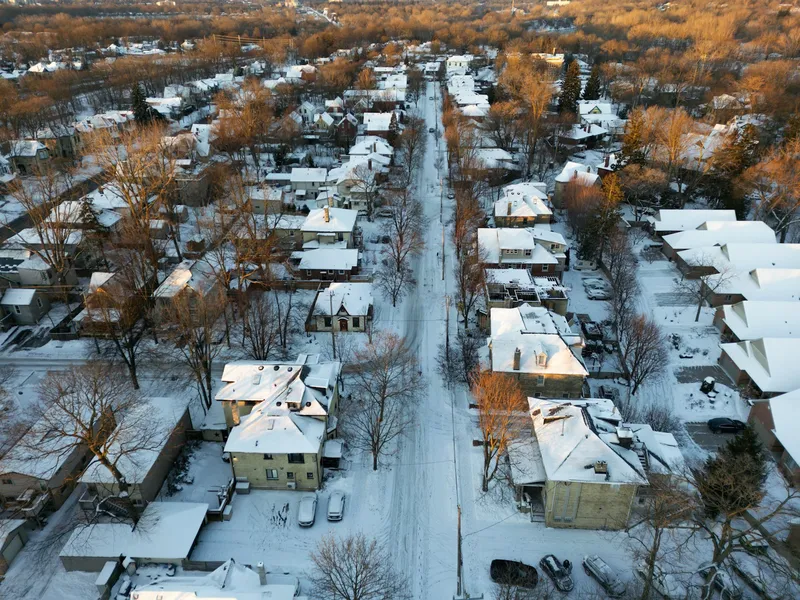
Frederick sits at 5,000 feet on open ground, which sounds mild until you've spent a November here with the northwest wind running unbroken across the plains. The Front Range is a blue wall on the horizon, close enough to steer the storms, too far away to block anything. First freeze historically lands around October 1. First snow tends to follow about two weeks later, in mid October, and the town typically collects somewhere in the range of 35 to 50 inches over a winter.
What matters for pipe isn't the average temperature, it's the wind. Thirty degrees with a hard northwest blow strips heat off an exposed hose bib faster than fifteen degrees on a still night, and the newest subdivisions out toward Wyndham Hill have the least shelter of anywhere in town: young trees, wide streets, nothing upwind but open field. The old downtown blocks have mature cottonwoods and tight lot lines doing quiet windbreak work that nobody ever credits. Different exposure, different freeze risk, same zip code.
Spring doesn't let go quickly either. The last freeze historically holds on until around May 6, which is later than most people plan for. Every year somebody reconnects the garden hose in mid April because it hit 70 on a Saturday, then wakes up to a split spigot after one hard Tuesday night. Keep the hoses off until the first week of May. That single habit prevents more burst pipes in this town than any gadget you can buy for the purpose.
Frederick at a glance
- Elevation
- 5,000 ft
- County
- Weld
- Population
- ~16,000
- First freeze
- Early Octoberhistorical average
- First snow
- Mid Octoberhistorical average
- Snow / year
- 35-50″approximate range
Frederick's first freeze historically lands in early October, about … from today. First snow tends to follow near mid October. Spring's last freeze holds on until roughly early May.
NWS forecast near Frederick: Loading…
The newest houses have their own list
New construction gets a pass it hasn't earned. A house finished in 2019 isn't a house without plumbing problems, it's a house with young plumbing problems, and in the boom-era subdivisions here that means three of them: builder-grade shutoff valves that seize the first time anybody turns them, drain lines installed correctly into soil that's still settling under a slab, and hard water going to work on brand-new fixtures from the first day of occupancy. Ten-year-old tract homes in Frederick need the same water heater attention that thirty-year-old houses do, because the water doesn't care how new your tank is.
Settling is the one worth watching. Ground that got graded, filled, and built on quickly keeps moving for years afterward, and a sewer lateral with a slight belly in it will hide that belly right up until the day it doesn't. If a five-year-old house is already giving you gurgling in more than one fixture, that's a scope conversation and not a plunger conversation. The details live on the Frederick sewer line page.
Getting a straight quote in a town this size
Frederick is small enough that word travels and big enough now that plenty of trucks drive in from Longmont, Brighton, and Firestone every morning. That's fine. Some of the best work in Carbon Valley comes from a shop three towns over. What matters is whether the person quoting you asked about the age of your house before naming a number. If nobody asked, they're pricing a generic house, and there is no generic house here.
Broad market ranges give you something to sniff-test a bid against. Along the Front Range, routine drain cabling commonly lands between $150 and $450, a standard tank water heater replacement often runs $1,500 to $3,000 installed, and sewer work swings from a few hundred dollars for a camera inspection to five figures for a full replacement under a driveway. Access drives which end of each range you hit. A basement cleanout on the old grid is a different job from a slab-side access point out east, and an honest quote will say so out loud.
- If your house predates 1950assume galvanized and cast iron until somebody proves otherwise
- If it went up after 2000ask about valve quality and slab settling, not pipe age
- If you honestly don't knowspend money on a look before you spend it on parts
Something dripping in Frederick right now?
Get a fast quoteWhat we cover here
Frederick service guides
Drain Cleaning
Century-old coal-camp drains and 2020s stacks clog for opposite reasons. Hard-water scale sits in both. What cabling, jetting, and a camera each tell you here.
→Water Heater Repair
Hard Central Weld water scales tanks fast, downtown gas lines are old, and a few edge properties still burn propane. Repair-or-replace math for all three.
→Sewer Line Repair
Coal-era laterals over old workings, new-build lines settling into graded fill, and the downtown-subdivision split. A camera before a shovel, every single time.
→Emergency Plumbing
Wind-driven freezes, valve archaeology in old-town basements, and leaks discovered at 6 p.m. by commuters. What to shut off first when the water gets loose.
→Frozen Pipe Repair
Open-plains wind, coal-era crawlspaces, and young subdivisions with no windbreak yet. Thawing and prevention keyed to an October 1 freeze and a May thaw.
→Nearby coverage: Firestone Longmont Brighton All 30 cities
Questions we actually get
Frederick plumbing questions
Is Frederick water hard enough to need a softener?
Hard enough that most people here end up with one. The Central Weld supply leaves scale inside water heaters, aerators, and anything with a small valve. A softener stretches appliance life and cuts the film on glass, but it brings tradeoffs: softened water is rougher on anode rods, and every regeneration cycle sends brine down your drain line. Both are manageable once you know they're happening.
My house is near Crist Park and the pressure keeps dropping. Why?
In the old coal-camp blocks, pressure that fades over years usually means the pipe itself is closing up. Galvanized supply corrodes from the inside, and hard-water scale builds on that rough surface until the opening is a fraction of its original size. Swapping an aerator won't touch it. Having a plumber open one section and look tells you more than any pressure test will.
Does the old coal ground under this area affect plumbing?
It's a reason to take underground movement seriously, not a reason to panic. Frederick grew up over coal workings, and ground that has shifted at any point puts stress on rigid clay and cast iron laterals. If your drains are gurgling and the house shows new cracks in the same season, get the line scoped rather than guessed at. A camera settles that question in about an hour.
When can I safely hook the garden hose back up?
First week of May, realistically. The last spring freeze around here historically hangs on until roughly May 6, and April gets warm enough to fool people into reconnecting early. A hose left attached through a hard night traps water at the spigot, and that's how a frost-free hydrant splits behind the wall, where you won't find the damage until you turn it on in June.
Get a real answer about your Frederick house.
Describe the symptom, mention roughly when the house was built, and a real person will map out the fix.
Get My Free Quote