
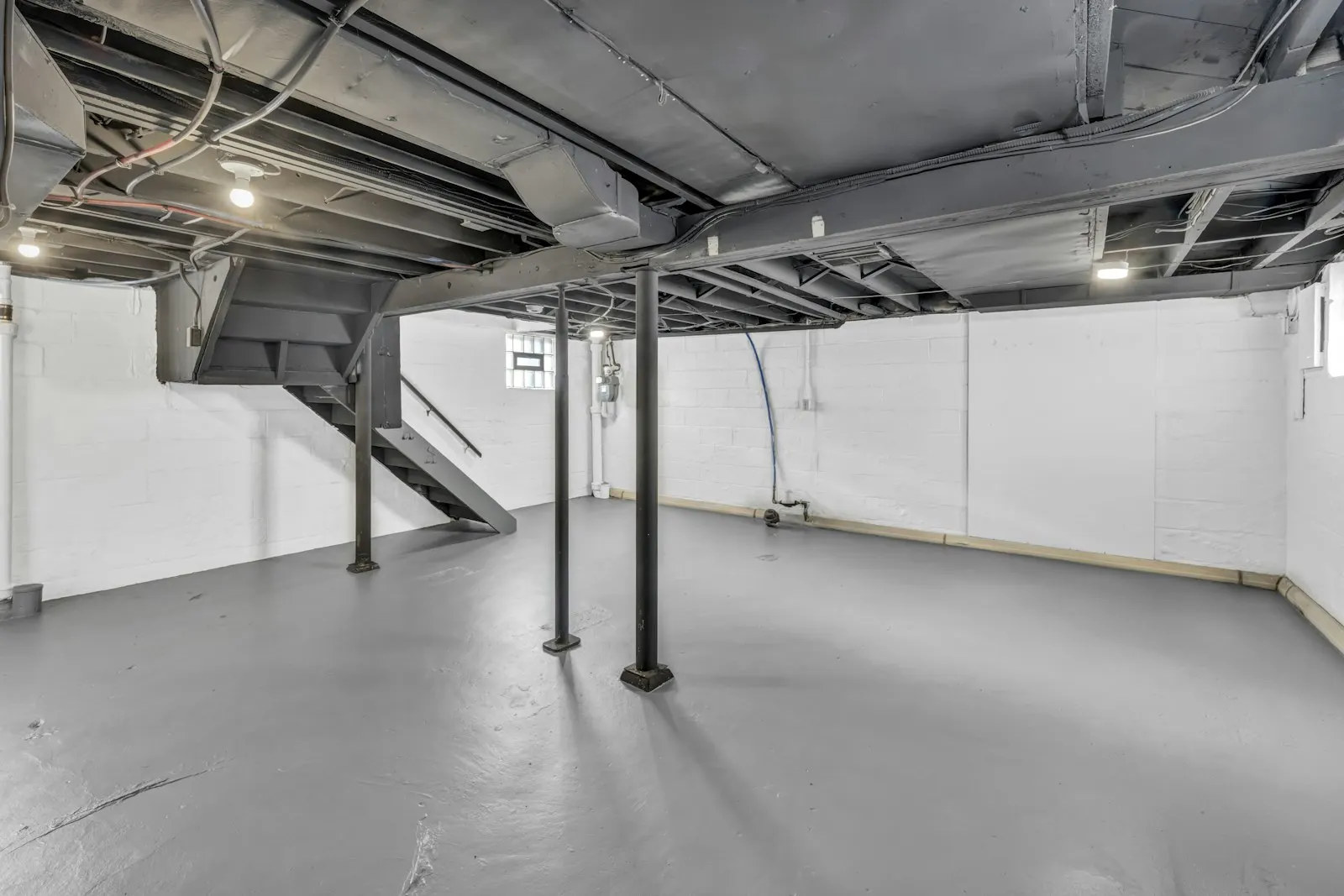
Basements, laundry, and mains
Floor Drain Backups Denver
Basement Floor Drain & Backwater Valve Service
Water coming up at the basement floor drain is not a floor drain problem. It's the lowest opening in the house telling you the main line is restricted. What you do in the next ten minutes decides how much of that basement you end up replacing.
- Stop water use first
- Laundry standpipe overflows
- Backwater valve basics
- Dry traps and smells
A floor drain is the lowest opening in the house
Get the hierarchy straight and the rest of this page follows. Every fixture in the house drains into one main line that leaves through the foundation wall. The basement floor drain sits lower than all of it. So when that main restricts, sewage does not back up into your kitchen sink. It comes up through the drain in the middle of the basement floor.
That makes the floor drain a warning system with terrible timing. Water appearing there while someone showers upstairs, or the moment the washer dumps, isn't a floor drain issue. The drain is doing its job. The main is not.
So the first move feels backward: stop using water. Every load of laundry, every flush, every long shower adds to what's coming up the floor. Shut it all down, then find the main cleanout: a capped fitting in the basement floor or wall near where the line exits, or out in the yard along the sewer run.
Then treat what's on the floor as what it actually is. Sewage carries bacteria nobody wants aerosolized indoors, and it's pooling in a room that generally holds a furnace, a water heater, and receptacles at ankle height. If the water has reached an appliance or an outlet, cut power to that circuit before you step in, and if you can't do that from a dry spot, stay out of the room and call somebody. Nothing down there is worth an electrical injury.
The laundry standpipe fails on its own schedule
The standpipe is the other half of this story, and it fails independently of everything else. A washer discharges through a hose hooked over a two-inch standpipe that drops to its own trap. The machine doesn't trickle. It dumps fifteen to twenty gallons in under a minute, and that pipe has to swallow the entire surge.
Lint is what closes it. Fine fibers and detergent build a felt lining inside the standpipe and trap, gradually enough that nobody notices until water crests the top and runs down the wall mid-cycle. High-efficiency machines pump out faster than the old ones did, so a standpipe that coped for twenty years can start overflowing the month a new washer arrives.
Two installation details cause a surprising share of these calls. A discharge hose shoved too far down the standpipe siphons the tub empty mid-cycle. A standpipe cut too short lets water crest the top. The hose goes in far enough to stay put and no further, with air around it.
In older houses around Denver and Englewood the laundry, the floor drain, and sometimes a basement toilet all tie into the same short run of cast iron. Clear the standpipe and the floor drain gurgles in response. That's the two of them telling you they share a pipe.
Backwater valves, cost, and the call you make at midnight
A backwater valve is the one piece of hardware that changes the outcome. It's a flapper sitting in an access pit on the main line, hanging open so waste flows out and swinging shut when flow reverses. Houses downhill from a municipal main, and older parts of the metro where the sanitary system takes on extra volume during heavy runoff, get the most out of one.
Putting a valve into an existing basement means cutting concrete, exposing the line, setting the body, and pouring back with an accessible lid, so along this corridor it's usually a four-figure job. The spread depends on how deep the line runs and what's been built over it. New construction gets the same protection for a fraction, because nothing has to come apart first.
They need attention too. A flapper propped open by a wipe or a ridge of scale protects nothing at all, and a valve nobody has opened in eight years is a valve nobody can vouch for. Once a year, lift the lid and look at it. That's the entire maintenance program.
As for when to call: sewage actively rising, sewage that came up and stopped, or water at the floor drain every single time the washer runs all qualify as now rather than Monday. A gurgle with no water is a scope-it-this-week problem, and that's where a camera earns its fee. If it's midnight and the water is climbing, that's an emergency call, and any shop telling you otherwise is managing their schedule instead of your house.
Water on a basement floor is either coming up or coming in, and that difference decides everything. Up through the drain means the sanitary main is restricted, and every gallon the household uses makes it worse. In from a wall, a window well, or the slab edge means groundwater, which is a sump and drainage question rather than a blockage.
Need this handled this week?
Start a quoteDry traps, finished basements, and the drain nobody can find
Floor drain traps dry out here. Colorado winter air is brutally dry, a heated basement pulls out what's left, and an unused drain can lose its seal in a few weeks. Sewer gas then comes up the same path the water would have. A bucket of water down each unused drain once a month is the whole fix, and a splash of mineral oil on top stretches it to a season.
Newer builds handle that automatically with a trap primer, a small line teed off a nearby supply that dribbles water into the trap whenever the fixture upstairs runs. When a newer basement smells and the primer line is bone dry, the primer valve is usually the culprit rather than the drain.
Then there's the drain nobody can find. Basements get finished, and floor drains get carpeted over, framed around, tiled across, or buried under a laundry pedestal. Homeowners in the big finished-basement suburbs, Highlands Ranch, Parker, north Thornton, learn this the hard way when the line backs up and there's a drywall wall between the plumber and the access point. Before you finish a basement, put an access cover over that drain and photograph exactly where it sits.
Know your two systems, as well. The sump pit collects groundwater from under the slab and pumps it outdoors. The floor drain takes whatever the household sends down. They stay unrelated until spring runoff, when saturated ground along the South Platte and a fast melt push both toward their limits in the same week. A basement that floods only during a wet spring is telling you something very different from one that backs up every laundry day.
| What you see | Most likely cause | First move |
|---|---|---|
| Water rises at the drain when the washer empties | Restricted main line | Stop all water use, find the cleanout |
| Sewage backs up with no water running | Main blockage or a stuck backwater valve | Emergency call, keep people out of the room |
| Standpipe overflows down the laundry wall | Lint packed into the standpipe trap | Cable the laundry line, not the floor drain |
| Sewer smell, floor bone dry | Evaporated trap seal or a failed primer | Pour in a bucket of water, wait a day |
| Seepage at the slab edge or window well | Groundwater, not sewage | Sump and exterior drainage, not drain cleaning |
Related work
More drains services
Clogged Sink Repair
kitchen and bathroom sink blockages, P-trap work, disposal-side clogs
→Clogged Toilet Repair
toilet blockages, running toilets, flange and wax ring failures, replacement
→Shower & Tub Drain Clogs
hair and soap blockages, slow tubs, pop-up assemblies, drum traps in old homes
→Garbage Disposal Repair
jammed or humming units, leaks at the flange, replacement sizing
→Hydro Jetting
high-pressure line scouring, grease mains, when jetting beats cabling
→Where we cover
Front Range cities we write for
Questions we actually get
Floor Drain Backups: quick answers
Should I plug the floor drain to stop the backup?
No. That drain is the pressure relief for the whole house, and capping it simply moves the sewage to the next lowest opening, often a basement shower or a first-floor toilet. Stop using water instead, then get the main cleared. If backups have become a pattern, the real answer is a backwater valve rather than a plug.
Why does the floor drain back up only on laundry day?
A washer dumps fifteen to twenty gallons in well under a minute, which is more flow at once than anything else in the house produces. A partly restricted main handles a shower and fails on that surge. It points at the main line or the shared laundry branch, and left alone it gets worse rather than better.
Is a backwater valve worth it in an older basement?
If you have had sewage on that floor even once, yes. It's a flapper on the main that shuts when flow reverses. Retrofitting one means cutting concrete, so budget for a four-figure job in most homes. It also has to be opened and inspected once a year, because a flapper held open by a wipe protects nothing at all.
Water at the basement drain?
Stop running water, then tell us what came up and when, and a real person reads the request.
Get My Free Quote