
Plumbing guidance for Erie, Colorado
Plumbers Erie CO
Emergency Plumbing, Drain Cleaning & Water Heater Repair in Erie
Erie sits at 5,130 feet on open plains where a coal-town core got wrapped in twenty years of subdivisions. Almost every pipe here is young, which means the failures arrive on a schedule and in batches. We write the guides, then connect you with plumbers who work this town.
- Failures sorted by build year
- Warranty windows worth reading
- Wind-aware freeze timing
- Requests read by actual humans
Erie plumbing is young, and that is its own problem
Erie plumbing has one obvious advantage: almost none of it is old. No cast iron stacks, no galvanized branch lines quietly closing up since the Eisenhower years, no clay laterals cracked open by ninety-year-old elms. What this town has instead is about 33,000 people living on some of the newest pipe in Colorado, most of it laid between 2005 and 2025. And pipe that young does not fail randomly. It fails on a schedule, in batches, sorted by build year.
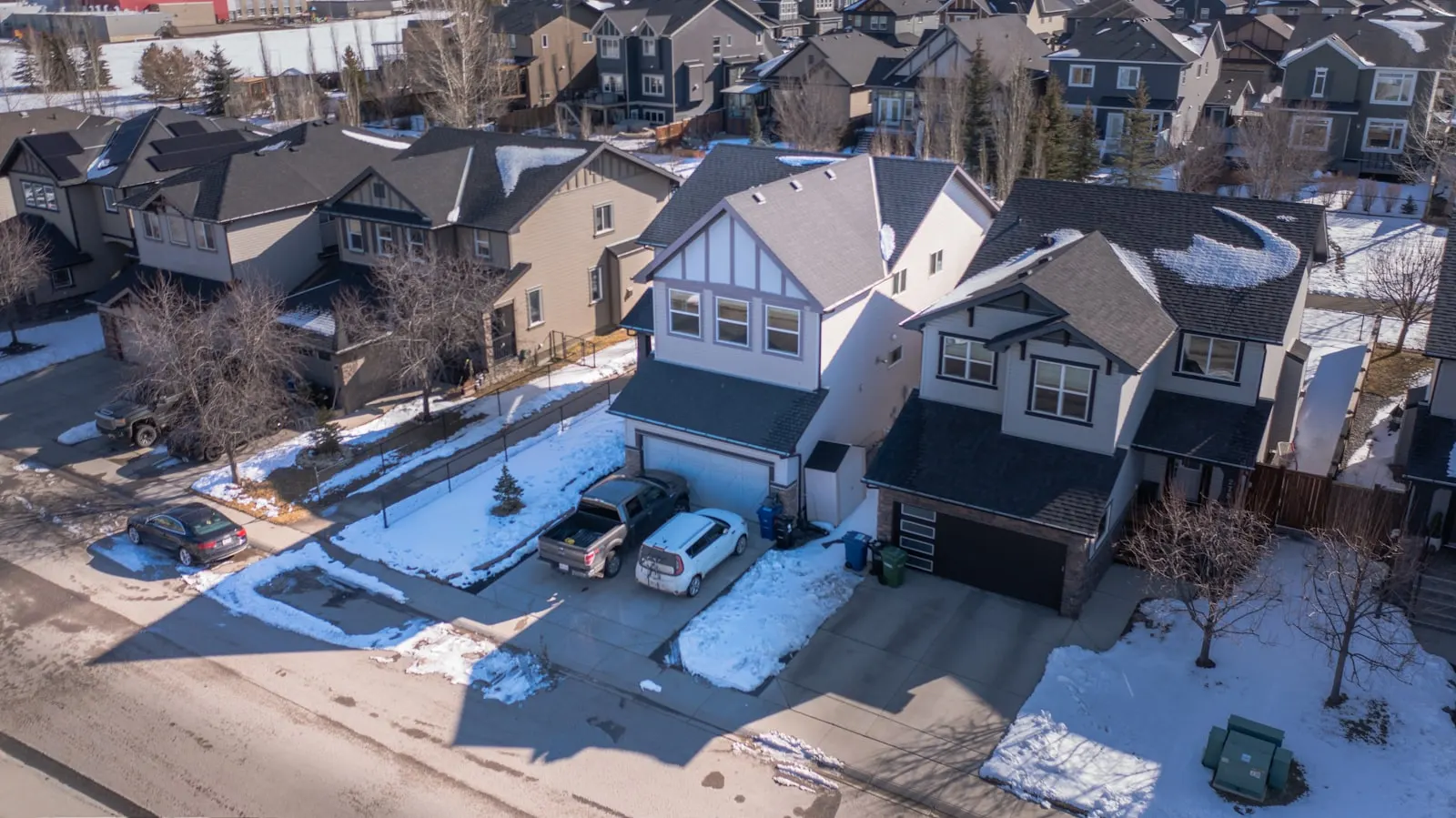
Walk Briggs Street and you will find the actual old Erie, a couple of blocks of coal-town brick that predate everything around them. Then look in any direction. Rooftops. Miles of them, framed and drywalled in waves, each wave sharing a plumbing spec sheet, a fixture package, and a subcontractor crew. When a builder puts the same disposal in four hundred homes, those four hundred disposals do not fail one at a time over a decade. They fail as a cohort, and your neighbor's kitchen sink is a preview of yours.
So the useful question here is not what is wrong with my house. It is what year is my house, and what did that year's crew do on the cheap. We read quote requests from all over the Front Range, and Erie's read differently from Wheat Ridge's. Less corrosion, more workmanship. Less this pipe is a century old, more this fitting never got a full bite and took nine years to mention it.
What your build year actually predicts
Erie's growth came in distinguishable waves and each one left a signature. Homes from 2005 through 2009 went in right before the market stopped, usually with copper stub-outs and a standard gas tank in the mechanical room. The 2013 to 2018 boom is where PEX manifolds became normal here, with a home-run line to every fixture and a plastic distribution block tucked into a basement wall. The newest stretch brought tankless-ready mechanical rooms, some of them pre-vented and pre-wired for equipment the original buyer never bought.
Each wave ages on its own clock.
PEX itself is durable and freeze-forgiving, which matters here more than you would think. The failures show up at connections: at the manifold, at the crimp that got ninety percent of a proper bite, at a brass fitting that took one hard cold snap too many. Builder-grade fixtures are the other timer. The cartridge in a builder bathroom faucet, the fill valve in a builder toilet, the half-horse disposal that shipped with the model home. None of it was chosen to last twenty years. It was chosen to pass a walkthrough.
| Build years | What is usually in the walls | First thing homeowners call about |
|---|---|---|
| 2005-2009 | Copper stub-outs, standard 40 to 50 gallon gas tank | Tanks aging out in bulk, angle stops seized |
| 2010-2015 | PEX home runs off a basement manifold | Manifold weeps and disposals quitting near year eight |
| 2016-2020 | PEX plus tankless-ready venting | Tankless units never descaled, split hose bibs |
| 2021-2025 | Full PEX, modern metering and pressure management | Punch-list leftovers and settling around cleanouts |
Neighborhood coverage
Where we get called in Erie
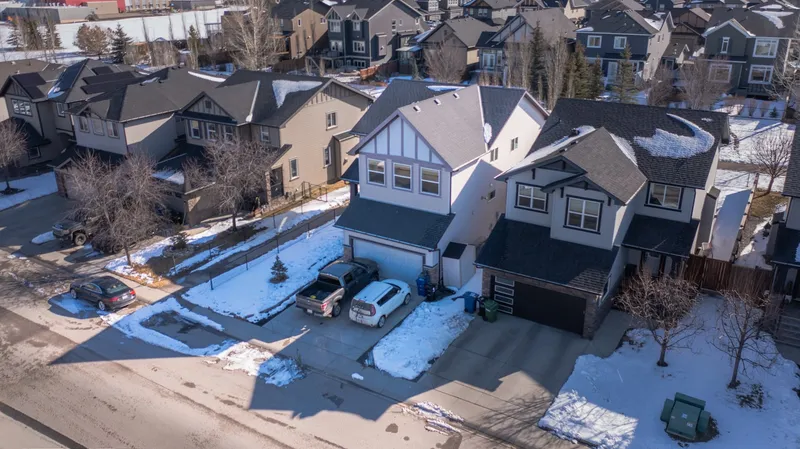
Plumbing problems cluster by neighborhood, because housing eras do. These are the Erie areas and nearby communities our guidance is written around.
Outside these? The whole city is covered. Neighborhood names simply help us guess your pipes before you finish typing.
Climate, elevation, timing
What 5,130 feet and an open wind fetch do to your pipes
Erie spreads across high plains east of the foothills at 5,130 feet, and that geography does one very specific thing: it hands the downslope wind a clear run at your house. Windstorms accelerate off the Front Range and arrive here with nothing in the way. No mature cottonwood belt, no sixty-year-old hedgerows, no dense old neighborhood breaking up the gusts. Just new fence lines and trees that are, honestly, still sticks.
The freeze calendar is the other half of it. October 2 is where Erie's first freeze historically shows up, measurable snow typically arrives by about the 14th, and spring keeps handing out freezing nights into the first week of May. Seasonal totals have historically run between 40 and 55 inches. That sounds like the headline and it mostly is not. Wind is the headline. Twenty degrees with a forty mile-an-hour gust pulls heat out of an uninsulated rim joist far faster than a still ten-degree night ever will.
Which is why the same hose bib on the same south wall behaves differently in Erie than in an older, sheltered town ten miles away. South-facing walls here bake in afternoon sun, thaw, then refreeze hard after dark, cycling like that for months. Your neighbor's identical house can come through a January fine while yours splits at one corner, and the difference is usually wall orientation and what the wind does at that exact spot. We put the cold-weather details on their own page: frozen pipes in Erie.
Erie at a glance
- Elevation
- 5,130 ft
- County
- Boulder/Weld
- Population
- ~33,000
- First freeze
- Early Octoberhistorical average
- First snow
- Mid Octoberhistorical average
- Snow / year
- 40-55″approximate range
Erie's first freeze historically lands in early October, about … from today. First snow tends to follow near mid October. Spring's last freeze holds on until roughly early May.
NWS forecast near Erie: Loading…
Warranty, builder, or plumber: who owns the failure
This is where a new town gets genuinely different from an old one, and where I get to be insufferable about paperwork. In a 1955 house, a leak is yours. Full stop. In a 2019 house, a leak might belong to the builder, the plumbing subcontractor, the fixture manufacturer, or you, and the answer is sitting in a document most people filed at closing and never opened again.
Builder warranties in these subdivisions generally run in tiers, with a short window on workmanship and finishes, a longer one on systems like plumbing rough-in, and the longest on structural. The exact split varies by builder, so read your own document instead of trusting the neighborhood group chat. Then read the exclusions page, because that is the page doing the real work. Deferred maintenance is usually excluded. So is damage from something you installed yourself. So, often, is a tankless unit nobody ever descaled, which is a manufacturer question rather than a builder one but bites the same way.
The practical move is documentation. Photograph the drip. Note the date. Get a plumber's written diagnosis of the cause, not just the fix, because failed crimp ring at manifold and homeowner overtightened a supply line send a claim in completely opposite directions. A plumber can stop the water tonight and still hand you a report that supports a claim in March. Ask for it in writing while they are still standing in your basement.
- Active leak, home still under builder coverageStop the water first, photograph everything, then call both a plumber and the warranty line
- Fixture failing, coverage expiredSkip the claim paperwork and price a better fixture, since builder-grade cartridges cost close to what good ones do
- Tankless unit throwing codesFind your service records before anyone quotes a replacement, because coverage usually assumes documented descaling
Name the behavior, not the trade
People search for a plumber by naming the trade. Plumbers diagnose by naming the behavior. Slow tub with a gurgle in the toilet every time the washer drains points somewhere completely different than slow tub with nothing else affected, and the first is a main-line question while the second is a hair-and-soap question.
A few honest translations from the requests we read. Hot water that goes lukewarm and never recovers is almost always the heater, not a mixing valve. Water rising near the basement floor drain during a laundry cycle belongs on the sewer line side, not the drain-cleaning side. A faint hiss at 2 a.m. with every fixture off is a pressurized supply leak, and that one goes straight to the emergency list no matter how small the puddle looks. A disposal that hums and will not turn is usually a jam, and there is a hex wrench taped to the bottom of most of them.
We publish guides and route quote requests. There is no van with our name on it, and nobody here will promise you a technician nine minutes out. The job is simpler than that: read what you actually wrote, ask the follow-up a dispatcher usually skips, and hand it to plumbers who work Erie and know what a 2014 manifold looks like when it starts weeping.
Something dripping in Erie right now?
Get a fast quoteWhat we cover here
Erie service guides
Drain Cleaning
Model-home disposals quit as a cohort around year eight, and settled grade puddles around new cleanouts. Which tool matches which symptom, and when to send a camera down.
→Water Heater Repair
Builder tanks installed by the hundred are hitting ten all at once, and Erie's first tankless wave is overdue for descaling. Repair-or-replace math, hedged honestly.
→Sewer Line Repair
Young PVC over Weld County clay develops settlement bellies decades before any root shows up. When to scope, when to file a claim, and when to dig.
→Emergency Plumbing
Windstorms here cascade into plumbing failures, and three-year-old houses flood too. Where the shutoffs hide in a post-2005 build, plus fast quote routing.
→Frozen Pipe Repair
No mature windbreaks, south-wall hose bibs cycling thaw to refreeze, and insulation the crew skipped in the corners. Where Erie's freezes actually get in.
→Nearby coverage: Lafayette Broomfield Frederick All 30 cities
Questions we actually get
Erie plumbing questions
The house is nine years old. Why is a plumber already involved?
Because age is not the only clock. Erie's build waves shared fixture packages and subcontractors, so builder-grade disposals, faucet cartridges, and fill valves reach their first replacement cycle as a group, usually somewhere past year seven. The pipe in your walls is probably fine. The parts bolted to the ends of it were spec'd to a budget, and budgets expire.
Does my builder warranty cover a leak?
Maybe, and the only way to know is to read your own document rather than a neighbor's summary of theirs. Coverage generally steps down from structural to systems to finishes, with a different window on each, and the exclusions page does most of the real work. Photograph the failure, get a written diagnosis of the cause from a plumber with no stake in the answer, and file with facts instead of adjectives.
Is Erie's water hard enough to matter for appliances?
Erie's town supply blends northern sources, and we are not going to hand you a hardness number we cannot stand behind. What we will say: scale and sediment accumulate in every tank eventually, an annual flush pays for itself, and tankless units in this corridor need descaling on a real schedule. If your heater rumbles during a cycle or your fixtures wear white crust, treat that as your local evidence.
The wind knocked things around and now something is leaking. Related?
It happens here more than people expect. Downslope gusts hit Erie's new rooftops with no mature tree line to slow them, and the damage cascades. A bent hose bib, a cracked vent boot, a garage door pinned open on a January night with supply lines behind that wall, a power outage that stops the furnace. Check the obvious water first, then go look for whatever the wind actually moved.
Get a straight read on your Erie plumbing.
Tell us the symptom, the build year, and what you have already tried, and somebody who reads these for a living will tell you where to start.
Get My Free Quote