
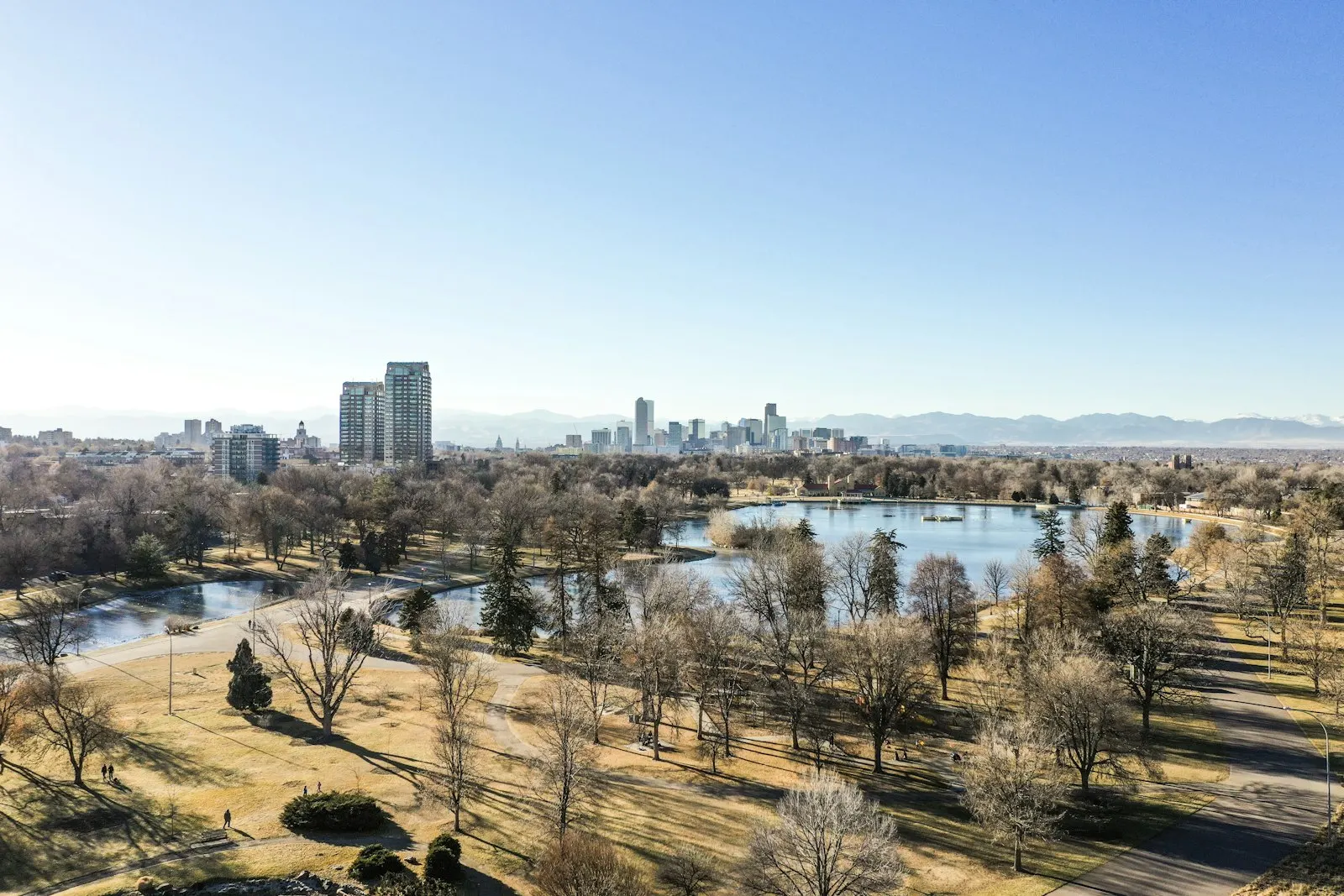
Plumbing guidance for Centennial, Colorado
Plumbers Centennial CO
Emergency Plumbing, Drain Cleaning & Water Heater Repair in Centennial
Centennial incorporated in 2001, but its pipes go back a generation earlier. We write plumbing guidance for the split-levels and two-stories between Southglenn and Piney Creek: original copper, cast iron under the slab, sprinklers on nearly every lot, and a first freeze that historically lands in early October.
- Built for 1960s-90s houses
- Cast iron and clay guidance
- Sprinkler and backflow know-how
- Quotes read by real people
Centennial plumbing is older than the city itself
Plumbing in Centennial has a funny birth certificate. The city didn't exist on paper until 2001, but the houses it inherited go back to the mid 1960s, a quilt of subdivisions stitched together from Southglenn on the west side out to Piney Creek on the east. Drive that grid slowly and you're reading a timeline. Ranches and split-levels from the Johnson years near the old Southglenn corner. Tri-levels and two-stories from the 70s and 80s through the middle. Then 1990s stock pushing toward the edge of Cherry Creek State Park. The plumbing follows the timeline street by street, and no single piece of advice covers all of it.
So the useful first question here isn't what's wrong. It's what year is your house. A 1966 split near the Streets at SouthGlenn probably has cast iron or clay carrying its waste and may still hide a stub of galvanized somewhere. A 1978 tri-level has original copper that's been moving moderately hard water for going on fifty years. A 1994 two-story off Piney Creek has better pipe and flimsier valves than you'd guess. Same city. Three different houses. Three different repair conversations.
That's the whole idea behind these pages: guidance sorted by the era you actually live in, not generic advice with a city name pasted on top.
- 1960s west side: cast iron and clay drains, occasional galvanized leftovers
- 1970s-80s middle: original copper supply, first-generation sprinkler systems
- 1990s east side: PVC drains, builder-grade valves reaching the end of their run
What we keep seeing between Southglenn and Piney Creek
A patchwork of water districts serves this city, and most of them deliver water that runs moderately hard. Thirty or forty years of that leaves a signature: scale on shower heads, crust on the little angle stops under sinks, a white ring in the toilet tank, and sediment settling into water heaters like sand into a jar. It's not dramatic. It's just constant. And it's a big part of why so many original 1970s valves in Centennial utility rooms no longer close all the way when you finally need them to.
Underground, the story is roots and iron. Silver maples were the default landscaping choice when these subdivisions went in, and a fifty-year-old maple is a serious drinker. Its roots have had decades to find the joints in west-side clay laterals and the fittings of aging drain lines. If your floor drain backs up every spring like it's marking the equinox, start with our drain cleaning guide, then read about what an annual root habit eventually becomes. The two problems are the same problem at different ages.
Above ground, the recurring cast includes sprinkler backflow preventers that crack over winter, hose bibs that spent a freeze holding a pressurized hose, and pinhole leaks in original copper that pick the ceiling over the one room you bothered to finish.
Neighborhood coverage
Where we get called in Centennial
Plumbing problems cluster by neighborhood, because housing eras do. These are the Centennial areas and nearby communities our guidance is written around.
Outside these? The whole city is covered. Neighborhood names simply help us guess your pipes before you finish typing.
Climate, elevation, timing
Early October changes everything at 5,834 feet
Centennial sits at 5,834 feet on the open high plain south of Denver, out of the foothills' wind shadow. The first freeze historically arrives around October 3, which is earlier than most people's mental calendar says. First measurable snow tends to follow about ten days later. And the last spring freeze hangs on until early May. Add it up and your plumbing spends roughly seven months of every year inside freeze season, with maybe 50 to 65 inches of snow scattered through it.
The spring storms are the mean ones. Upslope systems push moisture against the Front Range and drop wet, heavy snow on the mature canopy here, and every March or April somebody loses a silver maple limb onto a fence while the ground underneath soaks to saturation. Saturated soil moves. Sixty-year-old clay joints and slab-depth drain lines feel that movement far more than anything above grade does, which is one reason sewer trouble in this city clusters in spring.
The calendar work matters more here than in newer suburbs. Sprinkler blowouts before that early-October freeze, on lots where the system might run a dozen zones. Evaporative cooler lines drained before the first cold snap, not after. Hoses off the bibs in September, because a 1972 sillcock holding a charged hose isn't frost-free anymore, whatever the label promised. None of this is hard. All of it has a deadline, and the deadline is earlier than it feels.
Centennial at a glance
- Elevation
- 5,834 ft
- County
- Arapahoe
- Population
- ~108,000
- First freeze
- Early Octoberhistorical average
- First snow
- Mid Octoberhistorical average
- Snow / year
- 50-65″approximate range
Centennial's first freeze historically lands in early October, about … from today. First snow tends to follow near mid October. Spring's last freeze holds on until roughly early May.
NWS forecast near Centennial: Loading…
Repair, replace, or leave it alone
Most of what fails in Centennial isn't exotic. It's original equipment reaching the end of a long, honest life: a water heater from the second Reagan term, a gate valve that spins without gripping, copper showing its first pinhole. The judgment call is nearly always the same. Does this repair buy real years, or is it a toll booth on the road to replacement? Age answers most of it, access answers the rest, and a camera or a combustion test answers what those two can't.
Numbers help you think, so here are broad Front Range brackets for the jobs these houses generate most. Treat every figure, including ours, as orientation rather than a bid. Access drives which end of a range you land on, and access in a split-level (a crawlspace here, a finished ceiling there, a furnace shoehorned six inches from the tank) is exactly what a sight-unseen estimate can't price.
| Job | Commonly lands around | What swings it |
|---|---|---|
| Main line cabling for roots | $200 to $500 | Cleanout access, blockage depth |
| Tank water heater replacement | $1,500 to $3,500 | Venting, code catch-up, tight rooms |
| Shutoff valve replacement | $150 to $400 each | Location, whether the street must be shut |
| Sewer lateral lining | $8,000 to $18,000 | Length, pipe condition, prep work |
How this site actually works
Denver.Plumbing is a local guide and a quote service, not a dispatch office with a fleet idling out back. We publish what we know about houses like yours, you tell us what's dripping or gurgling or refusing to drain, and a real person reads the request and maps the sensible next step. No robocalls. No pressure to decide anything on the spot. If the honest answer is a $12 part and a YouTube afternoon, you'll hear that too.
Geography matters more than people expect. The same era of housing runs west into Littleton, where the stock skews even older, while the newer builds in Highlands Ranch and Parker fail in entirely different ways. If you're helping a parent or a friend a few miles over, their city's pages will read differently than yours. That's deliberate. In a metro where one suburb was framed in 1965 and its neighbor in 1999, the address is half the diagnosis, and pretending otherwise is how homeowners get sold the wrong fix.
Something dripping in Centennial right now?
Get a fast quoteWhat we cover here
Centennial service guides
Drain Cleaning
Cast iron mains under 1960s split-levels, silver maple roots, and lower-level drains that gurgle first. What cabling fixes here and what it only postpones.
→Water Heater Repair
Original utility rooms sized for 1970s tanks, orphaned flues left behind by furnace upgrades, and decades of hard-water sediment. The repair-or-replace math, era by era.
→Sewer Line Repair
West-side clay laterals from the 60s, root cutting as an annual spring ritual, and the dig-or-line decision on lots with fifty years of landscaping.
→Emergency Plumbing
Pinhole copper leaks behind finished walls, backflow failures at spring startup, and original shutoffs that won't close. What to do in the first five minutes.
→Frozen Pipe Repair
Uninsulated garage lines in 1960s splits, evaporative cooler lines left charged into fall, and sprinkler blowout timing before the early-October freeze.
→Nearby coverage: Parker Highlands Ranch Littleton All 30 cities
Questions we actually get
Centennial plumbing questions
Why does the lower-level bathroom in my split-level gurgle?
Because it sits lowest on the drain system, closest to the main line under the slab, so it hears trouble first. A gurgle when the washer empties usually means the cast iron main's capacity is shrinking from scale, grease, or roots. It's rarely the fixture itself. Have the main cabled and, on a 1960s or 70s house, scoped with a camera. Early is when this stays cheap.
When should Centennial sprinkler systems be blown out?
Late September into the very first days of October. The first freeze here historically lands around October 3, earlier than many people expect, and the backflow preventer sitting above grade is the part that cracks. If a hard freeze beats your appointment, shut the inside irrigation valve and drain what you can at the backflow to limp through the night.
Is Centennial's water hard on pipes and fixtures?
Moderately, and the city is a patchwork of water districts, so it varies block to block. Over thirty or forty years that moderate hardness scales up water heaters, crusts shutoff valves, and spots every fixture in the house. It's not destructive the way well water can be, but on original 1970s equipment the decades add up. An annual water heater flush is the cheapest countermeasure going.
My house is from 1972. Do the original shutoff valves need replacing?
Test them before you decide. Gently close and reopen the main and a few fixture stops. If any weep, stick, or spin without stopping the water, replace those first, starting with the main. Original gate valves that haven't moved in decades tend to fail exactly when you need them, and a working shutoff is what turns a future burst pipe into a mop-up instead of an insurance claim.
Tell us what your Centennial house is doing.
Describe the symptom and the year the house was built, and a real person will read it and map out the next step.
Get My Free Quote