
Tank truth for 1960s-90s utility rooms
Water Heaters Centennial CO
Water Heater Repair, Installation & Replacement
Somewhere behind your garage or under the stairs is a utility room drawn in 1974, sized for a 40-gallon tank and nothing else. Fifty years on, the furnace has been replaced twice and the water heater question is different now. We wrote this page for that little room.
- Orphaned flue checks explained
- Sediment and hard-water reality
- Repair-or-replace, by age
- Straight answers, fast quotes
The utility room your house was drawn around
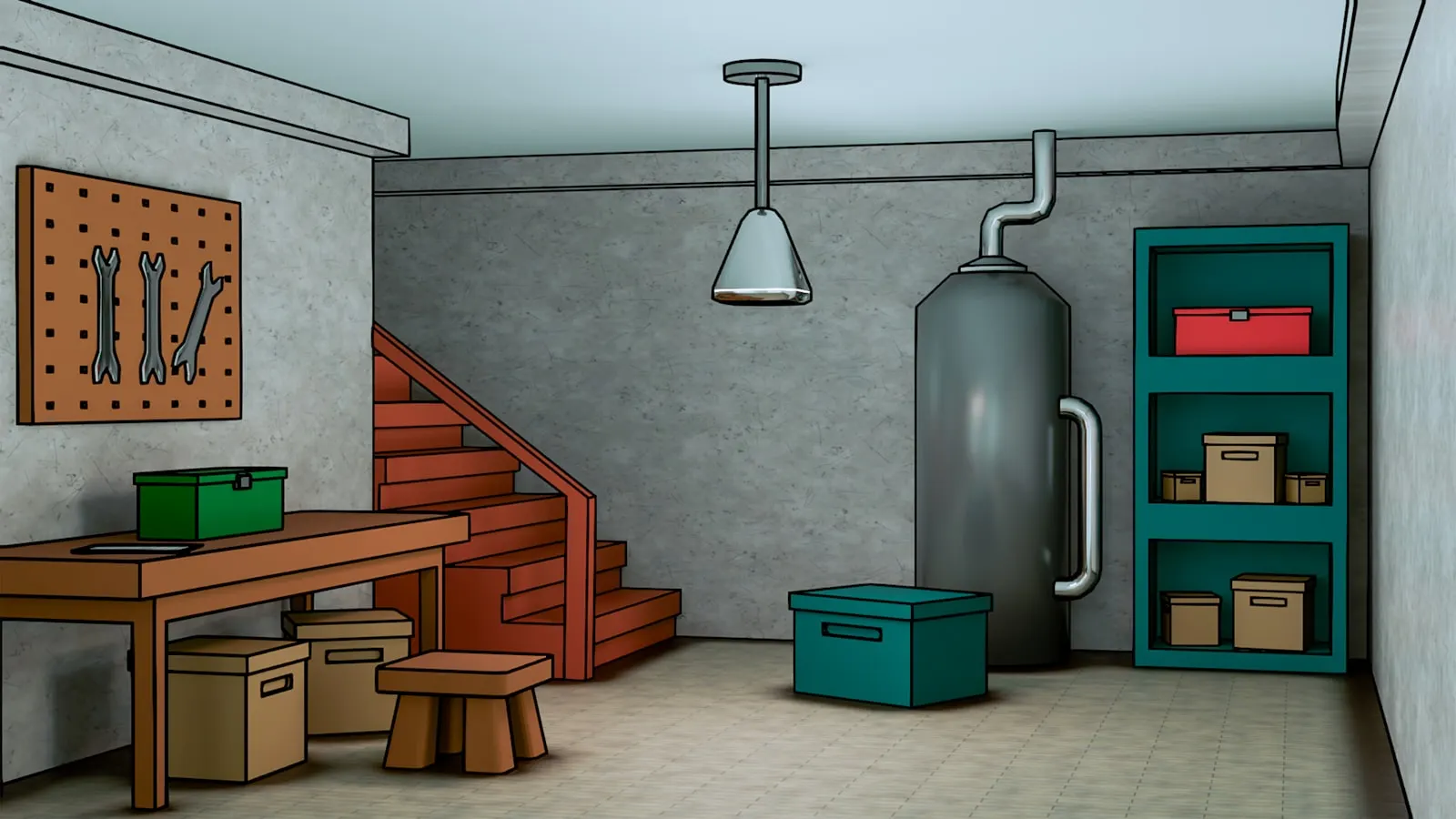
Water heater repair in Centennial usually starts in a room the size of a phone booth. When these split-levels went up, the builder gave the mechanical space exactly enough room for a furnace, a 40-gallon gas tank, and one person standing sideways. Fifty years later that same footprint is expected to hold a bigger tank, modern venting clearances, an expansion tank, and a drain pan, and sometimes it simply can't. Knowing that before you shop saves you a bad afternoon in a big-box aisle and a worse one in the hallway with a tank that won't turn the corner.
Age is the other wall you'll hit. Plenty of tanks here are on their second or third replacement, but we still hear from owners running originals from the late 80s, wearing their sediment like ballast in a Southglenn-era basement. A tank that old isn't really a repair candidate. It's a countdown, and the polite thing a plumber can do is say so plainly before it picks its own retirement date, which is historically a Friday night with a full house.
One preflight before any decision: find the sticker on the tank and decode the serial number's build date, then look at the room itself with fresh eyes. Is there a drain pan? A drain for the pan to empty into? An expansion tank on the cold line? Houses from this era mostly predate all three, and whoever you hire will have to price that gap. Walking in already knowing your tank's age and the room's shortfalls turns the conversation from a pitch into a plan.
The orphaned flue: quiet aftermath of a furnace upgrade
Here's a pattern specific to houses this age, and almost nobody mentions it at the furnace sale. The furnace gets upgraded to a high-efficiency model that vents out the side wall in white PVC. The old metal flue or masonry chimney stays behind, now serving one small appliance: the water heater. That's an orphaned flue, and it's frequently too big for the little burner left on it. Exhaust cools too fast on the long climb, draft weakens, and moisture condenses inside the chimney where it eats mortar and, in the bad cases, lets combustion gases spill back into the room.
If your furnace was replaced any time in the last fifteen years and the water heater still vents into the original chimney, have the draft checked. It's a quick, boring test with a real safety payoff. Fixes range from a properly sized metal liner to switching to a power-vent unit when the tank is due anyway. While someone's in there, have them look at combustion air too, because the louvered door that once fed a 1974 furnace may now be feeding nothing but a closed hallway and a cat.
Water heater repair in Centennial: the decision table
The repair-or-replace call is mostly arithmetic, so here's the arithmetic. Along the Front Range, the common repairs (thermocouples, gas valves, heating elements, anode rods) tend to land between $150 and $600. A standard tank replacement commonly runs $1,500 to $3,500 installed, with tight access, venting changes, and code catch-up items driving the spread. On a tank under eight years old, a repair is usually money well spent. Past twelve, you're tuning the engine while the wheels fall off, and every dollar spent is a dollar the replacement fund never sees.
Moderately hard water puts its thumb on the scale in most of Centennial's districts. Sediment builds faster, anode rods burn out sooner, and a tank that might see fifteen years on softer snowmelt can tap out at ten here. An annual flush and an anode check around year five are cheap habits that push the date out. That rumble you hear at every burn is sediment boiling under the water, and it's the tank telling you which decade it plans to quit in.
And if the tank is actively leaking from its body tonight, this stops being a decision table. Close the cold-side valve on top, kill the gas or the breaker, and treat it as what it is: the order of operations lives on our emergency page.
| Symptom | Likely story | Sensible move |
|---|---|---|
| No hot water, tank under 8 years old | A failed component, not the tank | Repair it and move on |
| Rumbling and popping at every burn | Decades of sediment on the bottom | Flush it, and budget for replacement |
| Rusty water from hot taps only | The tank lining is done | Replace: nothing repairs this |
| Water in the pan or on the floor | Seam or tank body leak | Shut the cold inlet, then replace |
Dealing with this in Centennial?
Start a quoteBuying the next twenty years
When replacement day comes, resist the urge to swap like for like without a thought. Three questions are worth ten unhurried minutes. Does the flue situation argue for a power-vent model? Does the household's hot water use still match a 40-gallon tank, or did the teenagers change that math years ago? And is there room, physically and financially, for the code items that have accumulated since the last install: expansion tank, pan and drain, seismic strapping, proper clearances? A swap priced without those is a quote you'll be renegotiating in the driveway while the old tank drips on the dolly.
Tankless deserves a fair hearing at this altitude, with honest talk about gas line sizing in older houses, and the metro-wide tradeoffs live on our Front Range water heater hub. If you're comparing notes with family in Highlands Ranch, remember their 1990s utility rooms hold different surprises than your 1974 one does. Different era, different failure list, same storms. That's the whole reason these pages exist.
Under eight years old, repair. Over twelve, replace on your schedule instead of the tank's. In between, let the flue, the water quality, and the size of that little room cast the deciding votes. And run down the orphaned-flue question this month, not someday: it's the one item on this page with a genuine safety edge.
Keep exploring
More for Centennial and nearby
All Centennial plumbing guides Water Heater Repair across the Front Range Parker Highlands Ranch
Questions we actually get
Water Heater Repair in Centennial: quick answers
How long do water heaters last in Centennial?
Commonly eight to twelve years for standard tanks, with the moderately hard water in most of the city's districts pushing toward the shorter end when nobody flushes the tank. The build date hides in the serial number, so look it up rather than guessing. Past year twelve, put replacement money aside and pick your timing instead of letting the tank pick it for you.
What's an orphaned flue, and does my house have one?
It's the old chimney or metal flue left serving only the water heater after a high-efficiency furnace moved to sidewall venting. It's common in Centennial because so many 1970s furnaces have been upgraded. The oversized flue can draft poorly and condense moisture into masonry. If the furnace vents in white PVC while the water heater uses the original chimney, have the draft and liner checked.
Can I fit a bigger tank in my old utility room?
Sometimes. Modern 50-gallon tanks run taller and wider than the 40s these rooms were drawn around, and clearances, combustion air, and the drain pan all get a vote. Measure the doorway too: more than one tank has fit the room but not the hallway leading to it. Where space truly won't give, a short lowboy model or a tankless conversion becomes the honest answer.
Get the tank verdict for your house.
Send the tank's age and its symptom, and a real person will send back a straight repair-or-replace answer.
Get My Free Quote