
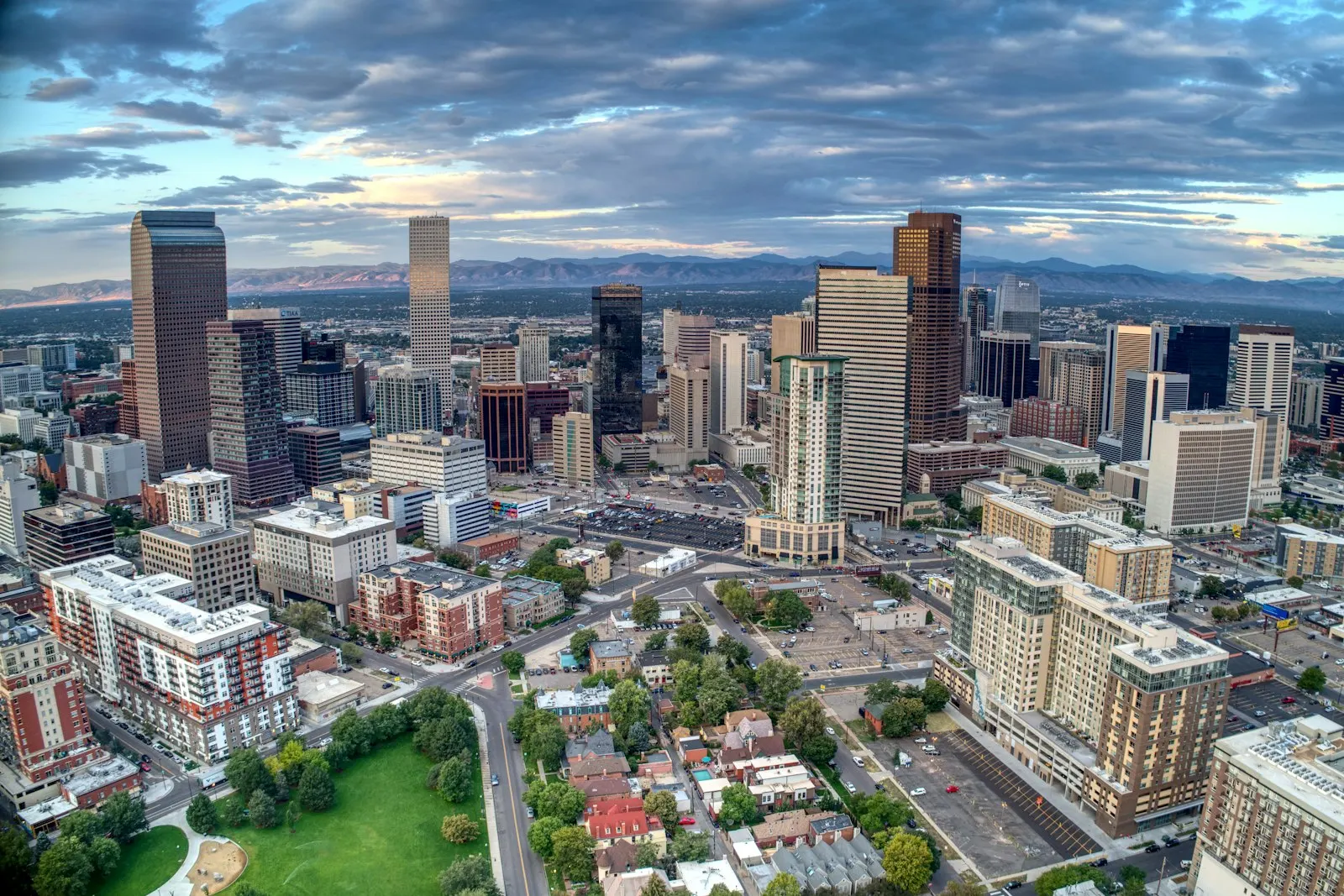
Plumbing guidance for Denver, Colorado
Plumbers Denver CO
Emergency Plumbing, Drain Cleaning & Water Heater Repair in Denver
Half of Denver's homes were plumbed before 1970, and it shows: galvanized supply in Berkeley, cast iron stacks on Capitol Hill, clay laterals under Park Hill's elms. We write about what's actually in these walls, then route your quote request to a real person who reads it.
- Bungalow belt pipe literacy
- Clay lateral straight talk
- Freeze timing at 5,280 feet
- Quotes read by a person
Four building booms, four kinds of pipe
Denver plumbing is really four cities stacked on top of each other. The 1880s gave Capitol Hill its mansions, with bathrooms shoehorned into closets as indoor plumbing arrived. The 1920s built the bungalow belt: Wash Park, Park Hill, Berkeley, block after block of brick craftsman homes with the kitchen on the alley side. The 1950s filled Virginia Village with low-slung ranches, and the last two decades poured the Central Park grid onto the old airport land. Each boom plumbed itself with the material of its moment, and each is now failing on its own schedule.
That stacking is why generic plumbing advice falls apart here. A Berkeley four-square, a Cap Hill conversion, and a Central Park townhome can sit six miles apart and belong to three different plumbing civilizations: galvanized against copper against PEX, cast iron against ABS, clay against PVC. The house tells you what will break next, if you know its birth year. We built this page, and the five service guides underneath it, around exactly that idea.
So before anything else, place your house in its era. It's the fastest free diagnostic this city offers, and it will sharpen every conversation you ever have with a plumber. The table below is where I'd start.
| Neighborhood | Built | Common finds |
|---|---|---|
| Capitol Hill, The Highlands | 1880s-1910s | Converted mansions, added baths, original stacks |
| Wash Park, Park Hill, Berkeley | 1900s-1930s | Galvanized supply, cast iron stacks, clay laterals |
| Virginia Village | 1950s-1960s | Early copper, first-generation laterals |
| Central Park | 2000s-today | PEX supply, PVC drains, modern venting |
What's really under a pre-1970 house here
More than half of Denver's homes predate 1970, and that single fact drives most of the city's plumbing economy. Galvanized supply pipe closes down from the inside like a hardening artery, which is why the shower in a 1912 Highlands four-square loses a little more pressure every year no matter which showerhead you buy. Cast iron stacks rust from the bottom up, quietly, until a horizontal run under the basement floor finally lets go. And vitrified clay laterals, the material I hold a lifelong grudge against, crack at their joints and invite every root on the block inside.
There's one genuine mercy in the mix. Denver Water delivers soft mountain snowmelt, among the softest municipal water in the country, so tanks and fixtures here get an easier life than almost anywhere out on the prairie. But soft water never saved a clay sewer line, and it can't push a decade of grease through a century-old kitchen drain in Wash Park. When the backups keep returning and the camera finds roots at the tree lawn, you've entered clay lateral territory. Different problem, different budget, different page.
The pattern repeats at every scale. Supply lines lose pressure, stacks lose wall thickness, laterals lose their joints. What an old Denver house asks of you isn't panic; it's sequencing. Fix what's actively failing, put a camera on what's hidden, and keep a running list of what's still original. Owners who know their pipe's birth year make better calls than owners who only know their granite's.
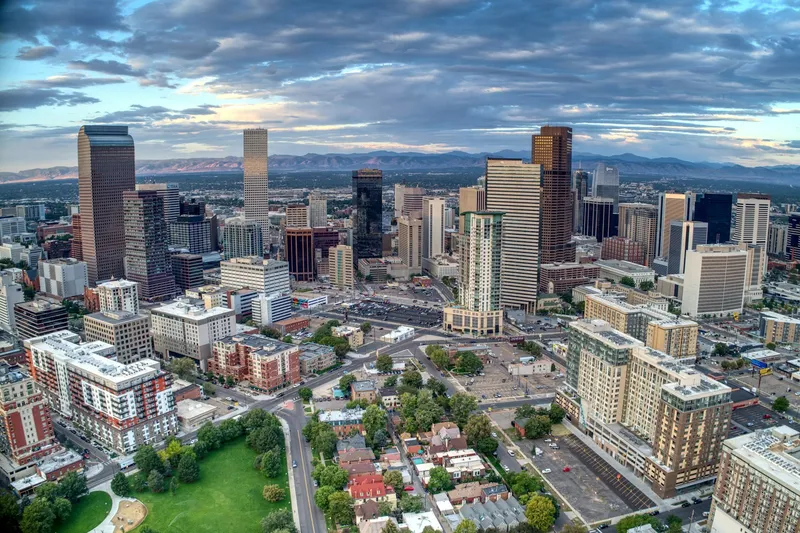
Neighborhood coverage
Where we get called in Denver
Plumbing problems cluster by neighborhood, because housing eras do. These are the Denver areas and nearby communities our guidance is written around.
Outside these? The whole city is covered. Neighborhood names simply help us guess your pipes before you finish typing.
Climate, elevation, timing
What 5,280 feet does to Denver plumbing
The city sits at exactly 5,280 feet in the South Platte valley, with the Front Range wall about 15 miles west, close enough to run the weather. Upslope storms stall against those peaks and drop heavy, wet spring snow. Chinook winds pour down them and can swing a January afternoon forty degrees before dinner. Your pipes ride every one of those swings, expanding, contracting, and testing every fitting a previous owner ever soldered on a Saturday.
The calendar is long. First freeze historically arrives around early October, first measurable snow near mid-October, and the last spring freeze typically hangs on until late April. Call it nearly seven months of freeze risk, with roughly 45 to 55 inches of snow spread across it. And the dangerous nights aren't the coldest ones; they're the first ones, when hoses are still connected and nobody has thought about the crawl space since May.
Altitude works on plumbing in quieter ways too. Water boils cooler up here and gas burners run a thinner mixture, which is part of why water heaters get sized and tuned differently than their sea-level manuals assume. And the same freeze-thaw whiplash that cracks Denver's streets every spring works slowly on shallow-buried service lines and on supply runs hiding in the bungalow belt's uninsulated brick walls.
Denver at a glance
- Elevation
- 5,280 ft
- County
- Denver
- Population
- ~715,000
- First freeze
- Early Octoberhistorical average
- First snow
- Mid Octoberhistorical average
- Snow / year
- 45-55″approximate range
Denver's first freeze historically lands in early October, about … from today. First snow tends to follow near mid October. Spring's last freeze holds on until roughly late April.
NWS forecast near Denver: Loading…
A walk through the neighborhoods we hear from most
Wash Park bungalows are the classic Denver patient: original 1920s drains under a lovingly remodeled kitchen, new fixtures feeding pipe their grandparents' plumbers installed. Capitol Hill's mansion-to-apartment conversions stack a century of amateur alterations on Victorian bones, and one upstairs leak can visit three units on its way to the ground floor. Park Hill's parkway elms, planted when the streetcar still ran, are glorious overhead and merciless underground, working roots into every clay joint within reach of the 17th Avenue canopy.
West of downtown, Berkeley and Sloan's Lake are ground zero for the scrape-and-rebuild economy: new duplexes standing shoulder to shoulder with 1910s originals, occasionally inheriting the same tired lateral. The Highlands keeps some of the city's oldest service lines in daily use. None of this is cause for panic. It's cause for learning your block's construction era before the bidding war, and budgeting for the pipe as seriously as the countertops.
Over east, City Park's giant silver maples run the same racket as Park Hill's elms, which is why sewer scopes in the old streetcar suburbs read like root atlases. And south of there, Virginia Village trades root-bound clay for 1950s copper that's entering its own retirement window. Even Denver's newer half has homework.
Where we fit in
Denver.Plumbing is a local plumbing resource and quote service, not a truck idling in your alley. We publish what we've learned about the city's pipe eras and its freeze calendar, and when you send a quote request, a real person reads it and routes it seriously. No robocalls. No pressure scripts. No pretending your bungalow is a subdivision build with a subdivision's problems.
Start with the guide that matches your symptom: drains, water heaters in tight old basements, sewer laterals, emergencies, or frozen pipes. And if you're just outside the city line, Lakewood, Englewood, and Aurora each get their own pages, because their housing stock and their winters aren't quite Denver's.
Something dripping in Denver right now?
Get a fast quoteWhat we cover here
Denver service guides
Drain Cleaning
Century-old kitchen lines under remodeled bungalows, shared duplex drains, and the grease a Wash Park disposal sends into 1925 pipe. What clearing them actually takes.
→Water Heater Repair
Repair-or-replace math for tanks in half-height Capitol Hill basements, tight brick flues, and what 5,280 feet of thin air quietly does to a burner.
→Sewer Line Repair
Denver is the clay lateral capital of Colorado. Roots, scopes, spot repairs, liners, and full digs, explained before the backup or the bidding war.
→Emergency Plumbing
What to shut off first when a prewar valve won't budge and the upstairs leak is becoming your neighbor's ceiling problem downstairs.
→Frozen Pipe Repair
Alley-facing kitchen walls, garden-level apartments, and uninsulated 1920s brick: where Denver freezes first, how thawing works, and what to do before early October.
→Nearby coverage: Englewood Lakewood Aurora All 30 cities
Questions we actually get
Denver plumbing questions
Why does Denver have so many clay sewer lines?
Vitrified clay was the standard lateral material from the 1880s into the 1950s, which happens to cover most of Denver's building booms. More than half the city's homes predate 1970, so the math follows. Clay doesn't fail on a schedule; it fails at its joints, wherever roots from the parkway trees find a gap. That's why a sewer scope matters more here than in almost any suburb on the corridor.
Is Denver's water hard on plumbing?
Mostly the opposite. Denver Water delivers soft mountain snowmelt, among the softest municipal supplies in the country, so scale inside heaters and fixtures is a smaller problem here than in Front Range towns on prairie groundwater. The catch: your pipes' age matters far more than your water's chemistry. Soft water flowing through 1925 galvanized is still flowing through 1925 galvanized.
When do pipes actually freeze in Denver?
The first freeze historically lands around early October, and the risk runs until the last spring freeze in late April. The trouble nights cluster early: a sharp October snap with hoses still connected, or the first hard cold that finds a garden-level apartment or an alley-facing kitchen wall. Chinook thaws in between lull everyone into forgetting. Disconnect hoses early and learn which of your walls face the weather.
Does Denver.Plumbing send its own plumbers?
No. We're a local plumbing resource and quote service. We publish guidance specific to Denver's housing stock, and when you submit a quote request, a real person reads it and routes it toward help that fits the job. We don't run trucks, we don't robocall, and we won't pretend otherwise. What you get from us is straight information and a serious handoff.
Put your Denver house's era to work.
Tell us the symptom and the neighborhood, and a real person will read it with the right century in mind.
Get My Free Quote