
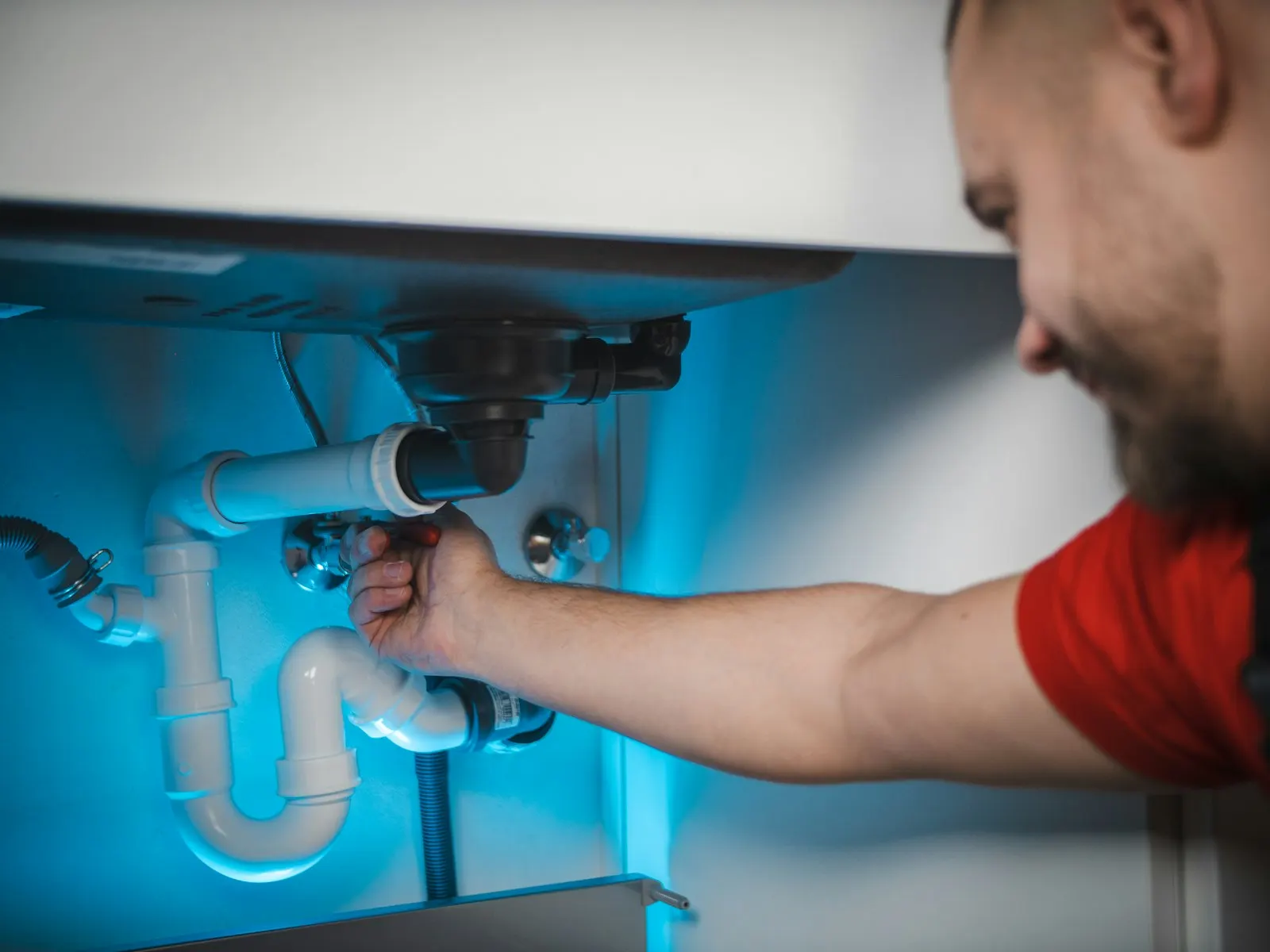
Emergency guidance for Denver, Colorado
Emergency Plumbing Denver CO
Burst Pipes, Active Leaks & Water Shutoff Help
At 2 a.m., with water coming through a light fixture, the only thing that matters is a valve you should've met months ago. Denver's prewar homes hide their shutoffs well, and one leak in a Cap Hill fourplex can soak three households. Learn the order of operations now.
- Prewar shutoff guidance
- Three-unit leak triage
- What to kill first
- Real person reads requests
Two in the morning on Marion Street
The call always seems to come from an upstairs bathroom. Capitol Hill's mansions grew their second-floor baths in the speakeasy era, plumbed up through exterior walls and into former closets, and a century later those additions sit directly above somebody else's bedroom ceiling. When a supply line lets go at 2 a.m. in a converted fourplex on Marion Street, gravity turns one household's problem into three households' problem in about ninety seconds. Emergency plumbing in Denver is shaped by that density, and by shutoff valves older than everyone in the building combined.
Old construction raises the stakes in a sneaky way. Lath and plaster doesn't leak politely the way drywall does; it drinks water into the ceiling cavity, holds it, sags, and then releases the whole load at once. The gap between a stain and a collapse can be minutes. Which is why the entire game is how fast the water stops, why an hour-old leak and a night-old leak produce invoices in different fonts, and why this page is mostly about valves.
Full honesty up front: Denver.Plumbing is a resource and quote service, the drill rather than the rescue. In a true flood, shut the water first and get help on the phone, then use our quote form for the repair work and everything that can wait an hour. What follows is the order of operations that saves ceilings.
Shut off the right things, in the right order
Prewar Denver hides its shutoffs. The main valve usually sits low on the front foundation wall of the basement, where the service line arrives from the street, frequently behind seventy years of paint cans and holiday boxes. Find yours today, not during the event. Then walk out front and locate the meter pit near the sidewalk, because that curb stop is the backup plan when the inside valve fails, and in this housing stock the inside valve fails often. While you're down there, trace the system once: main valve, then meter, then branches, and note which small valve starves the water heater on its own.
Renters and condo owners get one extra assignment: learn what you actually control. In a conversion, the valve that kills your kitchen may live in a neighbor's utility closet, and the building main may sit behind a door only the HOA can open. Ask now, in writing, while nothing is leaking, and keep the answer somewhere your phone can find it at 2 a.m.
- Water main: low on the basement's front wall, where the service line enters
- Curb stop: in the meter pit by the sidewalk, for when the inside valve fails
- Water heater: close its cold-side valve so the tank can't feed the leak
- Electricity: kill breakers to any room taking water, if the panel is dry
- Photos: shoot everything before cleanup starts, for the insurance file
What emergency plumbing in Denver costs, and when to wait
After-hours work carries a premium everywhere on the Front Range. A visit that might run a couple hundred dollars on a Tuesday afternoon commonly costs noticeably more at midnight, with the final bill driven by what actually broke and what it soaked on the way down. Nobody can honestly quote a flood sight unseen, and you should side-eye anyone who tries. What you control is the size of the problem when help arrives, and that is entirely a function of how fast the water stopped moving. The other lever you hold is documentation: insurers move faster with time-stamped photos and a clear record of what you shut off and when, so narrate the disaster to your camera roll as you go.
So triage honestly. Active water you can't stop, sewage rising in a basement, no water at all while pipes sit in freezing weather: those are now. That last one earns its urgency for a quiet reason: a supply line that went silent in the cold is probably frozen, and a frozen line may already be split, waiting for the thaw to start the flood. And any smell of gas is a different category entirely: leave the house and call the utility from outside before anything else.
A drip you've caught in a bucket, a water heater that died without leaking, one slow drain in a house with three baths: those keep until morning, and morning rates are kinder. The test is simpler than it feels in the moment. Is water currently going somewhere it shouldn't? If yes, act. If no, sleep, and write it up for the quote form with photos.
Dealing with this in Denver?
Start a quoteDensity makes every leak a group project
Density is the multiplier in Denver emergencies. A burst pipe in a Wash Park single-family house ruins a ceiling and a weekend. The same burst in a Cap Hill fourplex conversion soaks a stranger's bookshelves, and suddenly you're exchanging insurance details in a stairwell at dawn. If you own in a conversion, photograph the shutoffs, share the map with your neighbors, and label the valves with paint pen. It's the cheapest diplomacy in real estate, and the first flood pays for it a hundred times over. Renters get the same assignment in miniature: know the unit valve, the building valve, and the emergency number that actually gets answered at night.
And remember the season. A large share of this city's winter emergencies are freeze bursts wearing a disguise, garden-level units and alley-facing walls letting go during the first hard snap, which is why our frozen pipe guide is this page's companion from October through April. East of the city line, Aurora's emergency page covers a younger housing stock with different failure habits.
The order never changes: water off, electricity off wherever it's wet, photos, then phone. Denver's old housing punishes hesitation because one riser can serve many rooms and sometimes several homes. Find both shutoffs this week, test the valve gently, and tape the curb stop's location inside a kitchen cabinet. Future you, standing in water, says thanks.
Keep exploring
More for Denver and nearby
All Denver plumbing guides Emergency Plumbing across the Front Range Englewood Lakewood
Questions we actually get
Emergency Plumbing in Denver: quick answers
Where is the water shutoff in an old Denver house?
Almost always in the basement, low on the wall facing the street, where the service line comes through the foundation. In prewar homes it's typically an original gate valve, and decades of paint and mineral crust may have frozen it. Your backup is the curb stop in the meter pit near the sidewalk. Locate both before winter, and test the inside valve gently, never with force.
Water is coming through my ceiling. What do I do first?
Shut the main immediately, then open a low faucet like a basement laundry tub to drain the system faster. Kill the breakers to any room taking water if the panel itself is dry. If the ceiling is plaster and sagging, stay out from under it; plaster holds water and drops all at once. Then photograph everything before cleanup and start making calls.
Is an after-hours plumber worth the premium?
When water is actively moving or sewage is rising, yes, every time, because the damage clock runs by the minute. When the problem is contained, a drip in a bucket, a dead-but-dry water heater, a single slow drain, waiting for daytime rates is usually the smarter spend. Shutting off the water buys you that choice, which is why the valve is the whole strategy.
When it's dripping, don't draft an essay.
Send the short version: what's leaking, where, and your neighborhood, and a real person will take it from there.
Get My Free Quote