
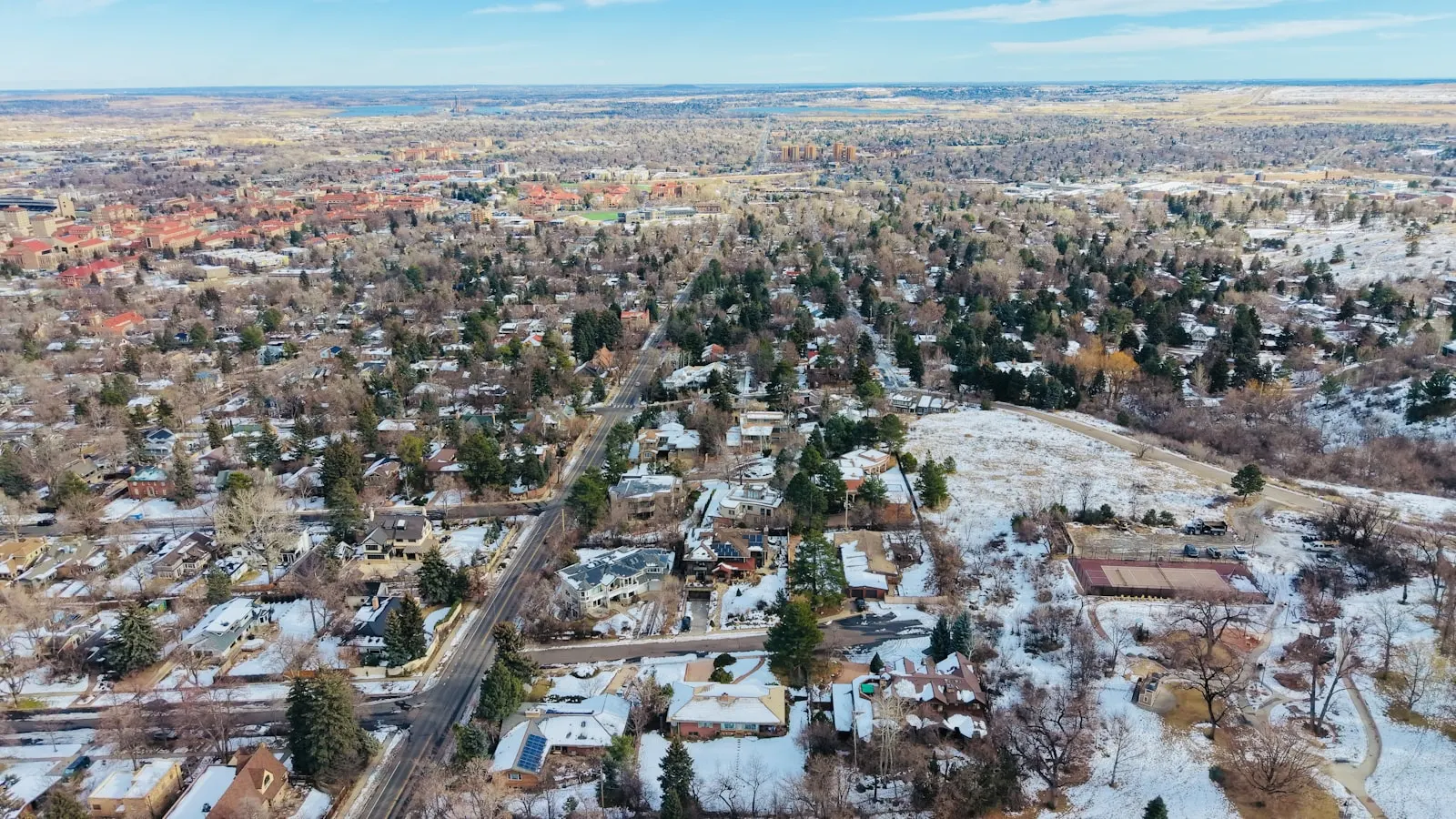
Freeze season guidance for Denver, Colorado
Frozen Pipe Repair Denver CO
Pipe Thawing, Burst Repair & Freeze Prevention
The pipe that freezes in Denver isn't random. It's the kitchen line in the uninsulated alley wall of a 1922 row home, or the garden-level apartment nobody's checked since the last chinook. Frozen pipe repair in Denver starts with knowing which of your walls face the weather.
- Alley-wall freeze map
- Garden-level early warnings
- Safe thawing steps
- Early October hose rule
The alley wall always goes first
Denver's freeze story has a main character: the kitchen supply line running through the alley-side wall of a 1920s row home or bungalow. That wall is usually double brick with a plaster skin and exactly zero insulation, because in 1922 nobody insulated anything, and the kitchen sits on the alley by design. Come the season's first hard snap, often within weeks of the early-October first freeze, that line is the coldest plumbing in the house, and it announces itself with a faucet that coughs air on a dark morning.
The supporting cast comes from the radiator age. Houses built around hot-water heat had piping routed wherever it fit, including exterior walls and unheated chases, and later remodels inherited those runs without asking questions. Garden-level apartments freeze first of all: they sit against cold earth, their vents and window wells gather the coldest air, and they're often rentals nobody is watching on the coldest night of the year.
Elevation seals it. At 5,280 feet the temperature falls off a cliff after sunset, and a 55-degree chinook afternoon can hand off to a subzero night in the same day. Mountain towns freeze harder, but Denver freezes sneakier, because the warm spells keep convincing everyone the danger has passed. Even the snow cooperates with the trick: the city's 45 to 55 annual inches arrive in bursts, with dry, mild stretches between storms, which is exactly the rhythm that breeds complacency.
Where this city freezes, house by house
You can nearly draw the map from the street. If a wall faces the alley or the north side, and the house predates insulation, any water line inside it is a candidate. If there's a garden-level unit, it's the canary. If a porch got enclosed or a pop-top got added, the plumbing threaded through the leftover cavity is running on borrowed warmth. And every pre-1960 hose bib without a frost-proof body is a small bet placed against October. If you rent a garden-level unit, ask in the fall, not in February, who owns freeze prevention and where the shutoff lives.
The chinook trap deserves its own warning. Those warm westerly winds melt the snow, reopen the patio, and convince the whole city winter is done. Then the next front drops forty degrees overnight. Pipes that survive steady cold get killed by that cycling, because freeze-thaw-freeze works a line like bending a paperclip until something splits. It's why so many Denver freeze stories start in October or April, the head-fake months, rather than in the honest cold of deep January.
- Alley-facing kitchen walls in row homes and bungalow-belt houses
- Garden-level and basement apartments with grade-level vents
- Radiant-era supply runs buried in uninsulated exterior walls
- Pre-1960 hose bibs, especially on north-facing brick
- Crawl spaces under porch enclosures and additions
- If one faucet quits during a snapSuspect the nearest exterior-wall run and start gentle heat
- If you hear water you can't findShut the main now; a split has already thawed somewhere
- If a garden-level unit sits emptyKeep heat on and doors open, or have the system properly drained
Frozen pipe repair in Denver: thawing, bursts, and the bill
Thawing done right is boring on purpose. Open the affected faucet so melting ice has somewhere to push, warm the suspect wall section gradually with a heat gun, hair dryer, or heat lamp, and keep everything flammable at a distance. No torches, ever: 1920s framing behind plaster is seasoned kindling, and Denver's old blocks have lost houses to exactly that shortcut. If you can't reach the frozen section, or the same run freezes every winter, that's when a pro earns the call, sometimes by opening the wall, sometimes with thawing equipment you shouldn't improvise.
The money conversation splits in two. A straightforward thaw call, when the line survived, often lands in the low hundreds along the Front Range. A burst is a different animal, because the plumbing fix, cutting out the split and sweating in new pipe, is frequently the smallest line on the invoice. Opening and closing a plaster or double-brick wall, then drying what the water touched, is where the real cost lives. The drywall usually costs more than the pipe.
Which frames the judgment call: a line that froze once will freeze again, because the wall around it hasn't changed. The thaw is the symptom fee. Rerouting the run, insulating the cavity, or adding heat tape is the cure, and cure pricing looks very reasonable next to a second flood.
Dealing with this in Denver?
Start a quoteFreeze-proofing on the city's actual calendar
Work Denver's dates, not the national checklist. Hoses come off and bib covers go on before early October, because the historical first freeze doesn't wait for the aspens to finish. Sprinkler blowouts belong on the calendar around then too. When the first real snap hits, open the cabinet doors under any sink on an alley or north wall so room heat reaches the pipes, and let the most vulnerable faucet run a pencil-thin drip overnight when forecasts go subzero. Moving water buys forgiveness that still water doesn't.
If you own or manage a garden-level unit, put it on a cold-night checklist by name: heat at a real temperature, vents and window wells sealed up, someone laying eyes on it during multi-day cold. A vacant garden apartment in January is Denver's single most predictable burst, and a burst that starts down there works through everything stored on the floor before anyone upstairs notices.
And know the handoff. The moment a frozen line becomes a burst line, you've left this page for the emergency shutoff drill, so run that drill once before you need it. For the wider corridor picture, elevation by elevation, our Front Range freeze guide compares the towns, and the Denver city page explains why this housing stock freezes the way it does.
Denver freezes on a schedule you can plan around: first freeze near early October, last near late April, chinook head-fakes in between. The pipes that burst live in weather-facing walls of houses built before insulation. Learn your risky runs now, winterize by the first week of October, and treat any freeze as a warning shot, not bad luck.
Keep exploring
More for Denver and nearby
All Denver plumbing guides Frozen Pipe Repair across the Front Range Englewood Lakewood
Questions we actually get
Frozen Pipe Repair in Denver: quick answers
Which pipes freeze first in Denver homes?
The kitchen line in an uninsulated alley-facing or north-facing wall is the perennial champion, followed closely by anything serving a garden-level apartment. Radiant-era supply runs threaded through exterior walls, hose bibs on pre-1960 brick, and lines crossing crawl spaces under additions round out the list. The common thread is walls that face the weather in houses built before insulation was standard practice.
My pipes froze but nothing burst. What now?
Open the affected faucet, then warm the suspect section slowly with a hair dryer or heat gun, never a flame. Know where your main shutoff is before you start, because splits hide in frozen pipe and reveal themselves only when the ice melts. If water returns and holds pressure with no hidden hissing, you got lucky. Spend that luck on insulating or rerouting the run before the next snap.
When should I winterize in Denver?
Aim for the end of September. Denver's first freeze historically lands around early October, and the earliest snaps are the ones that catch hoses still connected and garden apartments unprepared. Disconnect and drain hoses, cover the bibs, schedule the sprinkler blowout, and walk the house once to find which supply runs live in exterior walls. Fifteen minutes in September regularly saves a February flood.
Frozen line in Denver right now?
Shut the water if it's burst, then tell us which wall and which neighborhood, and we'll get your request moving.
Get My Free Quote