
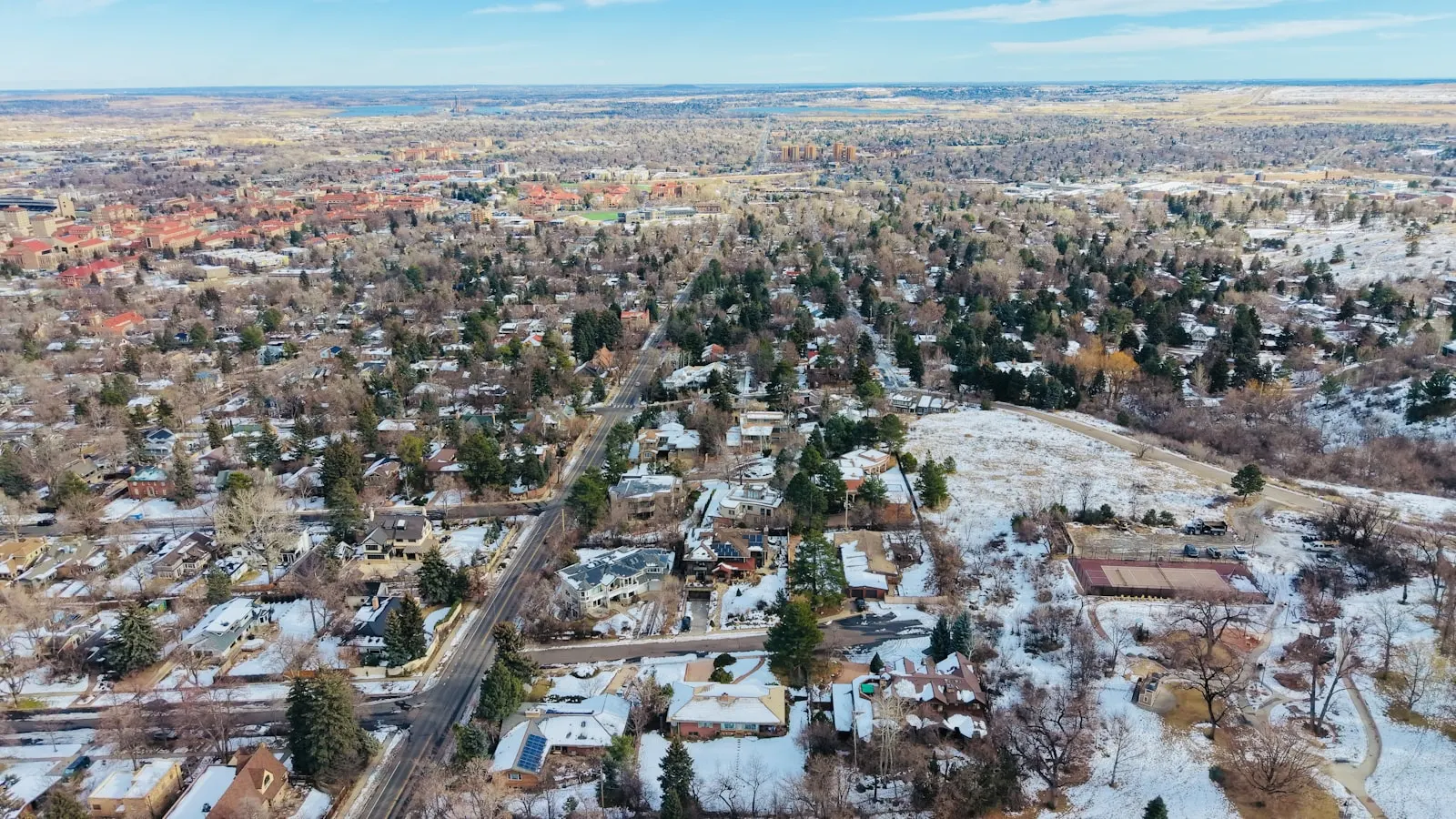
Freeze season on the west side
Frozen Pipe Repair Lakewood CO
Pipe Thawing, Burst Repair & Freeze Prevention
Wind comes off the hogback and works west-facing walls all night, and mid-century Lakewood built plenty of pipe into those walls with almost nothing behind them. Down near Bear Creek the cold pools instead. Two different freeze problems, one city.
- West walls take the wind
- Bear Creek cold pooling
- Mid-century chases, no insulation
- September prep beats January repair
Two ways to freeze a pipe in one city
Frozen pipe repair in Lakewood splits along the terrain. Up on Green Mountain's flanks, where the ground climbs past 6,000 feet toward the hogback, the enemy is wind. It strips heat off an exposed west-facing wall for eight straight hours, and a pipe sitting inside that wall loses more warmth than it would on a calm night ten degrees colder. Pipe doesn't feel wind chill the way your face does, but moving air strips heat through sheathing much faster than still air, and that gap is what turns water to ice inside a wall.
Down in the lower ground near Bear Creek Lake Park, the enemy is stillness. Cold air is heavy. It slides downhill after sunset, settles into the low spots, and stays there until the sun clears the ridge in the morning. Crawlspaces and low-level plumbing in those blocks sit inside a pocket of air that runs colder than the city forecast for hours at a stretch, and it happens on clear, calm nights that don't feel dangerous at bedtime.
In between, the flats around 5,400 feet do a little of each depending on which way the storm came in. The city averages 5,518 feet with genuine gradients inside its own limits, which is exactly why one street loses a pipe on a given night while the street below it sleeps through it.
Where Lakewood pipes actually freeze
The failure spots are consistent enough that you can check all of them in one afternoon, with a flashlight and no tools. Walk the perimeter first and note every wall facing west or north, because those are the walls that matter here. Then go back inside and find every fixture sitting against one of them. That short list is where your winter risk actually lives, and in most Lakewood houses it runs to four or five spots, not twenty.
The mid-century wall chase is the one people miss every year. There's no access panel, nothing visible from the kitchen, and the supply line is often stapled tight against the exterior sheathing where a builder in 1958 put it without a thought about insulation, because nobody was thinking about insulation. That's why a kitchen faucet is so often the first thing to quit during a Lakewood cold snap while the bathroom on an interior wall never notices anything happened.
Garages deserve a second look on the Green Mountain builds. Laundry rough-ins on a shared garage wall, the water heater's cold supply, and any line run along an uninsulated slab edge all sit in a space that drops toward outdoor temperature every time the door goes up. A cheap foam sleeve and a sealed door bottom handle most of it.
- Hose bibs: the most common freeze in the city, and the damage often stays hidden until you turn the valve on in April.
- Kitchen lines in exterior wall chases: mid-century builds ran supply through the outside wall behind the sink cabinet with siding as the only barrier.
- Crawlspace and rim joist runs: especially anywhere a foundation vent got left open through November.
- Garage lines: laundry rough-ins and water heater supply in unheated garages on the newer west-side builds.
| Where | Why it goes | Cheap fix now |
|---|---|---|
| Exterior hose bib | A hose left on holds water right at the valve | Disconnect hoses by late September |
| West wall kitchen chase | Wind pulls heat through uninsulated sheathing | Open the cabinet doors on hard nights |
| Crawlspace supply run | Cold air pooling plus open foundation vents | Close the vents, sleeve the run |
| Garage laundry or heater lines | Unheated slab space and a door that keeps opening | Pipe insulation and a sealed door bottom |
Thawing, splits, and what frozen pipe repair in Lakewood costs
A faucet that gives you nothing on a cold morning means ice somewhere between the source and that fixture, and a clock just started running. Open the faucet so melting water has somewhere to go. Apply gentle heat along the suspect run with a hair dryer or a space heater kept well away from anything that burns. Never a torch, never an open flame in a wall cavity, and never a heat gun held against old wall board.
Then keep the main shutoff within reach, because a frozen pipe and a split pipe look identical until the ice lets go. Water expands as it freezes and often cracks the pipe upstream of the blockage, so the leak announces itself the instant flow returns. If you hear water start moving and nothing comes out of the tap, shut the main right then and sort out the rest afterward.
Costs land in wide bands for real reasons. A simple thaw with no damage is often an hourly call in the low hundreds. Replacing a split section of copper or PEX somewhere accessible typically runs a few hundred more. Opening a finished wall, replacing hidden pipe, and repairing drywall, texture, and paint climbs into four figures quickly, and that's before any water damage restoration gets involved. Access is the whole story again, the same as it is with every other pipe in this city.
- No water at one fixture, nothing visibleOpen the tap, warm the run gently, watch for leaks
- No water anywhere in the houseCheck the main run and crawlspace, then call before it splits
- Water returns and you hear it runningShut the main now, the pipe cracked while it was frozen
- Wet spot on a west-facing wall in springThat's last winter's freeze, and it needs to be opened up
Dealing with this in Lakewood?
Start a quoteSeptember work beats January repair
First freeze historically lands around October 3 and first snow follows near October 13, so the useful prevention window closes in late September, weeks before most people think about it. Disconnect every hose and drain the bibs. Close crawlspace vents. Sleeve any run in the garage, along the rim joists, and on the exposed west side of the house. It's one afternoon of work and it beats an afternoon spent watching somebody cut into your kitchen wall.
On the hardest nights, cheap insurance goes a long way. Leave the cabinet doors open under sinks on outside walls, let a west-side faucet run a thin steady stream, and hold the furnace at a steady temperature instead of setting it back deeply overnight. If you're traveling in February, keep the thermostat in the mid-fifties at minimum and have somebody physically walk through the house, because a slow leak found in week three is a different insurance claim than one found on day two.
If a pipe already let go, our emergency steps tell you what to close and in what order, and the Front Range freeze guide goes deeper into thaw technique and materials. Both beat guessing at midnight.
The last spring freeze here holds on until roughly May 4, which means seven months of exposure rather than three. Homeowners who lose pipes usually did the right prep in November instead of September, or set the thermostat back too far on the one night the wind came up off the hogback. Do it early, then stop thinking about it.
Keep exploring
More for Lakewood and nearby
All Lakewood plumbing guides Frozen Pipe Repair across the Front Range Denver Wheat Ridge
Questions we actually get
Frozen Pipe Repair in Lakewood: quick answers
When should I disconnect my hoses in Lakewood?
Late September. First freeze historically lands around October 3, and that first cold night is the one that catches people with a hose still attached and water trapped at the valve. The split usually happens inside the wall where you can't see it, and plenty of homeowners don't find out until they open the bib in spring and water runs into the basement.
Why does my kitchen faucet freeze when nothing else does?
Because mid-century builders ran the kitchen supply through the exterior wall behind the sink cabinet, frequently on the west side of the house, with sheathing and siding as the only thing between that pipe and the wind. Every other line in the house sits in a warm interior wall. Opening the cabinet doors on cold nights genuinely helps more than it sounds like it should.
Is it safe to thaw the pipe myself before help shows up?
Often yes, carefully. Open the faucet, apply gentle heat with a hair dryer or a space heater at a safe distance, and work from the fixture back toward the frozen section. No torches, no open flame, and don't walk away from it. Keep a hand near the main shutoff, because if the pipe split while frozen, the leak starts the second the ice clears.
Frozen line in Lakewood?
Tell us which fixture quit and which wall it sits on, and we'll get someone who knows these chases headed your way.
Get My Free Quote