
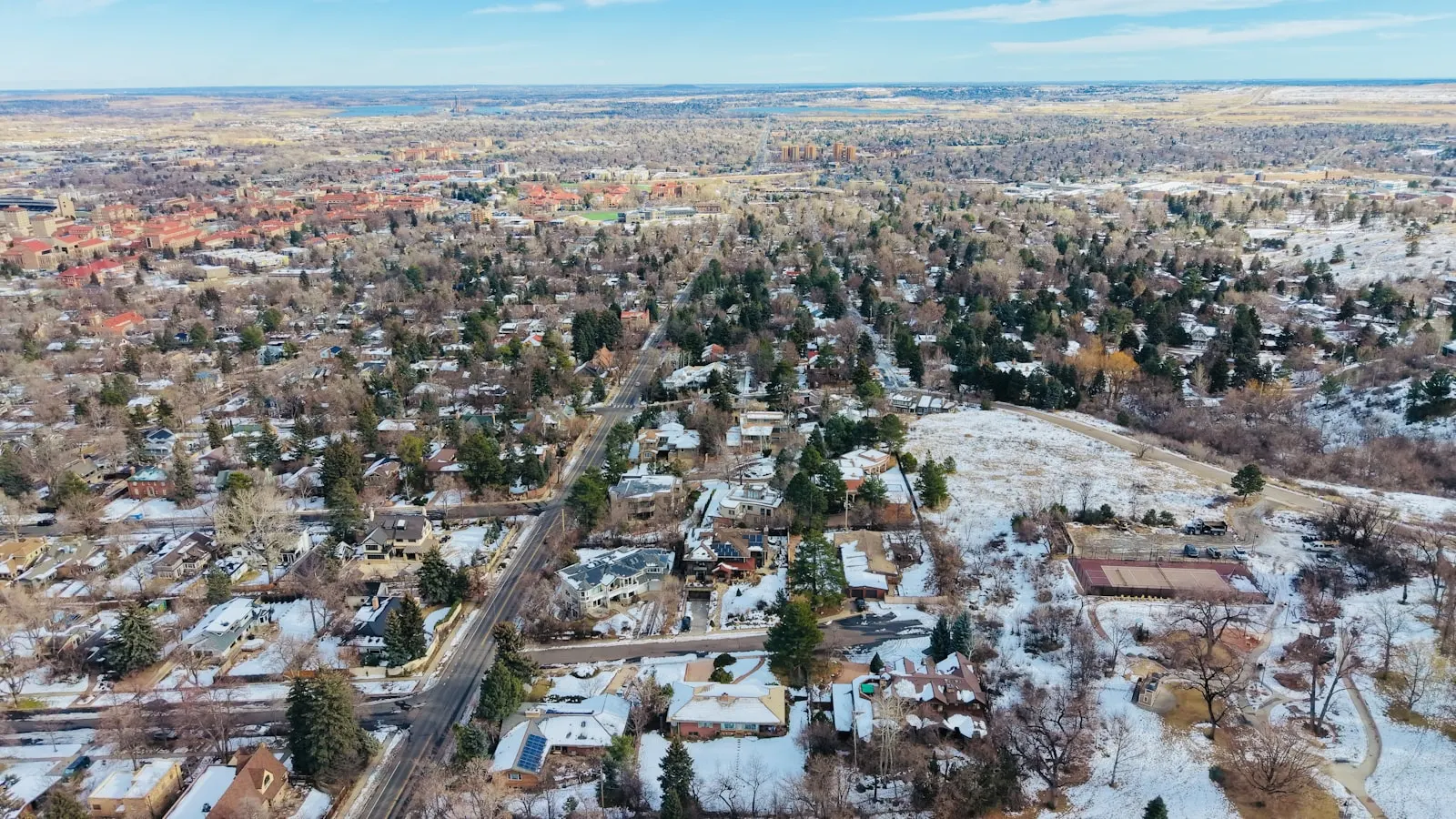
Freeze help for the cold-air blocks above Clear Creek
Frozen Pipe Repair Wheat Ridge CO
Pipe Thawing, Burst Repair & Freeze Prevention
Cold air drains off the foothills and pools along Clear Creek like water finding low ground, and it reaches garden hose bibs and brick-wall pipes first. Here's how freezes actually happen on this bench, how to thaw without starting a fire, and the fall routine that prevents the whole ordeal.
- Valley cold-pocket awareness
- Safe thawing methods
- Hose bib burst prevention
- Brick-wall pipe strategies
The hose you love is the pipe you lose
Gardeners cause half the frozen pipe repair in Wheat Ridge, and I say that with full sympathy, because the garden is worth it. The first freeze historically lands around October 4, while the tomatoes are still ripening and the dahlias haven't been lifted, so the hoses stay connected for one more week of watering. Then a clear, calm night drops the low blocks below freezing, the water trapped in the hose backs into the sill cock, and the pipe splits an inch inside the wall where nobody can see it.
The cruel part is the delay. A split hose bib pipe often doesn't leak until the next thaw, or until spring when you turn the spigot on for the first watering and quietly flood the crawlspace for a month. One connected hose, one October night, and the bill arrives in April. It's the single most preventable plumbing failure in this town, and on these garden-proud blocks it's also the most common. The fix costs nothing but a calendar reminder and a little willpower while the dahlias plead their case.
Where this bench freezes first
Cold behaves like irrigation water: it flows downhill and pools in the low spots. On clear, windless nights, dense cold air slides off the foothills and settles into the Clear Creek valley, which is why blocks near Anderson Park and the creek trail can run several degrees colder than the forecast that was written for the airport. The old carnation growers planned their glass houses around this drainage. Modern forecasting still doesn't quite capture it, but your thermometer will.
The houses add their own exposures. These brick ranches were built with little to no insulation in the exterior walls, brick, an air gap, plaster, done, so any supply line running in an outside wall lives closer to the weather than it would in a modern frame house. Kitchen lines on north walls are the classic victims, along with pipes crossing vented crawlspaces where winter air moves freely underneath the floor. A pipe that survived fifty winters isn't proof of safety; it's a streak, and streaks end on the coldest calm night.
Frozen pipe repair in Wheat Ridge, thawed without wreckage
If a faucet goes dead during a cold snap, move quickly but gently. Open the affected tap so melting ice has somewhere to push, then warm the pipe from the open faucet back toward the frozen section: a hair dryer, a heating pad, towels soaked in warm water, patient passes rather than blasting one spot. Warm the room too, and open the cabinet doors under sinks on outside walls. What you never do is put an open flame on a pipe. Torches split pipes with steam pressure, and every winter they take a house or two somewhere along the Front Range. Slow is the whole technique.
Know when it's past DIY. If you can't find the frozen section, if it's buried in a wall or ceiling, or if the line has already split and leaks when things warm up, that's the moment for a pro with thawing equipment and a repair kit on the truck. Broad hedged numbers: a professional thaw call along the Front Range commonly lands between $200 and $600, and repairing a burst section commonly runs a few hundred to well over a thousand depending on access, with the drywall and flooring afterward often outrunning the plumbing itself. If water is actively spraying, treat it as the emergency it is: main valve off first, then the phone.
And read the event like a soil test. A pipe that froze once has told you something permanent about that wall, that vent, that corner of the crawlspace. Thawing it without fixing the exposure just schedules a rerun for the next arctic front.
Thaw slow, from the open faucet back, with gentle heat and never a flame. Call for help the moment the freeze is hidden in a wall or the pipe has already split. Then treat the freeze as a diagnosis: that pipe told you exactly where your house is exposed, and insulating that one spot costs a fraction of meeting it again in January.
Dealing with this in Wheat Ridge?
Start a quoteAn October checklist for a garden town
The fall routine here is short and non-negotiable, and the calendar is firm: hoses off by the first days of October, ahead of that historical October 4 freeze, even though the garden will beg for another week. Drain the hoses, shut interior stop valves feeding the bibs if your house has them, and let the outside spigots weep dry. Better still, have frost-free sillcocks installed; they move the actual shutoff point back inside the warm wall and forgive almost everything except a still-connected hose. Sprinkler systems want blowing out in the same window, and spring restraint matters too, since last freezes here have held on until about May 4.
Inside, spend one afternoon before Halloween on the cold spots. Foam sleeves on every pipe crossing the crawlspace, and close or block the crawlspace vents for winter. Caulk the gaps where plumbing penetrates the rim joist. During real arctic snaps, open the cabinets under outside-wall sinks and let the far bathroom faucet run a pencil-lead trickle overnight; moving water resists freezing, and the pennies of water are the cheapest insurance sold. Neighbors on the same cold-air path deal with identical physics, so the Lakewood freeze guide is worth a look if you're comparing notes, and the Wheat Ridge overview ties freeze timing into the rest of the house's old-pipe realities.
Keep exploring
More for Wheat Ridge and nearby
All Wheat Ridge plumbing guides Frozen Pipe Repair across the Front Range Arvada Lakewood
Questions we actually get
Frozen Pipe Repair in Wheat Ridge: quick answers
When exactly should hoses come off in Wheat Ridge?
By the first days of October. The historical first freeze lands around October 4, and the cold-air drainage into the Clear Creek valley means low-lying yards can frost even earlier than forecasts suggest. The garden will still want water, so fill cans from an inside tap for the stragglers. A connected hose traps water against the sill cock, and that's the burst that shows up months later.
Do frost-free hose bibs actually work on old brick houses?
Yes, and these ranches are exactly where they earn their cost. A frost-free sillcock puts the shutoff seat a foot or more back inside the heated wall, so the exposed stub drains dry after each use. Installation in brick takes more care than in siding, which nudges the price up, but it turns the most common freeze failure on these blocks into a non-event. One caveat: leave a hose connected and even a frost-free bib can freeze.
My kitchen faucet slows to a dribble on the coldest nights. Frozen?
Partially, most likely. A dribble that returns to normal as the day warms means ice is forming inside that supply line, almost certainly where it runs through the uninsulated outside wall, and it's a warning shot rather than a quirk. Open the cabinet doors and add gentle heat on cold nights as first aid, but get that run insulated or rerouted. Full blockage and a split are the next chapter.
Frozen line on the bench right now?
Tell us which faucet died and when, and we'll route you to local pros with thawing gear.
Get My Free Quote