
Plumbing guidance for Firestone, Colorado
Plumbers Firestone CO
Emergency Plumbing, Drain Cleaning & Water Heater Repair in Firestone
Firestone sits at 4,970 feet on open prairie, where wind runs unbroken down from Wyoming and Central Weld water arrives hard enough to chalk a showerhead in one season. Most of these houses are under 25 years old. Their plumbing is already asking for attention.
- Hard water from Central Weld
- Wind with nothing to stop it
- 2000s builds, first-cycle repairs
- October frost, May thaw
Firestone plumbing is young. That's exactly the problem.
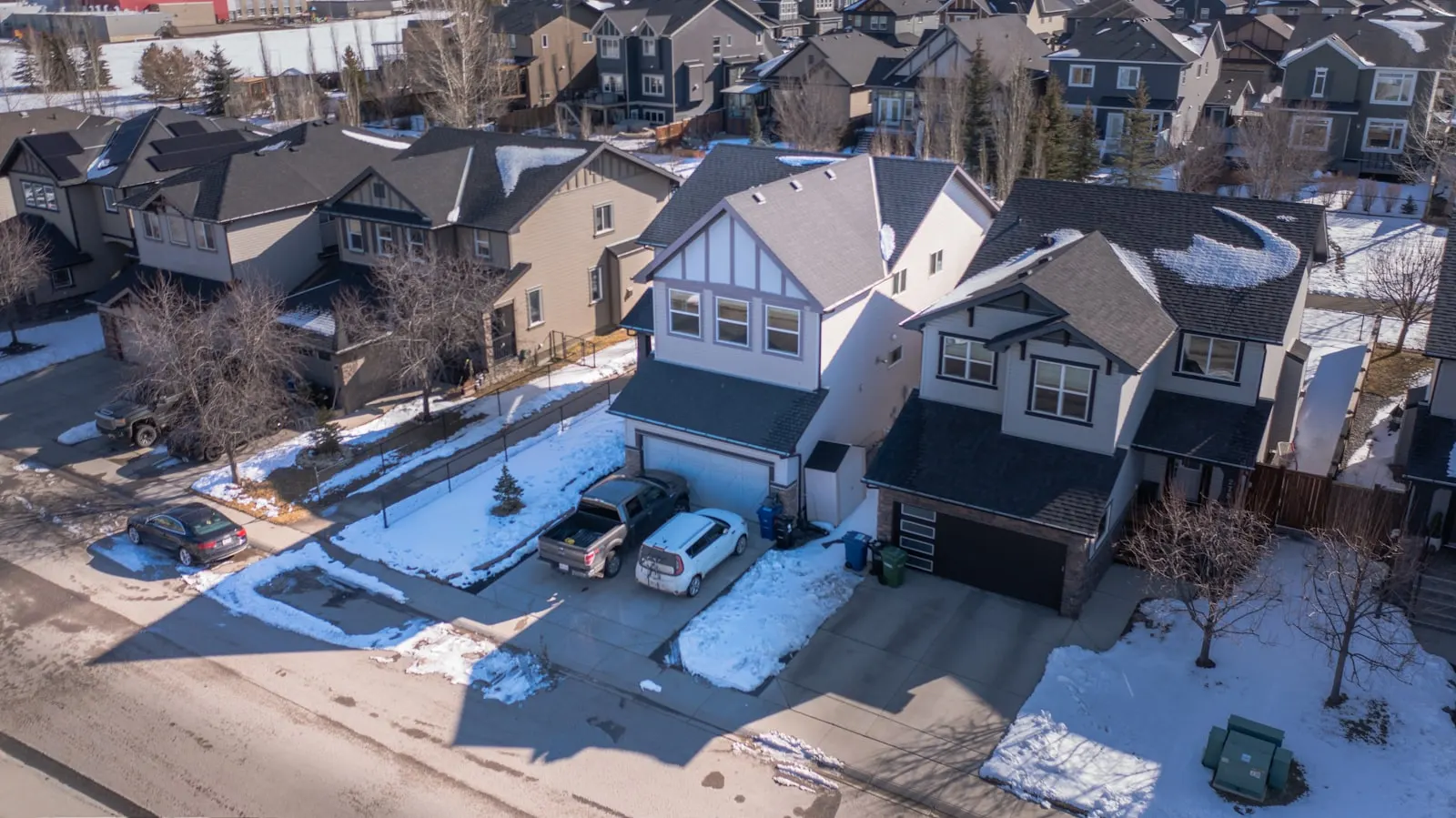
Most of Firestone went up after 2000. Saddleback, Barefoot Lakes, the streets filling in along the I-25 frontage: those houses ran PEX from the first day, with plastic manifolds, builder-grade angle stops, and water heaters bought by the pallet. On paper that's modern plumbing. In practice, Firestone plumbing reaches its first real failure window as one big cohort, all at once.
So the quote requests we read out of Carbon Valley don't look like the ones out of a 1920s bungalow belt. Nobody here is chasing galvanized pipe or lead bends. They're chasing scale. A disposal that was cheap in 2008 and finally gave up. A shower cartridge seized with mineral. A tank nobody ever flushed, because the house still feels new.
Young plumbing fails differently. It fails on schedule, in cohorts, and almost always at the cheapest component in the chain. Which makes it predictable, and predictable problems are the ones you can get in front of. Ask the neighbor who closed the same month what broke on them, and you have a decent forecast for your own water heater.
| Build era | Typical system | First thing to go |
|---|---|---|
| Older Firestone core | Copper stubs, some CPVC, older tank heaters | Supply stops and the tank itself |
| 2000-2010, Saddleback era | PEX home runs, plastic manifolds, 40 to 50 gallon tanks | Disposals, cartridges, first heater swap |
| 2010-2018 infill | PEX, poly stops, higher-efficiency tanks | Scale in fixtures, pressure regulators |
| 2019-2025, Barefoot Lakes | PEX, some tankless, factory shutoff valves | Softener sizing and warranty gray zones |
Central Weld water fights every fixture you own
Central Weld County Water District delivers water that's hard by any honest measure, and you can see it working. White crust on the aerator. Spots on dark dishes that no rinse aid touches. A shower door that goes cloudy two weeks after you scrubbed it clean. That's calcium and magnesium dropping out of solution and staying put.
What you can't see is the same thing happening inside a water heater tank, across the face of a heating element, in the seat of a toilet fill valve, and along the inside wall of a drain line where grease suddenly has something rough to grab. Softeners are common in Firestone for a reason. A house here running unsoftened water is putting every appliance it owns through a slow abrasion cycle, every day, on the same bill.
If your softener came with the house and you've never touched anything but the salt lid, get it looked at. Undersized units regenerate constantly, burn through salt, and still let hardness slip past when three people shower back to back. Sizing it to the household, not to the builder's spec sheet, is the cheapest upgrade in the mechanical room. Filtration and softening across the Front Range is worth reading before you buy anything.
- Aerators that crust over within a few months
- Toilet fill valves whining, ghosting, or running
- A water heater that pops and rumbles on recovery
- Shower cartridges that turn stiff, then seize
- Etched glassware and film on the dishwasher door
Neighborhood coverage
Where we get called in Firestone
Plumbing problems cluster by neighborhood, because housing eras do. These are the Firestone areas and nearby communities our guidance is written around.
Outside these? The whole city is covered. Neighborhood names simply help us guess your pipes before you finish typing.
Climate, elevation, timing
Winter reaches the ground here before it reaches the air
Firestone's first freeze historically lands around October 1, with first snow following near October 16. Spring doesn't fully let go until roughly May 6. That's about seven months where a hard night is on the table, and at 4,970 feet on open plains, the calendar isn't even the main event.
The wind is. There's nothing between Firestone and the Wyoming line to break it. The thermometer can read 22 degrees and a north wind will still pull heat off an exposed hose bib, a rim joist, or a garage wall far faster than that same 22 degrees would in a sheltered foothills neighborhood ringed by sixty-year-old cottonwoods. Wind doesn't drive pipe below air temperature. It just gets pipe there hours sooner, and speed is what splits copper.
Firestone's trees aren't old enough to help. Out in Barefoot Lakes and the newer Saddleback streets, the landscaping is young enough that a two-story wall faces open prairie with no windbreak at all. The northwest corner of those houses takes a beating from January through February, and it's usually where the first burst shows up.
Snowfall historically runs somewhere between 35 and 50 inches a year, but it rarely stays where it falls. It travels. Drifts stack against one side of a foundation and scour the other side bare, and the bare side is exactly where a hose bib, a crawlspace vent, or a poorly sealed sill plate takes the wind head on. Our frozen pipe guide for Firestone maps the spots that go first.
Firestone at a glance
- Elevation
- 4,970 ft
- County
- Weld
- Population
- ~17,000
- First freeze
- Early Octoberhistorical average
- First snow
- Mid Octoberhistorical average
- Snow / year
- 35-50″approximate range
Firestone's first freeze historically lands in early October, about … from today. First snow tends to follow near mid October. Spring's last freeze holds on until roughly early May.
NWS forecast near Firestone: Loading…
Empty weekdays turn small leaks into big invoices
A lot of Firestone works somewhere else. The I-25 corridor runs commuters south toward Broomfield and Denver and north to Longmont and Greeley, which means plenty of these houses sit empty from 6:30 in the morning until dark, five days a week.
A supply line that lets go at 8 a.m. in an occupied house is a bad hour. The same failure in an empty house is a bad day, and the water is still running when you pull into the driveway. That gap is the single largest cost multiplier in this town, and it has nothing to do with the quality of the pipe.
Which is why we lean on two boring habits harder in Firestone than almost anywhere else on the corridor. Know where your main shutoff is and actually turn it once a year, before you need it, so the stem isn't frozen with mineral when it matters. And if your family is gone all day through the winter, sensors at the water heater, the laundry box, and under the kitchen sink cost less than the drywall repair they prevent.
- If nobody's home ten hours a day in winterput leak sensors at the heater, the laundry box, and the kitchen sink
- If the house is under ten years old and the softener is originalhave its real capacity checked before you replace anything downstream
- If the main shutoff hasn't moved since closing dayexercise it this weekend, not during a burst
Where your money actually goes furthest here
Cost along the Front Range tracks access more than anything else. A tank heater sitting in an open Firestone garage with clearance on three sides is a different job than the same tank wedged into a mechanical closet behind a furnace. A sewer repair under a four-year-old lawn is a different job than one under a stamped concrete patio and a mature ash tree.
Broad ranges are worth carrying in your head, mostly so you can smell a bad number. Routine drain clearing on an accessible line commonly lands in the low hundreds. A straightforward tank water heater replacement usually falls somewhere in the low-to-mid four figures. Sewer work spreads wider than anything else, from a scope and a spot repair to a full lateral replacement, because depth and surface restoration drive the total. Round numbers only, and access decides which end you land on.
One advantage Firestone genuinely has: young landscaping. Digging up a lateral here rarely means saving a sixty-year-old shade tree or matching thirty-year-old brickwork, so restoration costs less than it does in older Longmont or Brighton blocks.
In a town where half the houses came off the same handful of plans, the useful question isn't only what a job costs. It's whether the neighbors two streets over already paid for the same diagnosis. Ask what the cohort is doing. It's the best free information in Carbon Valley.
Something dripping in Firestone right now?
Get a fast quoteWhat we cover here
Firestone service guides
Drain Cleaning
Mineral-roughened pipe gives grease something to grab, so 2006 kitchen lines in Saddleback clog like they were installed in 1946.
→Water Heater Repair
Central Weld hardness can strip an anode rod in half its rated life, and whole Firestone streets lose their tanks in the same two winters.
→Sewer Line Repair
Young PVC laid in prairie clay settles into bellies long before roots ever show up, so a scope beats a guess every time.
→Emergency Plumbing
Bedroom-community houses sit empty all day, which turns a 20-minute failure into an eight-hour one. Shutoff knowledge is the whole game.
→Frozen Pipe Repair
Wind crosses Firestone unbroken from Wyoming and the trees are too young to slow it. Northwest walls and exposed bibs go first.
→Nearby coverage: Frederick Longmont Brighton All 30 cities
Questions we actually get
Firestone plumbing questions
Does a Firestone house really need a water softener?
Need is a strong word, but the math usually works out. Central Weld County water is hard enough that scale shortens water heater life, stiffens shower cartridges, and gives drain lines a rough interior surface for grease to cling to. Price a properly sized softener against a decade of early tank replacements and repeat fixture work, and most Firestone homeowners land on the softener.
My house is only nine years old. Why does it need plumbing work already?
Because age of house and age of parts aren't the same thing. Builder-grade disposals, angle stops, fill valves, and shower cartridges are chosen on price, and hard water accelerates every one of them. Nine years of Central Weld water is plenty to seize a cartridge or wear out a grind ring. The pipe is fine. The cheap components attached to it are not.
When should I start winterizing in Firestone?
Work backward from October 1, which is roughly when the first freeze historically arrives here. Hoses off and drained by then, sprinkler system blown out before mid-October when first snow typically shows, and foam covers on the exposed bibs. Spring's last freeze holds until about May 6, so leave the freeze protection in place longer than instinct says.
Who is responsible for the sewer line running off my property?
Generally the homeowner owns the lateral from the house out to the connection at the main, and the district or town owns the main itself. Firestone has metro districts and newer infrastructure layered along the growth corridor, so the exact handoff point varies by neighborhood. Confirm it with your district before anyone quotes a dig, not after.
Firestone, tell us what it's doing
Describe the symptom, the age of the house, and whether you have a softener, and a real person will map out what's likely going on.
Get My Free Quote