
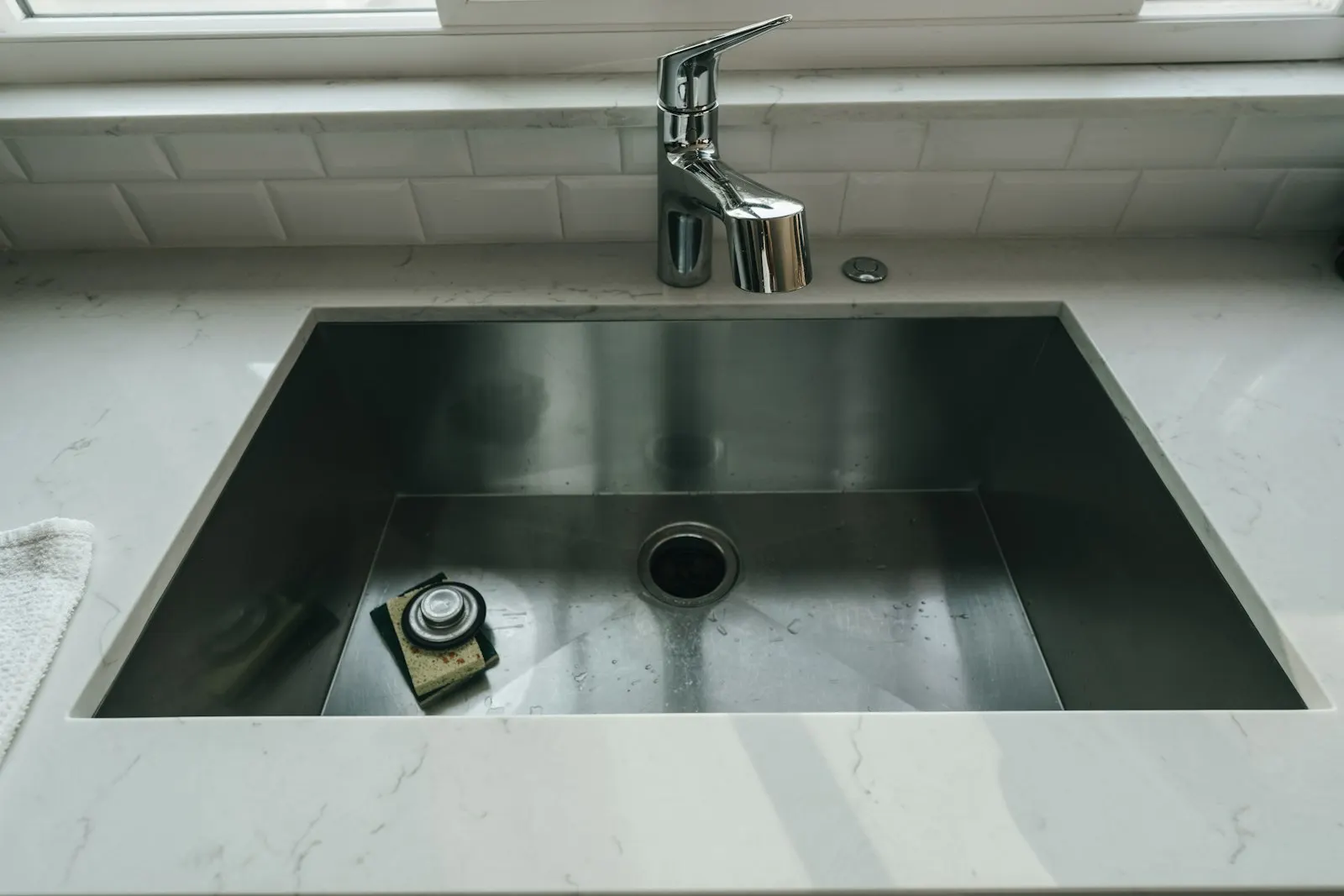
Clogs, scale, and Carbon Valley kitchen lines
Drain Cleaning Firestone CO
Drain Cleaning, Rooter Service & Clog Removal
A 2006 kitchen line in Saddleback can back up like a 1946 one. Hard Central Weld water leaves a rough mineral skin inside the pipe, grease grabs it, and a drain you thought of as new starts running like it's fifty. Here's what actually clears it.
- Scale narrowing lines under 20 years
- Builder disposals at end of life
- High water table near the lakes
- Cable, jet, or camera first
Why drain cleaning in Firestone ignores the age rule
Everywhere else along the corridor, the drain conversation opens with how old the house is. Drain cleaning in Firestone breaks that habit. These are 2000s and 2010s houses with PVC waste lines and PEX supply, and they still plug up on a schedule that would make sense in a place three times older.
Hard water is the reason. Central Weld County water carries enough calcium and magnesium that every warm, wet interior surface picks up a thin mineral deposit. On the inside of a horizontal kitchen branch, that deposit isn't smooth. It's a grip. Cooking fat that would have slid down clean PVC catches instead, cools, and starts a shelf. Two years of dishwater later, a two-inch line is doing the work of a one-inch line.
There's a second wrinkle in tract construction. When a builder runs the same floor plan down a whole loop, the kitchen branch takes the same route, at the same fall, with the same number of turns, in forty houses at once. Whatever was marginal about that layout is marginal at every address on the street. Which is why drain trouble in Firestone tends to arrive in clusters rather than one unlucky house at a time.
Then the disposal quits, and the same house has two problems in the same week.
The kitchen branch, the disposal, the laundry standpipe
Ask around a Firestone cul-de-sac and you'll hear three versions of the same story. The kitchen sink that gurgles at the dishwasher. The disposal that hums, trips, and needs the reset button pressed. The laundry standpipe that overflows on heavy loads, almost always in a basement laundry that got finished sometime after closing.
Builder-grade disposals are a real pattern out here. A half-horse unit that came with the house in 2006 or 2010 has ground through fifteen-plus years of kitchen abuse, and its grind ring has worn round instead of sharp. It stops shredding and starts pushing paste into a line that's already narrowed by mineral. Replacing a dying disposal is frequently half of the actual drain fix, not an upsell.
Down near Barefoot Lakes and the low ground along the drainages, add a second layer. The water table sits close. Basement floor drains and sump systems there feel more groundwater pressure than the same fixtures a mile uphill, so a sluggish or weeping floor drain is worth handling before spring runoff rather than during it.
- Gurgling at the dishwasher air gap when the sink drains
- Standing water in one basin of a double sink
- A disposal that hums, trips, and needs resetting
- Laundry standpipe backing up only on full loads
- Floor drain that smells or seeps after a wet week
| Symptom | Usual cause here | What clears it |
|---|---|---|
| Slow kitchen sink, both basins | Grease bonded to scale in the branch | Cable first, jetting if it returns |
| Disposal hums, then trips | Worn grind ring on a builder unit | Replacement, not another reset |
| Tub slow, toilet fine | Hair and soap curd on mineral | Small cable through the overflow |
| Laundry backs up on big loads | Blocked standpipe or a lazy vent | Cable the standpipe, check the vent |
| Basement floor drain seeping | High water table plus a dry trap | Clear it, then keep the trap primed |
What the visit involves, and what it should run
A drain call worth paying for starts with questions, not equipment. Which fixtures run slow, and which are fine? Does it back up when the washer drains? Has anybody already been down there with a store-bought auger? Those answers narrow the target before anyone opens a cleanout.
Cable work is the default tool. A drum machine with the right head cuts through grease and soap curd and gets the line moving that afternoon. Jetting is a different animal: high-pressure water that scours the pipe wall back toward its real diameter. In Firestone, where scale and grease build in layers, jetting is what resets a repeat-offender kitchen line instead of just punching a hole through the middle of the plug.
On money, broad ranges. Routine cabling of an accessible line along the Front Range commonly lands in the low hundreds. Hydro jetting typically runs a few times that. A camera inspection is often discounted or bundled when it follows a clearing. Access moves the number more than anything: a cleanout at the garage wall is cheap to work from, while a kitchen line with no cleanout, reached from a roof vent on a windy Firestone afternoon, is not.
And if the same line closes twice inside a year, stop buying clearings. That's slope, a belly, or a damaged section, and it needs a camera to answer. Our Firestone sewer line guide covers what a scope actually shows you.
Two clearings on the same line in twelve months is a diagnosis, not bad luck. Pay for a camera before you pay for a third cable. In a town with pipe this young, a repeat kitchen backup usually means scale and grease have built a genuine restriction, or the original slope was marginal the day the trench got backfilled.
Dealing with this in Firestone?
Start a quoteKeeping it open after the machine leaves
Nothing you pour down a Firestone drain will out-work hard water. Enzyme products do a little on organic film and nothing at all on mineral. Caustic openers are worse than useless: they cook grease into a harder plug and then sit in the trap waiting for whoever opens it next.
Skip the wand-style hardware store augers too. They're short, they tend to coil back on themselves in the trap, and on a line already narrowed by mineral they compact the plug instead of pulling it out. Every plumber has stories about pulling one back out of a kitchen line, still attached to its plastic handle.
What works is dull. Hot water running after greasy cooking, long enough to push fat past the horizontal run and into the stack. Fat in the trash, not the disposal. Cold water while grinding so anything oily stays solid enough to shred. A basket strainer in the kitchen basin. Cleaning aerators when they crust over, because if the supply side is depositing mineral, the drain side is building the same rough surface.
Once a year, run a bucket of water through the laundry standpipe and every floor drain so traps stay wet and vents stay clear. Firestone houses sit empty most of the day and traps dry out faster than people expect, which is how sewer gas finds a finished basement. If your whole house is fighting scale, price softening against a decade of clearings and early appliance swaps. Then compare notes with Frederick next door, where the water district and the housing stock tell the same story, and check the rest of your Firestone plumbing guides while you're at it.
Keep exploring
More for Firestone and nearby
All Firestone plumbing guides Drain Cleaning across the Front Range Frederick Longmont
Questions we actually get
Drain Cleaning in Firestone: quick answers
My house is fifteen years old. Should I need drain cleaning already?
Yes, and it's normal here. Hard Central Weld water roughens the inside of waste lines, which gives kitchen grease a surface to bond to. Fifteen years of that plus a worn builder disposal is enough to narrow a branch line badly. Age of house tells you very little in Firestone. Water hardness and disposal condition tell you a lot.
Is hydro jetting worth the extra cost?
For a first-time clog, usually not. Cable it and move on. For a kitchen line that has backed up twice in a year, jetting is the better spend, because it scrubs the layered grease and scale off the pipe wall instead of boring a channel through the middle of it. Ask for a camera before and after so you can see what you bought.
Why does my basement floor drain smell in the summer?
The trap dried out. Firestone houses often sit empty ten hours a day and basement drains rarely see water, so the seal evaporates and sewer gas comes back up. Pour a gallon of water down it, add a splash of mineral oil to slow evaporation, and repeat a couple times a year. If the smell persists after that, it's worth a look.
Get the Firestone drain cleared right
Tell us which fixtures are slow and what you've already tried, and we'll route it to someone who works these lines.
Get My Free Quote