
Plumbing guidance for Louisville, Colorado
Plumbers Louisville CO
Emergency Plumbing, Drain Cleaning & Water Heater Repair in Louisville
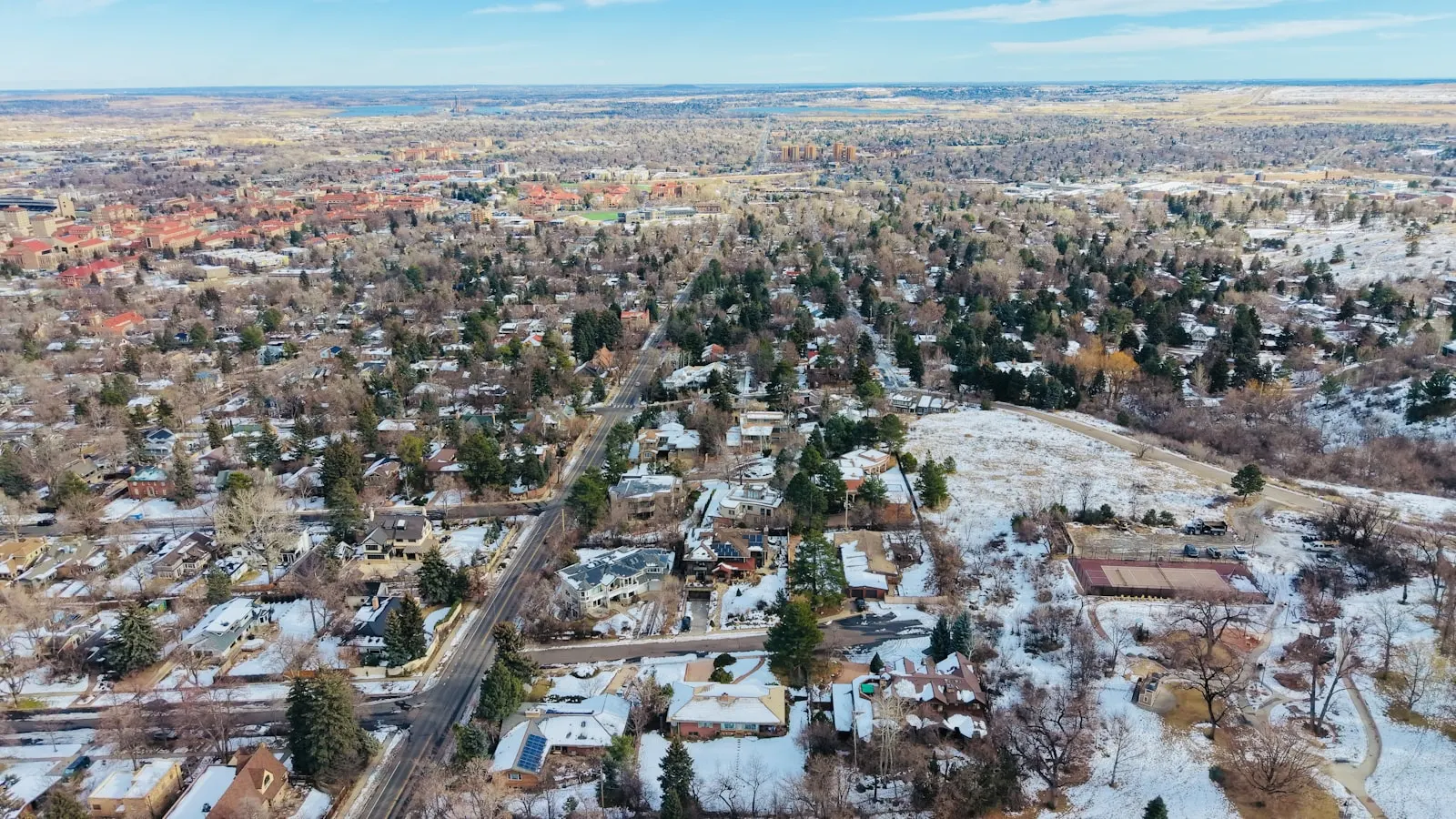
Louisville sits at 5,335 feet on the last bench before the foothills, where downslope wind funnels through the Marshall gap and finds every gap in a wall. Century-old cottages and houses finished last year share the same streets. We write plumbing guidance for both, then connect you with people who work here.
- Cottage-era and rebuild-era homes
- Freeze timing for 5,335 feet
- Plain cost ranges, no games
- Real people read every request
Two eras of Louisville plumbing on the same block
Walk two blocks off Main Street and you can pass a cottage built when coal money paid for it, a ranch from 1978, and a house that got its keys handed over last spring. Louisville plumbing has to answer to all three at once. That's unusual. Most Front Range towns hand you one dominant era plus a few outliers, but here the mix sits shoulder to shoulder on the same street, sharing the same water main.
About 21,000 people live here, in Boulder County, at 5,335 feet on the last bench before the ground starts climbing toward the Flatirons. Small town. Not a simple one to plumb. A plumber who spends Tuesday morning chasing a galvanized hot line under a 1908 floor might spend the afternoon in a mechanical room where every PEX run is labeled and the manifold is still shiny.
Then there's the piece that shaped a lot of the recent building here. The 2021 Marshall Fire took entire blocks, and the homes that replaced them went up from 2022 on, with all-new supply lines, all-new drains, and service lines younger than most people's cars. Those systems are good ones. They're also unfamiliar to the people living with them, which is its own kind of learning curve. So we write for both halves of town: the house that's had a century to develop habits, and the house that hasn't developed any yet.
What's in your walls depends on your decade
Age is the fastest diagnostic tool you own. Not perfect, but fast. The cottages near Main Street were plumbed when galvanized steel was the standard, and even where supply lines got swapped to copper during some remodel, there's often a stretch of original pipe hiding behind a wall nobody opened. Galvanized doesn't burst so much as it closes up. You notice it as pressure that got worse so gradually you can't name the month it changed.
The subdivisions built from the 70s through the 90s, the ones spreading toward Coal Creek Golf Course and Harper Lake, run mostly copper supply with plastic or cast iron drains. Sound systems. Their weak points are the parts nobody thinks about: original angle stops that seize the first time you turn them, water heaters quietly passing year twelve, and hose bibs on west walls that take the full brunt of a downslope night.
Rebuild-era homes are a different conversation entirely. The pipe is new, the workmanship is current, and the failures that turn up are small and mechanical: a fitting that weeps, a trap the tile crew bumped, an irrigation zone that never got blown out correctly. Worth catching early. Not worth losing sleep over.
| Home era | What's usually in the walls | What tends to go first |
|---|---|---|
| Pre-1940 near Main Street | Galvanized branches, cast iron drains, clay lateral | Narrowing hot lines, root-fed drain backups |
| 1970s and 80s subdivisions | Copper supply, cast iron or plastic drains | Seized shutoffs, pinhole leaks, tired water heaters |
| 1990s builds toward Coal Creek | Copper and early PEX, PVC drains | Hose bib freezes, original heaters at end of life |
| 2022 and newer rebuilds | PEX manifolds, PVC drains, new service line | Punch-list drips, unfamiliar shutoffs, first-winter surprises |
Neighborhood coverage
Where we get called in Louisville
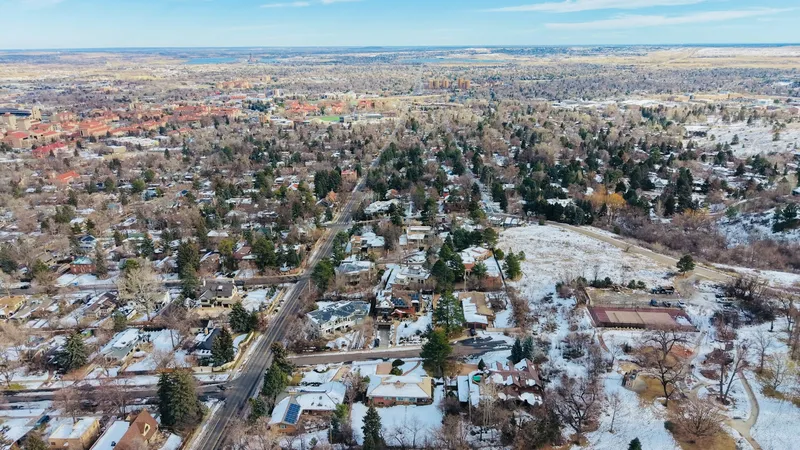
Plumbing problems cluster by neighborhood, because housing eras do. These are the Louisville areas and nearby communities our guidance is written around.
Outside these? The whole city is covered. Neighborhood names simply help us guess your pipes before you finish typing.
Climate, elevation, timing
What 5,335 feet and the Marshall gap do to pipes
Start with the calendar, because Louisville's runs longer than newcomers expect. The first freeze historically lands around October 3. First snow tends to follow near October 13, and spring's last freeze hangs on until roughly May 5. That's about seven months of nights when an unprotected pipe is exposed to something it doesn't like. Snowfall runs somewhere around 48 to 62 inches in a typical year, though it rarely arrives politely spread out.
Elevation matters less here than what sits to the west of you. At 5,335 feet Louisville occupies the last bench before the foothills, lined up with the gap that funnels downslope wind off the Flatirons. When those windstorms run, the number on the thermometer stops being the number that matters. A 20 degree night with still air is survivable for a pipe in an uninsulated crawlspace. A 20 degree night with sustained wind pulling heat out of a rim joist is a different event.
So freeze damage in this town clusters on nights that don't look severe on paper. Wind finds the gaps. A crawlspace vent nobody closed in October, a garage door left cracked for the dog, a bay window cantilevered over open air with a supply line running through the floor of it. West and northwest walls take the worst of it, every time.
The other seasonal trap is the spring swing. Louisville can run 60 degrees on a March afternoon and drop below freezing by ten that night, and that's exactly the window when people have already put winter thinking away. Hose bibs get reconnected too early. Sprinkler systems get charged before the last freeze has actually let go. If you take one date off this page, take May 5, and treat everything before it as still winter.
Louisville at a glance
- Elevation
- 5,335 ft
- County
- Boulder
- Population
- ~21,000
- First freeze
- Early Octoberhistorical average
- First snow
- Mid Octoberhistorical average
- Snow / year
- 48-62″approximate range
Louisville's first freeze historically lands in early October, about … from today. First snow tends to follow near mid October. Spring's last freeze holds on until roughly early May.
NWS forecast near Louisville: Loading…
Small signals that turn into weekend emergencies
Most plumbing failures mail you a postcard before they mail you a bill. The trick is knowing which postcards matter.
A kitchen drain that gurgles when the washing machine empties is telling you a shared line is narrowing. A toilet that rocks slightly is telling you the flange or the subfloor underneath has been wet longer than you'd like. A water heater that ticks and pops on recovery is telling you sediment has claimed the bottom of the tank. None of those are emergencies today. All of them are on a clock.
In rebuild-era houses the signals are quieter and easier to wave off, because everything is new and new things aren't supposed to fail. Trust the evidence over the install date. A faint musty smell in a finished basement, a hairline stain under a manifold, a hot water run that started sounding different last week: those are worth a look now, especially while a builder's warranty window is still open. And if water is already moving where it shouldn't, the Louisville emergency steps are written for exactly that hour.
- If a drain gurgles when the washer emptiesthen the shared branch is narrowing, so cable it before it closes
- If your water heater is past year twelvethen price the replacement on a weekday, not at 6 a.m. on a Sunday
- If a wall feels cold and damp near a hose bibthen look for a slow split from a past freeze before spring pressure finds it
Tell us the symptom and we'll sort the category
You don't have to arrive with a diagnosis. Most people describe what they can see: water on the floor, no hot water, a smell near the floor drain, a tub that empties like it's thinking it over. That's plenty to start with. We read every quote request that comes through, and we'll help sort whether the trouble is a drain problem, a supply problem, or something out under the yard that needs a camera before anybody quotes a price.
Be honest about the age of the house when you write in, because it changes the answer completely. A slow tub in a 1912 cottage and a slow tub in a 2023 rebuild point at nearly opposite causes. Same with sewer questions: some of Louisville's laterals have been in the ground since before the war, and some went in beside the newest service lines in town.
What we won't do is manufacture urgency. Denver Plumbing is a guidance site and a quote service, not a truck idling outside your house, and a fair amount of what you'll read here amounts to "that can wait until Tuesday." When it genuinely can't wait, we'll say so plainly and help you move fast.
Something dripping in Louisville right now?
Get a fast quoteWhat we cover here
Louisville service guides
Drain Cleaning
Cottage kitchen lines near Main Street clog on a century-old schedule. Rebuild-era drains clog for brand-new reasons. Different tools, different pricing, same ruined Saturday.
→Water Heater Repair
Tankless units from the rebuild years are reaching their first real service intervals, and historic-home closets still refuse to fit a modern tank. Repair math for both.
→Sewer Line Repair
Pre-war clay laterals and 2022 PVC sometimes sit under the same street. What a camera scope tells you, and when lining beats digging up the yard.
→Emergency Plumbing
Know your shutoff before a wind night makes you find it in the dark. Valve locations differ sharply between Main Street cottages and rebuilt homes.
→Frozen Pipe Repair
Wind through the Marshall gap strips heat faster than the thermometer suggests. Freeze risk here runs early October into early May, and crawlspaces go first.
→Nearby coverage: Lafayette Superior Broomfield All 30 cities
Questions we actually get
Louisville plumbing questions
When should I winterize outdoor plumbing in Louisville?
Aim for the last week of September. The first freeze here historically lands around October 3, and wind makes an early cold night bite harder than the forecast reads. Pull the hoses, drain and cover the bibs, and close the interior stop if your bibs have one. Getting the sprinkler blowout done before mid-October is the sane habit, not the paranoid one.
Our house was rebuilt after 2021. Is there anything specific to watch?
Mostly ordinary first-owner items. Find and label the main shutoff before you need it, learn where the manifold lives, and confirm the irrigation system gets blown out by someone who knows the layout. New systems fail small: a weeping fitting, a bib that wasn't pitched right, a trap knocked loose during finish work. Write down anything you notice while the builder's warranty is still open.
Why do pipes freeze here on nights that aren't especially cold?
Wind. Louisville sits at 5,335 feet directly in line with the gap that funnels downslope air off the Flatirons, and moving air strips heat out of crawlspaces, rim joists, and exterior walls far faster than still air can. A calm 15 degree night often passes without incident. A windy 22 degree night can freeze a garage wall line before midnight.
How does the quote side of this site actually work?
You describe the problem in plain words, we read it, and we route it to plumbers who work Boulder County. There's no dispatch board here and no truck of our own. We publish the guidance so you can walk into the conversation knowing which questions to ask and roughly what the work should run, then you decide who does it.
Louisville, let's get it sorted.
Describe what your plumbing is doing and a real person will point you toward the right fix, or tell you honestly that it can wait.
Get My Free Quote