
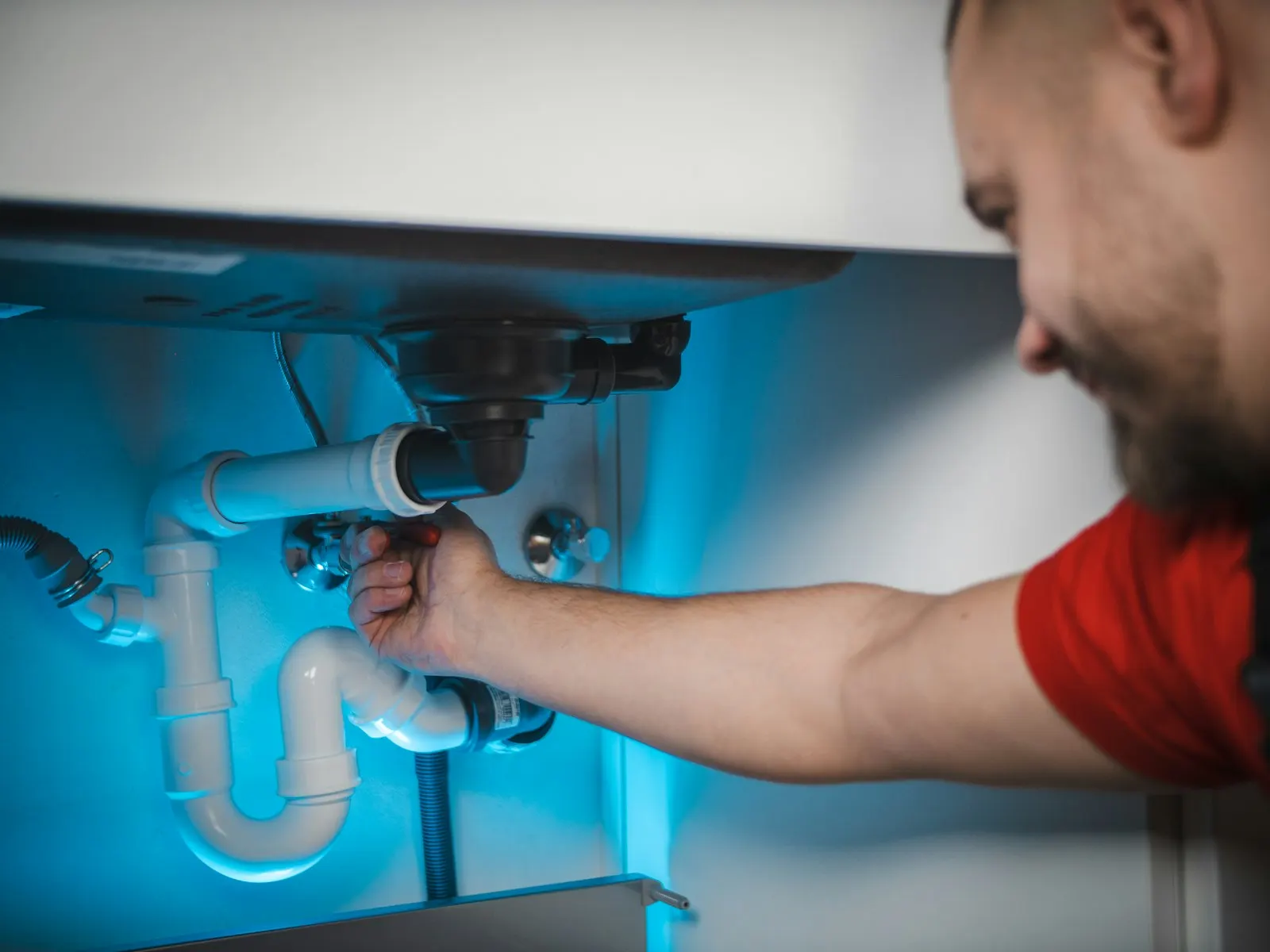
Urgent help guidance for Louisville, Colorado
Emergency Plumbing Louisville CO
Burst Pipes, Active Leaks & Water Shutoff Help
The first ten minutes of a burst pipe decide how much of the next five hours you spend with a shop vac. In Louisville the shutoff valve lives somewhere different depending on whether your house went up in 1910, 1985, or 2023.
- Find your main shutoff
- Triage steps in order
- After-hours cost expectations
- Quote requests read fast
The first ten minutes beat the next five hours
Emergency plumbing in Louisville comes down to one skill most homeowners never practice: stopping the water. Everything else can wait for a professional. That part can't, and it's the difference between drying out a section of subfloor and replacing a ceiling.
So the order goes like this. Shut the water off at the fixture stop if the leak is under a sink or behind a toilet. If that valve is seized or the leak is inside a wall, go straight to the main and close it. Then kill power to any circuit near standing water, at the panel, not by reaching for a wet switch. If the water heater is the source, close its gas valve or flip its breaker. Then start moving what you can move and get help coming.
Wind advisories get read carefully in this town, and that habit is worth pointing at your plumbing too. A hard downslope night does two things at once: it pulls heat out of exposed pipe runs faster than a still night ever could, and it sometimes takes the power with it. A house without heat for eight hours during a February windstorm is a house with a freeze risk it didn't have at dinnertime.
Your shutoff location depends on your build year
This is the part worth handling on a calm Saturday rather than in the dark with a flashlight in your teeth. Where the main valve lives in a Louisville house tracks closely with when the house was built, and the spread between vintages is wider here than in towns with one dominant era.
Test the valve once you've found it. Old gate valves seize in the open position and then snap or spin uselessly when they're finally asked to work. Turn it fully closed, run a faucet to confirm the water actually stopped, then open it back up. If it won't hold or won't move, that's a non-emergency repair worth booking now, because a shutoff that doesn't shut off is the same as not having one.
The curb stop out at the street is a different animal. It belongs to the utility, it takes a long key most homeowners don't own, and it usually sits under a small metal lid flush with the parkway strip. Think of it as the backup plan rather than the first move. Know where yours is anyway, because finding it under six inches of snow at midnight takes a lot longer than spotting it in September.
Roughly how it breaks down by era:
- Pre-1940 cottages: often a valve in the crawlspace or on a basement wall facing the street, sometimes behind boxes nobody has moved since the last owner.
- 1970s to 90s subdivisions: usually a main in the basement or utility room where the line enters, plus a curb stop at the street that takes a key most homeowners don't own.
- 2022 and newer rebuilds: typically a labeled main in the mechanical space with a PEX manifold nearby, which makes isolating a single fixture easy once you've studied it in daylight.
- Every house here: individual stops under sinks and behind toilets, which are the fastest fix for a fixture leak and the first thing you should test before you ever need them.
What counts as an emergency in Louisville, and what after-hours runs
Not every plumbing problem earns a 2 a.m. call, and paying an after-hours rate for something that could wait until Tuesday is its own kind of damage. The honest test is simple: is water actively going somewhere it will do harm, and can you stop it yourself?
Active leaks you can't isolate, sewage backing up into the house, and a burst supply line are real emergencies. So is any leak reaching electrical or a finished ceiling. A water heater weeping from the base is urgent tonight and replaceable tomorrow. A toilet running, a dripping faucet, or a single slow drain will keep until business hours, and your wallet will notice the difference.
After-hours pricing along the Front Range generally means a premium on the service call, sometimes doubling the normal trip charge, with the repair itself priced closer to normal. A holiday, or a night when a windstorm has half of Boulder County calling at once, pushes it higher still, because the supply of available trucks is the real constraint. Nobody enjoys that math. Knowing about it in advance beats discovering it on the invoice.
While you wait, do the boring things. Move what you can lift off the floor, photograph the damage before you start cleaning up, and pull standing water with a shop vac instead of towels if you own one, because the faster it goes the less subfloor gets involved. If the leak is above a ceiling and the drywall is bulging, set a bucket underneath and poke a small hole to drain the pocket deliberately. A controlled drip beats a collapsed ceiling every time.
Water moving where it shouldn't and no way to stop it: emergency. Sewage backing into a floor drain: emergency. A water heater leaking at the base: urgent tonight, replaced tomorrow. A dripping faucet: Tuesday. Getting that sorting right saves you the after-hours premium and gets the real emergencies the fast response they deserve.
Dealing with this in Louisville?
Start a quotePrep that pays off on a bad night
Keep a short list somewhere everyone in the house can find it. Where the main valve is, where the panel is, where the gas shutoff sits, and which wrench fits the meter if you have one that needs it. Add a photo of each. That page does more good than any gadget you can buy.
Cheap water alarms under the heater, behind the washer, and beside any basement fixture will wake you before the ceiling does. Braided stainless washer hoses beat rubber, which fails without warning and usually while nobody is home. And if a windstorm knocks power out in January, open the cabinet doors under sinks on exterior walls and let a faucet drip, because the house cools faster than you'd think once the furnace stops.
One more item for these mixed streets. If you live on a block where houses got rebuilt, all that new construction next door changes nothing about your own 1975 supply line, and emergencies stay stubbornly individual. What does help is neighbors: knowing who owns a shop vac, who keeps a meter key in the garage, and who's home during the day in February.
Cold-night failures deserve their own reading. The Louisville freeze guide covers thawing without splitting the pipe, and if the trouble is the heater rather than the weather, start with water heater repair here. Neighbors dealing with the same wind exposure can check Superior for their version of the same playbook.
Keep exploring
More for Louisville and nearby
All Louisville plumbing guides Emergency Plumbing across the Front Range Lafayette Superior
Questions we actually get
Emergency Plumbing in Louisville: quick answers
What do I shut off first when a pipe bursts?
The nearest valve that stops the water. Under a sink or behind a toilet, use the fixture stop. Anything inside a wall or ceiling, go straight to the main and close it, then cut power at the panel to any circuit near the water. Take thirty seconds to photograph the damage before you clean up, because insurance will ask.
Do windstorms really cause plumbing emergencies here?
Indirectly, and often. Wind strips heat out of crawlspaces, rim joists, and exterior walls much faster than still air, which drops pipe temperature well below what the forecast suggests. When wind also takes the power out, the furnace stops and the house cools fast. That combination is behind a lot of the winter calls in this part of Boulder County.
Is a leaking water heater an emergency?
It depends on where the water goes. A slow weep into a floor drain is urgent but manageable overnight. Water spreading across a finished floor or near electrical is a right-now problem. Either way, shut off the cold inlet valve on top of the tank and close the gas valve or flip the breaker before anyone arrives.
Water where it shouldn't be in Louisville?
Shut it off first, then tell us what happened and how old the house is. We'll get your request moving right away.
Get My Free Quote