
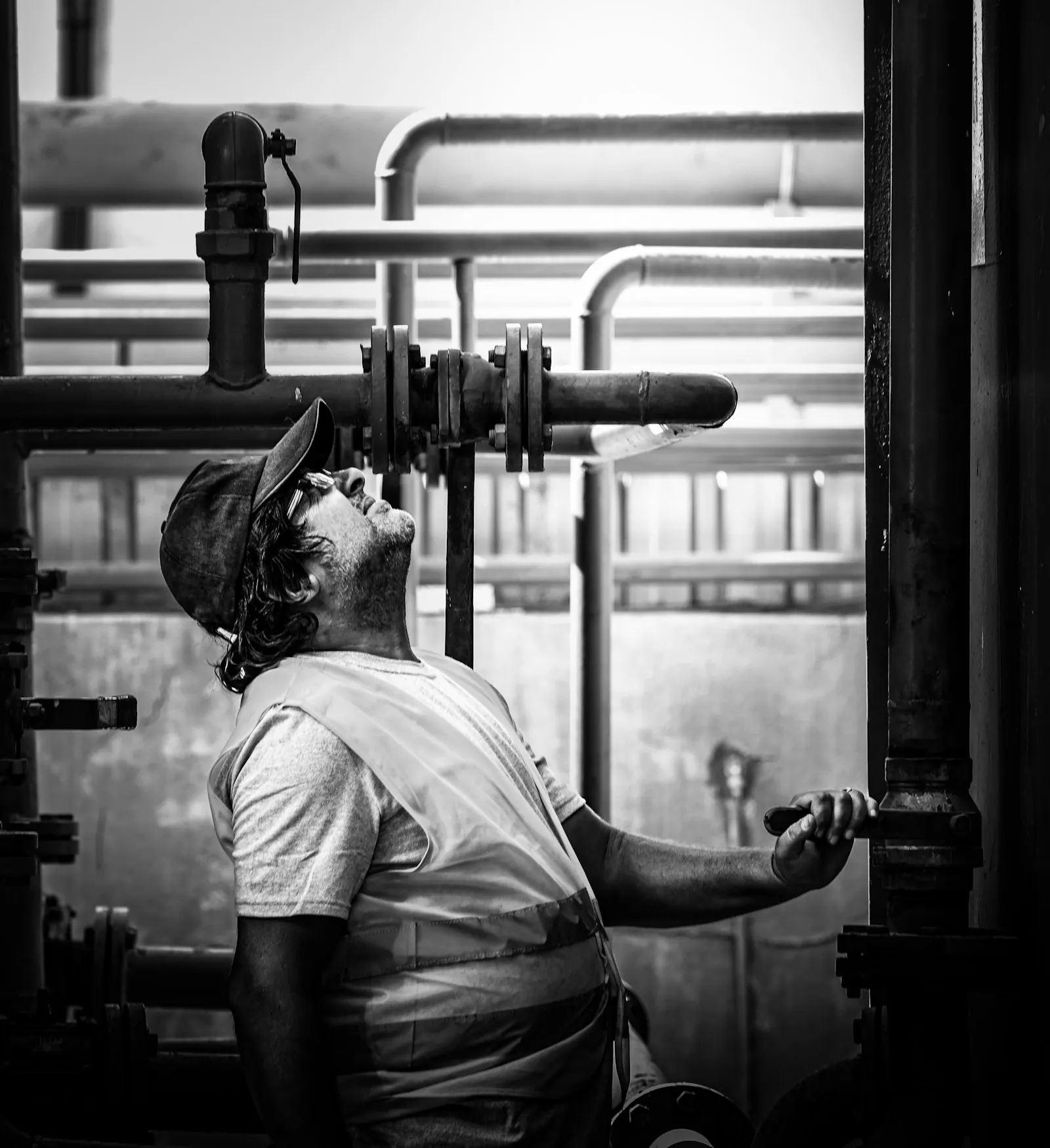
Basement backflow protection
Backwater Valve Installation Denver
Basement Backflow Protection & Valve Service
A backwater valve is a one-way door on your sewer lateral. When the city main surcharges, or your own line plugs downstream of the house, the flapper drops shut and the sewage that would have come up through the basement floor drain stays out in the pipe.
- What the valve protects
- Retrofit access options
- Annual flapper maintenance
- When a valve won't help
Backflow finds the lowest opening
Sewage doesn't pick your basement out of spite. It takes the lowest opening in the system, and in a Front Range house with a finished lower level that's the floor drain, the basement shower, or the laundry standpipe. Everything above that point keeps draining away harmlessly while the lowest fixture turns into a fountain. Which fixture goes first tells a plumber a great deal about where the blockage sits.
Two different events cause it. Your own lateral can plug, usually at a root-caught clay joint, and back up into the house. Or the public main can surcharge, filling above the level of your basement floor during heavy rain or an infiltration event, and push the other direction. A backwater valve is the only thing that addresses that second case, and it helps with the first one too.
Communities that have watched water arrive where it wasn't invited take this more seriously. Since 2013, homeowners around Boulder and along the St. Vrain in Longmont have asked about backflow protection with a specificity the rest of the corridor sometimes lacks. A finished basement full of drywall, carpet, and mechanical equipment is a five-figure loss. The valve is not.
How the valve works and where it has to go
The common residential design is a normally open flapper hinged inside a body with a clear or bolted lid. Waste flows out over it with almost no resistance. When flow reverses, the flapper swings up against a seat and seals. No power, no sensor, nothing to fail electrically, which is most of the appeal. Gate-style valves add a manual blade you can close by hand, handy when a storm is on the radar and the basement is finished.
Placement is the real design problem. The valve goes on the lateral downstream of the fixtures it protects and upstream of the failure it guards against, and it has to stay reachable forever. That means an access box: a riser with a removable lid, either sunk in the yard over the line or set flush into the basement slab. A valve buried under three feet of backfill with no access is a valve that fails closed one day and nobody knows why.
Retrofits are where the cost lives. In an unfinished basement with the lateral running under a bare slab, the job is a saw cut, a hole, the valve, an access cover, and patching. Outside, it's a targeted excavation at the right footage on the line, which is a strong argument for combining it with a root cutting visit or a repair you already had scheduled.
What a retrofit runs, and who actually needs one
Front Range backwater valve retrofits commonly land somewhere from the mid hundreds to the low thousands, and the spread is almost entirely about access. Cutting an interior slab in an open utility room sits at the friendly end. Excavating in the front yard at six feet of depth, under a walkway, sits at the other. Adding a valve during an excavation you're already paying for costs a fraction of doing it alone later.
Not every house needs one. If the basement is unfinished storage with a floor drain and you've never had a backup, the honest answer may be to fix the roots in your lateral and revisit the question later. If the lower level is finished living space, if the floor drain sits below street level, or if you've had sewage on that floor even once, a valve stops being optional in a hurry.
One caution nobody sells you on: a closed backwater valve stops your drains too. During a main surcharge, water you send down the line has nowhere to go, so that's not the moment for laundry and long showers. And nobody should run a drain cable through a closed valve. Know where the box is and what's inside it well before you need either fact.
- If the main has ever surcharged into your basementa valve is the direct fix, and it's the only device that addresses that direction of flow.
- If backups start with roots in your own lateralfix the joint first. A valve shields the house but leaves the blockage sitting there.
- If the lower level is finished living spaceprice a valve now, ideally alongside any excavation already on the calendar.
- If the lateral is being replaced anywayadd the valve and the access box during that trench. It'll never be cheaper.
Need this handled this week?
Start a quoteMaintenance is the whole deal
The failure mode of a backwater valve is neglect. Grease coats the seat, a wipe drapes over the flapper, grit works in during a backup, and the door that was going to save your basement no longer seals. Open the lid once a year, look at the flapper and the seat, clear whatever is sitting on them, and check that the hinge swings freely. Twenty minutes, no tools worth mentioning.
Find the access box now, not in April with water rising. Mark it on a photo of the yard, tell whoever mows, and keep the lid clear of mulch and snow. If yours went in during a line replacement, the location should already be on the sketch you were handed at the end of that job. Photograph the open box while you're down there and note the valve brand in the same shot, because replacement flappers and gaskets are model-specific and nobody remembers that detail two winters later.
And keep the rest of the line healthy. A valve is a last line of defense, not a maintenance plan: it does nothing about roots, bellies, or a lateral running out of pipe. Pair it with a scope every few years and the picture stays complete. The sewer guide lays out how these pieces fit together.
| How often | What to do |
|---|---|
| Once a year | Open the access lid, inspect the flapper and seat, wipe both clean |
| After any backup | Inspect right away. Grit and paper on the seat stop it from sealing |
| Before storm season | Confirm the lid is findable and that a gate blade still moves freely |
| Before cabling the line | Tell the plumber the valve is there and where. Cables and flappers don't mix |
Related work
More sewer lines services
Sewer Camera Inspection
scoping before purchase, reading footage, distance markers, what a scope proves
→Tree Root Removal
root cutting schedules, clay joint intrusion, chemical vs. mechanical
→Trenchless Sewer Repair
CIPP lining, pipe bursting, when trenchless works and when it cannot
→Sewer Line Replacement
open-trench excavation, depth and surface cost drivers, restoration
→Where we cover
Front Range cities we write for
Questions we actually get
Backwater Valve Installation: quick answers
Will a backwater valve stop all basement flooding?
It stops sewage coming back up the sewer line, which is one specific route. Groundwater through a foundation wall, a failed sump pump, a window well filling, or a burst supply line are separate problems with separate fixes. Plenty of basements need both a valve and a working sump system, and they solve different halves of the same bad night.
Can I install one myself?
This is one to hand off. The valve has to sit at the right point on the lateral, at the right orientation and grade, with permanent access and a proper connection to existing pipe, and the work usually means cutting a slab or excavating over a live sewer. Getting the position wrong produces a valve that protects nothing at all.
Does a valve cause problems when it closes?
It does exactly what it was designed to do, which is stop flow in both directions for a while. While a main surcharge is happening, water you run in the house has nowhere to drain. Hold off on laundry and dishwashers until the event passes. A clear-topped valve body lets you lift the lid and see whether the flapper is up.
Protect the lowest drain in the house.
Tell us what your basement did during the last backup and we'll help you get a local quote.
Get My Free Quote