
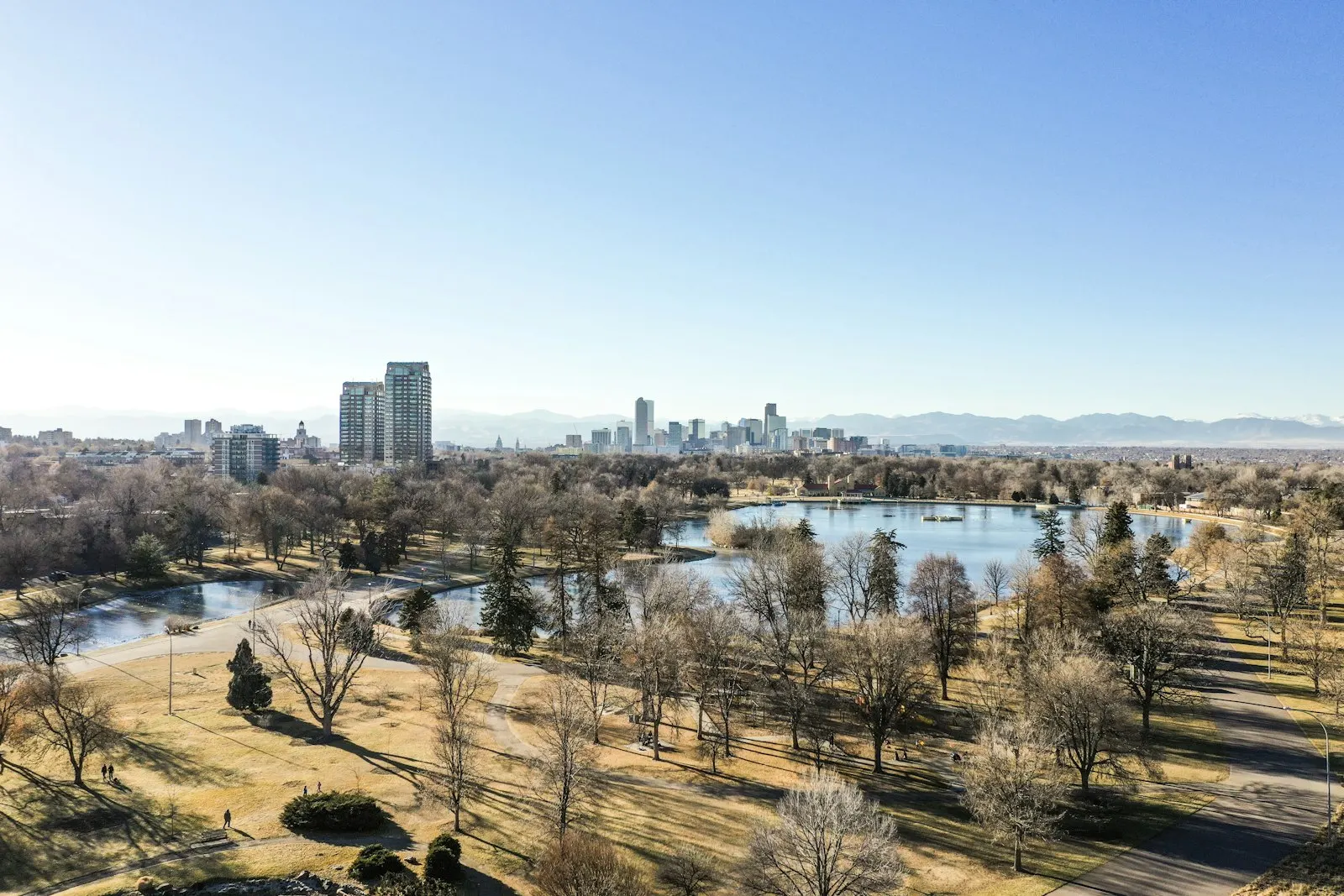
Plumbing guidance for Lakewood, Colorado
Plumbers Lakewood CO
Emergency Plumbing, Drain Cleaning & Water Heater Repair in Lakewood
Five housing eras share one city here: postwar blocks below Sloan's Lake, mid-century Applewood, the rebuilt streets around Belmar, and Green Mountain subdivisions climbing toward the hogback. Same town, wildly different pipe. We write about what each era does once it gets old.
- Cast iron through PEX era
- Green Mountain elevation quirks
- Clay lateral and root reality
- Fast, free local quotes
Five housing eras before lunch
A normal west-side morning runs through half a century of construction. You start in a 1949 bungalow on the blocks below Sloan's Lake's south shore, where the drain is cast iron and the main shutoff is a gate valve nobody has turned since Eisenhower. By ten you're in Applewood, copper supply, big lot, decades of life left in it. Lakewood plumbing isn't one story. It's five, sitting side by side, and lunch is usually a 1993 two-story on Green Mountain's flank with PEX in the walls and sixty gallons of hot water parked in a cold garage.
Belmar is its own answer to the question. The old mall came down, a downtown went up in its place, and now a chunk of central Lakewood has 2000s construction standing a few blocks from 1955 ranches with original everything behind the drywall. Head west along Colfax through the 40 West Arts District and the mix gets older again. Jefferson County's biggest city, roughly 156,000 people, and no two square miles agree on what's buried under them.
Which is why citywide advice is close to useless here. A slow drain in the low ground near Bear Creek Lake Park and a slow drain up a Green Mountain cul-de-sac usually have nothing in common except the symptom. Cross streets first. Build year second. Then we can talk about what's probably wrong.
| Era and area | Typical guts | What tires first |
|---|---|---|
| 1940s-50s, blocks below Sloan's Lake | Cast iron drains, galvanized or early copper | Slow lines, gate valves that won't reseat |
| 1950s-70s core belt, Wadsworth to Kipling | Cast iron waste, clay laterals, big shade trees | Root intrusion, scale, tubs that gurgle |
| Mid-century Applewood | Copper supply, cast iron stacks, deep lots | Lateral bellies, tired angle stops |
| 1980s-90s Green Mountain | Copper or early PEX, ABS drains, garage tanks | Pressure regulators, tank corrosion, hose bibs |
| Belmar-era rebuilds and infill | Modern PEX, shared stacks in attached builds | Fixture leaks, backups shared with a neighbor |
The older two-thirds is still running on original parts
Most of this city went up between 1950 and 1979, and a lot of it never got updated below the floor. Cast iron waste lines. Clay laterals from the house to the main. Galvanized supply in the oldest pockets, early copper through the rest. None of that is an emergency by itself. It's just old, and old fails in patterns you can see coming.
Cast iron doesn't blow out. It scales inward and roughens until a four-inch pipe behaves like a three-inch pipe with sandpaper walls, so grease and paper hang up where they used to slide right past. Then it rots along the bottom, out of sight, where the water actually sits. Clay behaves nothing like that. It stays perfectly serviceable for decades until one joint shifts a quarter inch, and then a root finds the gap.
Your water is not the villain in this story. Consolidated Mutual serves part of Lakewood and Denver Water serves other parts, and both deliver relatively soft supply, so you aren't fighting the mineral crust that chews through fixtures in other states. The bigger variable is the age of the plumbing inside your own walls. Two houses on one block, same water, twenty years apart in build date, age at completely different speeds.
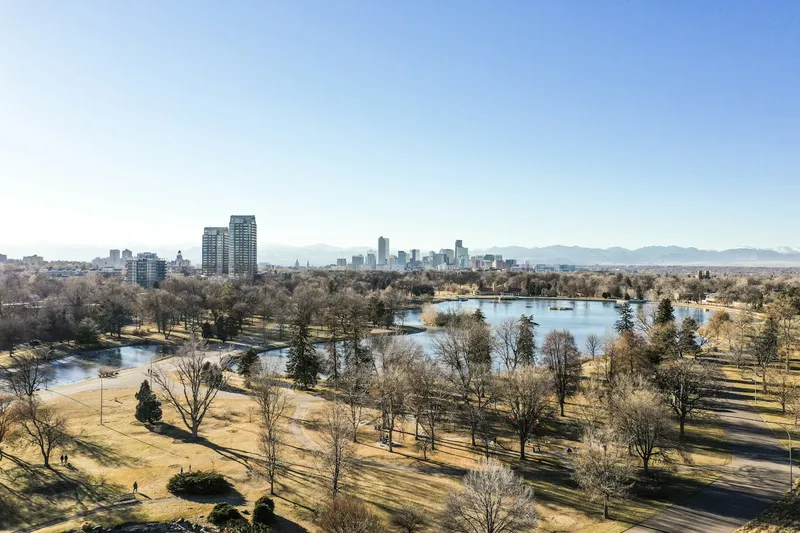
Neighborhood coverage
Where we get called in Lakewood
Plumbing problems cluster by neighborhood, because housing eras do. These are the Lakewood areas and nearby communities our guidance is written around.
Outside these? The whole city is covered. Neighborhood names simply help us guess your pipes before you finish typing.
Climate, elevation, timing
Cold arrives early here, and it doesn't arrive evenly
Lakewood doesn't sit at one elevation. The flats start around 5,400 feet and the ground climbs past 6,000 on Green Mountain's flanks, averaging 5,518 across the city, a genuine stair-step toward the hogback with real gradients inside its own limits. A few hundred feet of rise changes when frost reaches a crawlspace. It changes how hard the wind hits a west wall, too.
The calendar is blunt about the rest. First freeze historically lands near October 3, first measurable snow around October 13, and spring holds its last freeze until roughly May 4. That's seven months when a hard night is possible. Snowfall typically runs somewhere between 50 and 65 inches a year, and it doesn't arrive as a steady blanket. It arrives as a dozen serious storms with dry, sunny, deceptive stretches in between.
Those dry stretches are the part that works on your pipe. Freeze, thaw, freeze again, and the soil around a clay lateral gets kneaded like dough. Cold air drains downhill after sunset and settles in the Bear Creek lowland, so the low blocks can sit well under what your phone is reporting for the city. Up on Green Mountain the problem inverts. Not pooled cold, but wind off the hogback pulling heat out of exposed west-facing walls hour after hour. One city. Two entirely different freeze risks, and the fix for each is different too.
Lakewood at a glance
- Elevation
- 5,518 ft
- County
- Jefferson
- Population
- ~156,000
- First freeze
- Early Octoberhistorical average
- First snow
- Mid Octoberhistorical average
- Snow / year
- 50-65″approximate range
Lakewood's first freeze historically lands in early October, about … from today. First snow tends to follow near mid October. Spring's last freeze holds on until roughly early May.
NWS forecast near Lakewood: Loading…
Match what you're hearing to the system that's talking
Houses this age are noisy in useful ways. One slow sink is a local problem, and it stays local. Every drain on the lowest level gurgling at once is a main line problem, and on the older blocks that usually means a clay lateral with a root in it, not anything you'll reach from under the cabinet.
Hot water that quits partway through a second shower points at the tank, not the pipes, and in the tri-levels and Green Mountain builds that tank is usually in the garage where it works harder every January. Rusty water at every tap, hot and cold both, points at galvanized supply. Rusty on the hot side alone points at what's happening inside the heater. Small distinction. Very different invoice.
Sound is evidence too. A hammering bang when the washer valve snaps shut, a whistle at one fixture only, a toilet refilling by itself at 3 a.m. Those aren't personality quirks your house developed. They're pressure, a worn seat, and a leaking flapper, in that order, and all three stay cheap right up until they don't.
- One drain is slow, the rest are fineTreat it as local and clear that single line
- Every low-level drain gurgles togetherStop snaking and get a camera into the lateral
- Hot water fades early in a Green Mountain buildCheck the tank's age before anyone sells you a part
- A west wall goes cold and one faucet quitsAssume a freeze in the chase, not a bad faucet
Getting a straight answer about Lakewood plumbing
We're a plumbing resource and a quote service for the Front Range, not a truck with a name on the door. What we do is read what you write and route it to people who work these neighborhoods, so the more specific you are, the better the answer that comes back. A note that says "slow drain" earns you a guess. A note that says "slow kitchen drain, 1956 ranch off Wadsworth, gurgles when the washer empties" earns you a plan.
Give us the build year if you know it. Say what changed and when, because "it's been getting slower since spring" and "it stopped tonight" send different trucks. Mention anything you already tried, especially chemical drain openers, since that changes how the next person has to work. And flag a deadline if you have one. Inspection windows on the west side move fast, and a sewer scope booked Tuesday for a Thursday objection deadline is a different request than one you're doing out of curiosity.
Quotes here should come as ranges with reasons attached, never one number and a shrug. Access drives cost more than anything else in old west-metro housing: a cleanout at grade in the front yard versus a cleanout that was never installed, a tank sitting in an open basement versus one wedged into a 1958 utility closet behind a furnace. If nobody explains which situation you're in, ask them to. Then compare notes with a neighbor town if you want a sanity check on the number.
Three facts settle most Lakewood plumbing questions: the year the house was built, what the ground under it does, and how hard it is to physically reach the broken thing. Lead with those and any decent plumber can narrow the problem before the truck rolls. Lead with the symptom alone and you're paying somebody to guess in your driveway.
Something dripping in Lakewood right now?
Get a fast quoteWhat we cover here
Lakewood service guides
Drain Cleaning
Cast iron from the 1950s runs under most of the core belt, and it narrows quietly for sixty years before anything actually backs up on you.
→Water Heater Repair
Garage tanks in Green Mountain tri-levels and cramped 1950s utility rooms fail in different ways. Age and access decide most of the conversation.
→Sewer Line Repair
Clay laterals under 70-year maples, plus expansive soil that shifts on the Green Mountain side. Scope the line before you buy, sell, or dig.
→Emergency Plumbing
Original valves fail at scale in a city this old, usually at night, usually in a tri-level where the shutoff hides behind the furnace.
→Frozen Pipe Repair
Wind off the hogback strips heat from west-facing walls while cold air pools near Bear Creek. Mid-century wall chases take the hit both ways.
→Nearby coverage: Denver Wheat Ridge Golden All 30 cities
Questions we actually get
Lakewood plumbing questions
Why does plumbing advice for Lakewood change so much block to block?
Because the city was built in waves and never in one style. A 1949 bungalow near Sloan's Lake, a mid-century Applewood ranch, and a 1993 Green Mountain two-story carry different supply materials, different drain materials, and different failure points. The ground shifts too, from the 5,400-foot flats to over 6,000 feet on the mountain's flanks. Start any question with your cross streets and your build year.
Is Lakewood water hard enough to wreck fixtures?
Not really. Consolidated Mutual serves part of the city and Denver Water serves other parts, and both deliver relatively soft supply, so you aren't fighting the mineral crust people fight in the Midwest or the Southwest. The variable that actually matters here is the age of the pipe inside your own walls. Sixty-year-old galvanized will close up on schedule no matter how gentle the water running through it is.
When should I start worrying about freezing?
Earlier than most people expect. First freeze historically lands around October 3 and first snow follows near October 13, with the last spring freeze holding on until roughly May 4. Disconnect hoses in late September, not late October. If you're on Green Mountain's west-facing side or down in the Bear Creek lowland, treat the first real cold snap as the test that counts.
What does a plumbing quote in Lakewood actually depend on?
Access, mostly. Two identical repairs price differently depending on whether there's a cleanout at grade, whether the tank sits in an open basement or a 1958 closet behind a furnace, and whether the lateral runs under a driveway or open lawn. Front Range ranges stay wide for exactly that reason. Anybody quoting a flat number without seeing the situation is guessing at your house.
Get a Lakewood plumber who knows the era.
Send the address, the build year, and what your plumbing is doing, and we'll route it to someone who works your side of town.
Get My Free Quote