
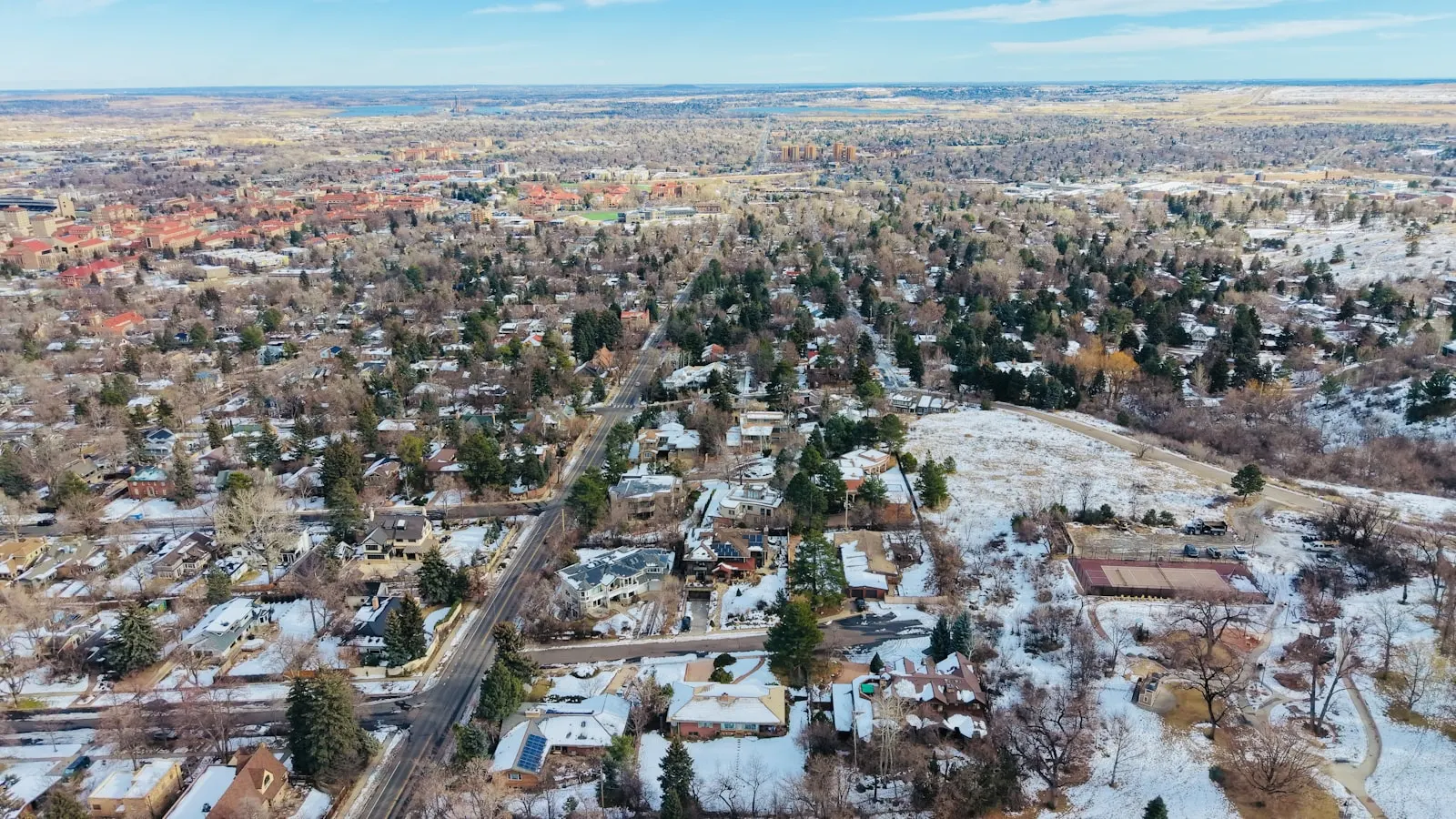
Freeze guidance for Englewood's pre-insulation housing
Frozen Pipe Repair Englewood CO
Pipe Thawing, Burst Repair & Freeze Prevention
Englewood winters run milder than the outer suburbs, and its pipes freeze anyway, because the houses went up before wall insulation was standard practice. Double-brick walls, pipes in exterior chases, kitchens over vented crawlspaces. This guide covers where these houses freeze, how to thaw without damage, and what to fix by October.
- Brick chase freeze points
- Crawlspace kitchen lines
- Safe thawing, no torches
- October prep checklist
Brick holds no heat and tells no lies
Frozen pipe repair in Englewood is a lesson in how these houses were built. A 1920s bungalow wall is often two wythes of brick, an air gap, and plaster on lath: honest construction, handsome as anything going up today, and holding roughly no insulation at all. When a plumber back then ran a supply line up an exterior chase to reach a sink or an upstairs bath, that pipe ended up living closer to the January air than to the living room. On a calm 25-degree night, fine. On a windy night in the teens, that chase is a chimney for cold.
The heat island helps less than people think. Yes, the first freeze typically holds off until the first week of October, later than the outer towns, and winters run a touch softer this close to Denver. But freezing is local. The block can be two degrees warmer while the north-facing chase behind your kitchen wall sits well below the line. The wall wins that argument every time, and the pipe pays.
The cold spots nobody put on a map
Every pre-war Englewood house has a private geography of freeze points, mostly created after it was built. The floor furnace came out in the 60s and left a patched hole and drafty ductwork paths under the floor. The kitchen sits over a vented crawlspace that was never sealed. Somebody moved the laundry to the detached garage in the 80s and ran water out there through a shallow trench, insulated with optimism. None of this shows up on any drawing. The house learned these weaknesses over decades, and each new owner gets to discover them one cold snap at a time.
So scout in daylight. The usual suspects: any pipe you can see from the crawlspace with sky or vent light near it, the runs along the garage slab, hose bibs without frost-free bodies, and every plumbing wall that faces north. A ten-dollar thermometer left in the crawlspace on a cold night tells you more about your freeze risk than any general advice ever will. Write down what you find. That list is your October work order.
Renters and new owners, this goes double. The previous household knew which faucet to drip and which wall to worry about, and that knowledge moved out with them in the moving truck. If your first winter in the house is this winter, walk the crawlspace before the cold does, and ask the neighbors what freezes on this block. They'll know. Blocks here have long memories.
Thawing frozen pipes in Englewood without wrecking them
First response when a fixture goes dry in a cold snap: open the faucet it feeds and leave it open, then get gentle heat on the suspect run. A hair dryer, a heat lamp at a safe distance, warming the room itself. Work from the open faucet back toward the cold section so melting water has somewhere to go. What you never do in this housing stock is bring a torch anywhere near a wall. The lath behind that plaster is century-dry kindling, and every winter somewhere on the Front Range a thawing job burns down the house the pipe was in.
Costs run on a mercy scale. A pro thawing an accessible line commonly runs a few hundred dollars along the Front Range. A split pipe repaired before the thaw floods anything stays in the same neighborhood. And a burst that ran while everyone was at work is a different conversation entirely, with drying and plaster restoration driving it well past the plumbing bill. Which is the argument for the boring move: if a line freezes, even if it thaws on its own, treat it as a warning shot and fix the exposure. Frozen once means frozen again.
| Situation | Do this | Skip this |
|---|---|---|
| Faucet dry, no visible pipe damage | Open the tap, gentle heat, watch for leaks at thaw | Torches, and walking away mid-thaw |
| Frozen line inside a plaster wall | Warm the room, open cabinets, call a pro | Cutting exploratory holes while pressurized |
| Pipe visibly split or bulged | Kill the main now, thaw comes second | Thawing first, flooding second |
| Garage laundry line frozen again | Reroute or properly insulate the run | Another season of a space heater on a timer |
Dealing with this in Englewood?
Start a quoteFreeze-proofing a house built before insulation
The permanent fixes are unglamorous and they work. Seal and insulate crawlspace vents and rim joists so the kitchen floor stops sitting over outdoor air. Get real insulation, not a rag wrap, on every line you found while scouting. Swap old hose bibs for frost-free bodies. For the garage laundry, decide honestly between doing the run right, with buried depth or heat cable and insulation installed as a system, or moving the laundry back into the heated house. Heat tape on a good thermostat is a fine tool and a lousy religion: it fails silently, so check it each fall.
Budget-wise, this is the cheapest page on the whole site. Pipe insulation, a couple of frost-free bibs, foam and sealant for the crawlspace: one weekend and modest money at the hardware store, set against four figures for a burst inside a plaster wall. No other corner of plumbing offers prevention this lopsidedly cheap, and none punishes skipping it harder.
Put it on the calendar like the season it is. Outside spigots and cooler lines done in September, the crawlspace buttoned up before Halloween, heat cable tested at first frost. If a line lets go anyway, the Englewood emergency guide covers the shutoff drill for these houses. The metro-wide frozen pipe hub goes deeper on methods, and if you're comparing notes with newer housing, Greenwood Village's freeze guide shows how different this problem looks one town south.
Englewood freezes are a housing problem wearing a weather costume. The climate gives you until early October; the brick and the crawlspace decide what happens after that. Map your cold spots in daylight, insulate the runs you found, exercise the shutoff, and never put a flame near lath. Do those four things and January gets boring, which is the goal.
Keep exploring
More for Englewood and nearby
All Englewood plumbing guides Frozen Pipe Repair across the Front Range Littleton Denver
Questions we actually get
Frozen Pipe Repair in Englewood: quick answers
A pipe froze but hasn't burst. Can I thaw it myself?
If you can see and reach the pipe, yes. Open the faucet it serves, then work gentle heat, hair dryer or heat lamp, from the faucet back toward the frozen stretch. Stay with it the whole time and watch every joint as it thaws, because splits reveal themselves when water starts moving. If the freeze is inside a finished wall, warm the room and call a pro instead of cutting.
Which pipes freeze first in Englewood houses?
The recurring offenders: supply lines in exterior brick chases, especially north-facing kitchen and bathroom walls, runs crossing vented crawlspaces under kitchens, anything serving a converted garage laundry, and old hose bibs without frost-free bodies. Nearly all of them share one trait: the pipe sits between the heated house and outdoor air with nothing meaningful in between. Find those spots in daylight and you've found your risk.
Should I let faucets drip on cold nights?
On the hard nights, yes, for fixtures on vulnerable runs: a pencil-lead stream, both hot and cold, plus cabinet doors open on plumbing walls. Moving water resists freezing and a cracked door borrows room heat for the pipes. The water cost is pocket change against a burst inside plaster. If you're dripping the same faucet all winter, though, that run is telling you to insulate it properly.
Frozen solid in the bungalow belt?
Tell us which fixture went dry and what wall it lives in, and we'll route the thaw before it becomes a burst.
Get My Free Quote