
Freeze guidance for the valley floor
Frozen Pipe Repair Littleton CO
Pipe Thawing, Burst Repair & Freeze Prevention
On a clear, windless January night, cold air slides off the foothills and pools along the South Platte, and the coldest spot in Littleton might be a crawlspace six feet from your furnace. This guide covers which pipes freeze first here, how to thaw them safely, and what prevention costs.
- Valley cold-pool literacy
- Pre-war crawlspace tactics
- Safe thawing, no torches
- Prevention priced honestly
The house remembers being smaller
Frozen pipe repair in Littleton clusters in a specific kind of house: the one that grew. Walk the older blocks and you can read the additions like entries in a ledger. A porch enclosed in the forties. A kitchen bumped out in the seventies. A bathroom carved from attic space when the second kid arrived. Every one of those improvements moved plumbing into space the original builder treated as outdoors, and the supply line running through what used to be a porch wall has no insulation behind it, because that wall was never asked to keep anything warm.
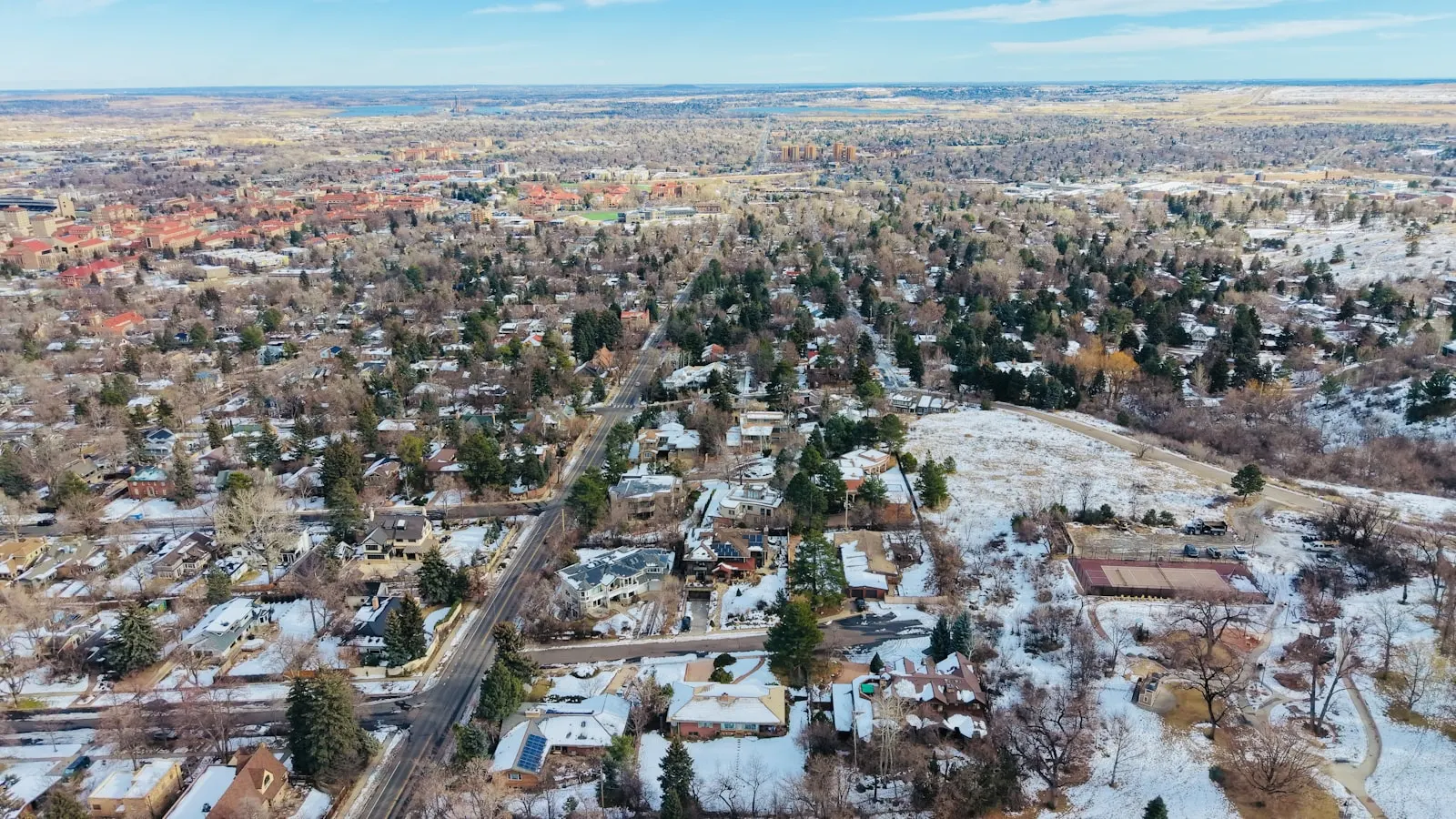
Geography does the rest. Littleton's seat in the river valley means radiational cooling: on clear, calm nights the coldest air flows downhill and settles over the low ground near South Platte Park and Hudson Gardens. The forecast low gets measured somewhere official. Your crawlspace ignores the forecast and reads the valley, and on the worst nights the valley reads several degrees meaner.
You can audit your own house in twenty minutes with this lens. Stand outside and find the seams: where the siding changes, where a roofline steps, where a porch became a room. Every seam is a candidate for a pipe in cold territory, and the old building permits never mention it. The house wears its history on its skin. Learn to read it and the freeze map draws itself.
Where this town's pipes actually freeze
The freeze map of an old Littleton house is predictable once you think like the cold. Pre-war crawlspaces top the list: built for coal-era ventilation, many carry zero insulation and foundation vents left open year-round, so January air moves through them freely, all night, every night. Additions over old porches come second, with supply lines buried in former exterior walls. Then attic bathrooms in converted bungalow half-stories, hose bibs without frost-free bodies, and any long run along an uninsulated north wall.
Timing matters as much as location. Historically the first freeze here lands around early October and the last one hangs on until about early May. But the dangerous nights are the deep, clear ones between storms, when the snow that would have insulated the ground has already melted and the valley pools its coldest air with nothing to slow it down. Snow on the ground is actually your friend in this story. The bare, windless, near-zero stretch after a warm week is the night the porch-wall line finally quits.
Renters and new owners get one shortcut: ask whoever lived there last which faucet acts up in January. Every old house has a resident memory of its cold spots, and it transfers in a single conversation.
- Pre-war crawlspaces with open vents and no insulation
- Supply lines inside former porch walls
- Attic bathroom runs in converted half-stories
- Hose bibs and their interior shutoffs
- North-wall kitchen and laundry lines
Frozen pipe repair in Littleton: thawing and arithmetic
If a line freezes, the safe playbook is boring on purpose. Open the affected faucet so melting ice has somewhere to relieve pressure. Warm the suspect section gradually: a hair dryer working along the pipe, a space heater set in the crawlspace at a respectful distance from anything flammable, heat tape applied exactly per its instructions. No open flame, ever. That's partly fire risk and partly physics, because steam trapped in a closed pipe section bursts it just as surely as ice does. Patience is the real tool. Most residential freezes let go within an hour or two of gentle heat, and hurrying is how intact pipes stop being intact.
The money splits into three tiers. Thawing an intact line yourself costs an afternoon. A plumber thawing and inspecting commonly runs a few hundred, Front Range-wide, with access driving the number. A burst is a different order entirely: repair plus water damage in plaster-era housing climbs into the thousands quickly, which is why a freeze that hasn't burst yet deserves urgency, and why the best money gets spent before October. Prevention, for scale, is usually a two-figure line at the hardware store.
And a line that's frozen twice in one winter isn't unlucky. It's routed wrong for this climate, and rerouting or properly insulating that run beats paying for a third thaw.
In Littleton's valley cold, prevention is embarrassingly cheap next to repair. Foam sleeves, crawlspace vents closed for winter, heat tape on the porch-wall run, and a cheap hose bib cover stand between you and a four-figure plaster repair. Do the homework in September, before the early-October first freeze, and the clear January nights become somebody else's story.
Dealing with this in Littleton?
Start a quoteSeptember is the deadline that matters
Work backward from the historical calendar. First freeze around early October means the outdoor checklist, hoses disconnected, bibs drained, sprinklers blown out, is late-September homework, not a November scramble. Inside, September is the month to close crawlspace vents, check insulation on the runs you already distrust, and teach the household where the main shutoff lives, a lesson that pays off hard in the scenario covered by the Littleton emergency guide. The whole checklist costs less than a tank of gas and one Saturday morning.
Know your microclimate honestly, too. Neighbors on different terrain play by different rules, which is why Highlands Ranch has its own freeze guide. Down here the enemy is still, pooled cold working patiently on housing that predates insulation as a concept, and the rest of your house's era-specific homework lives in the Littleton plumbing guides.
If a line is already frozen, or worse, skip the reading. Describe where the pipe runs and what era the house is, and we'll route your quote to a crew that's thawed this exact story before. Include what you've already tried, and say if the house has a crawlspace. Both change who should take the call and what they load on the truck.
Keep exploring
More for Littleton and nearby
All Littleton plumbing guides Frozen Pipe Repair across the Front Range Englewood Highlands Ranch
Questions we actually get
Frozen Pipe Repair in Littleton: quick answers
Should I let faucets drip on cold nights?
On the vulnerable lines, yes. It's a legitimate tactic, not a myth. Moving water resists freezing, and a pencil-thin stream on the coldest valley nights protects the runs you already suspect: the porch-wall line, the crawlspace run, the attic bathroom. It wastes some water, so save it for the handful of clear, still nights when Littleton's cold pooling is at its worst.
How do I know if a pipe has already burst?
Frozen without a burst: the faucet gives nothing or a trickle, and everything stays dry as it thaws. Burst: you'll see water once thawing starts, hear it inside a wall, or watch pressure drop house-wide. If you suspect a split, close the main shutoff before thawing further and keep it closed until someone's looked, because thawing pushes water straight toward the crack.
What does frozen pipe repair cost in Littleton?
Hedged Front Range ranges: professional thawing of an intact line commonly runs a few hundred depending on access, repairing a burst section runs more, and the wildcard is water damage, which in plaster-and-lath housing escalates into the thousands fast. Access drives cost more than parts do here. A split in an open basement ceiling is cheap. The same split inside a former porch wall isn't.
Beat the valley to the punch
Frozen line, burst pipe, or just a crawlspace you don't trust: describe it and we'll route your Littleton quote to the right crew.
Get My Free Quote