
Drain guidance for Denver, Colorado
Drain Cleaning Denver CO
Drain Cleaning, Rooter Service & Clog Removal
That slow kitchen sink in your Wash Park bungalow drains through pipe older than sliced bread. Drain cleaning in Denver means reading a house's era first: galvanized branch lines, cast iron under the floor, clay at the property line, and roots that treat every joint as a door.
- Century-old kitchen lines
- Shared duplex drain sense
- Roots and silver maples
- Snake, jet, or scope
Old pipe, new kitchen, predictable clog
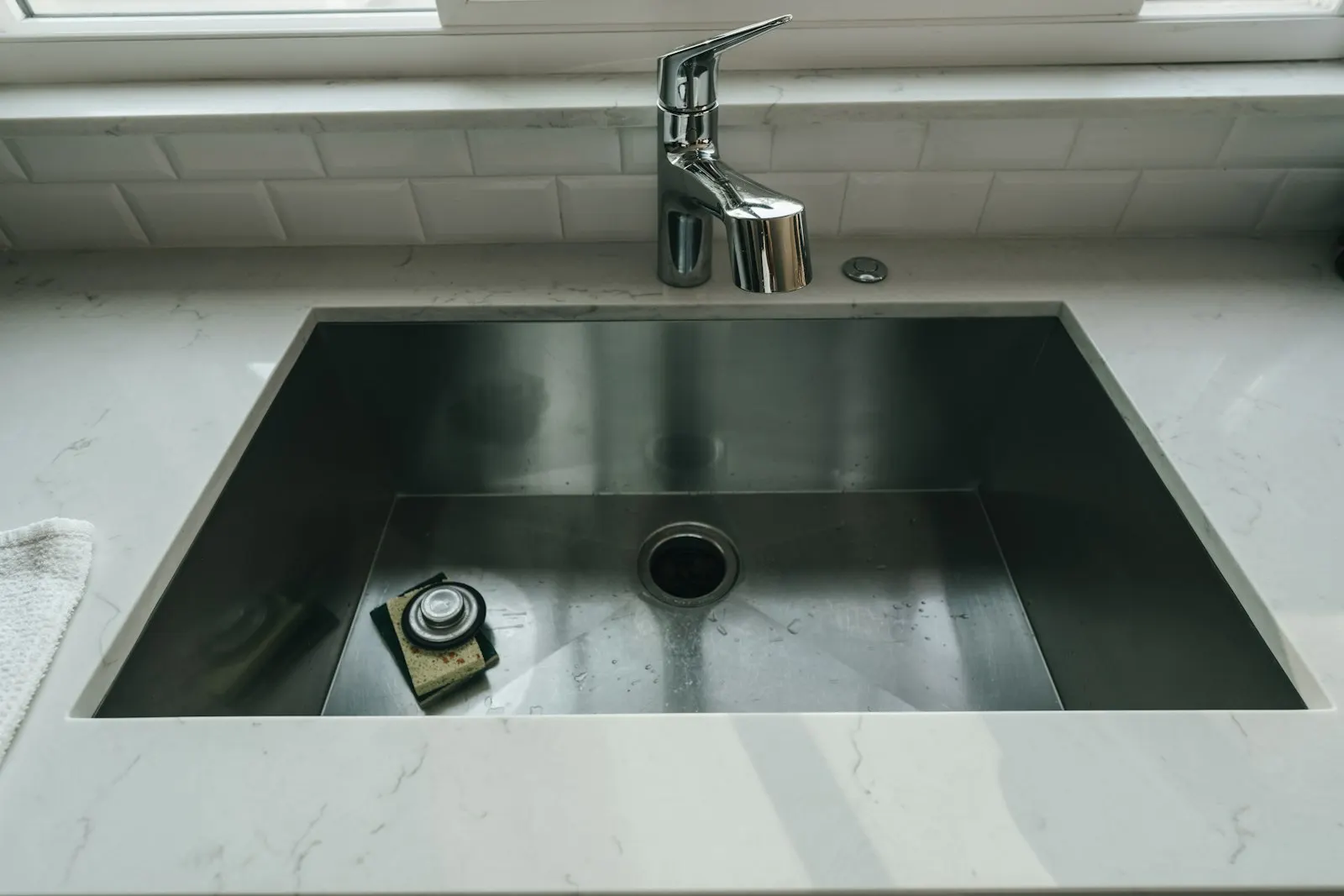
The most common drain call in Denver starts in a bungalow kitchen. Somebody remodeled it beautifully in 2019: quartz counters, a deep single-basin sink, a disposal that could eat a phone book. Then they connected all of it to the same two-inch galvanized branch line that has hung under the floor joists since Coolidge was president. Drain cleaning in Denver is mostly this story on repeat, told from Wash Park to Berkeley, and the right fix starts with respecting how old the pipe actually is.
A century of use narrows galvanized pipe the way decades of breakfast narrow arteries. Rust builds inward until a two-inch line flows like a one-inch line, and every tablespoon of grease the disposal sends down sticks to the rough spots. So the sink doesn't clog because you did something wrong last Tuesday. It clogs because 1925 finally caught up with your kitchen, and no amount of boiling water poured down the drain will negotiate with that.
The good news: the fix menu is short and well understood. The bad news: the wrong item off that menu, applied every eight months, quietly costs more than the right one applied once. So let's read the symptoms the way a house historian would, then talk tools and money.
Reading the symptoms like a house historian
Old Denver drains announce their problems with an accent. A gurgle in the hall bath when the kitchen sink empties means the branch lines are sharing air, common in houses plumbed before venting got serious. Water rising at the basement floor drain is the classic sign the trouble sits farther downstream, in the building drain or the lateral, because that drain is the lowest opening in the system and the first to confess. And a kitchen line that clogs on a schedule usually means grease on rough galvanized, not bad luck.
None of these symptoms means your house is failing. It means your house is old, which in this city is practically a compliment. But the order of operations matters: clearing a branch line is routine and cheap, while repeated whole-house backups deserve a camera before anyone quotes you anything with the word excavation in it.
One Denver-specific tip: know your cleanouts. Bungalows often have one capped behind a basement toilet or set into the floor near the front wall, and some blocks hide an exterior cleanout under decades of lawn. Finding yours before trouble arrives means the machine goes straight into the line instead of through a pulled toilet, which is faster, cleaner, and noticeably kinder to the invoice.
- Slow kitchen sink that shrugs off plunging: greased-up galvanized branch line
- Basement floor drain backing up: mainline or lateral trouble, stop running water
- Gurgling tub when the toilet flushes: venting trouble or a partial main blockage
- Sewage smell near the tree lawn: the lateral's involved, get a scope
What drain cleaning in Denver involves, and roughly costs
Three tools do most of the work here. A cable machine, the snake, cuts through soft blockages and root fringe, and it's the right first move on a clogged branch line. Hydro jetting scours grease and scale off the pipe walls with high-pressure water, which matters in the bungalow belt because rough old galvanized and cast iron re-clog quickly after a snake-only visit. And a camera tells the truth about what's actually down there, which, in a city built on clay laterals, is a truth worth a few hundred dollars all by itself.
On money: along the Front Range, a straightforward drain clearing commonly lands somewhere between $150 and $450, and access drives which end you hit. Jetting a badly greased kitchen run or a rooty main tends to land higher, often in the $400 to $900 neighborhood, and camera work frequently gets bundled into the visit. Treat all of that as market weather rather than a quote. A fourplex cleanout stack in Cap Hill and a ranch in Virginia Village are simply different jobs wearing the same name.
The judgment call worth internalizing: paying for the same snake job three times is how old Denver kitchens quietly eat budgets. Once a line has clogged on a schedule, the cheap visit stopped being cheap two visits ago, and the era-appropriate fix, jetting or repair, starts looking like the bargain.
- If one fixture drains slowSnake that branch line first and skip the heroics
- If the same line clogs every few monthsAsk about jetting plus a camera; the pipe wall is the problem
- If sewage backs up at the floor drainStop running water, clear the main, then scope it
Dealing with this in Denver?
Start a quoteShared drains, silver maples, and whose problem it is
Denver's duplexes and fourplexes, especially the converted mansions of Capitol Hill and the side-by-sides near Sloan's Lake, often share drains that were never designed for four kitchens. When a shared line clogs, unit B's cooking habits become unit A's flood, and the fix is a plumbing conversation and a property conversation at the same time. If you're buying into a conversion, ask which units share which lines. Somebody knows, and it's almost never written down anywhere useful.
Outside, the tree lawns did their job too well. Silver maples and elms planted by streetcar-era developers now stand over nearly every lateral in the old neighborhoods, and their roots find clay joints with unsettling precision. When clearing the line stops working, the problem has usually migrated from cleaning into sewer repair territory, and it pays to know that before the third service call. Our Denver guide maps which blocks got which era of pipe, and west of Sheridan, Lakewood's drain page speaks that suburb's dialect.
One last word on the chemical aisle. Crystal and lye-based openers are a bad marriage with century-old pipe: they generate heat, sit in bellies, and give the next person who opens that trap a chemistry surprise. Enzyme treatments are gentler as maintenance, but nothing in a jug restores slope or removes roots. Old pipe wants mechanical help and honest diagnosis, in that order.
Keep exploring
More for Denver and nearby
All Denver plumbing guides Drain Cleaning across the Front Range Englewood Lakewood
Questions we actually get
Drain Cleaning in Denver: quick answers
Why does my Denver kitchen sink keep clogging?
In the bungalow belt, the usual culprit is a galvanized branch line that has spent a century rusting inward. The rough, narrowed pipe grabs grease from the disposal, builds up, and clogs on a rhythm, often every six to twelve months. A snake reopens the channel but leaves the rough walls. Jetting cleans them properly, and a camera tells you honestly how much life the line has left.
Is hydro jetting safe for old pipes?
Usually, with a caveat. Sound cast iron and clay handle jetting fine, and it's the most effective cleaning old lines can get. But a line that's already cracked, badly offset, or paper-thin deserves a camera inspection first, so the pressure doesn't finish what time started. Any outfit that quotes jetting on a prewar Denver line without discussing a camera is skipping the step that protects you.
How do I know if it's my drain or the sewer line?
Watch what backs up. One slow fixture points to its own branch line, a local and cheap problem. Multiple fixtures acting up together, or water rising at the basement floor drain, points downstream to the building drain or the lateral. In Denver's older neighborhoods that distinction matters enormously, because the lateral is likely vitrified clay under a mature tree, and that's a different repair universe.
Stop renting the same snake twice.
Tell us which fixture, which neighborhood, and how often it clogs, and a real person will point you at the era-appropriate fix.
Get My Free Quote