
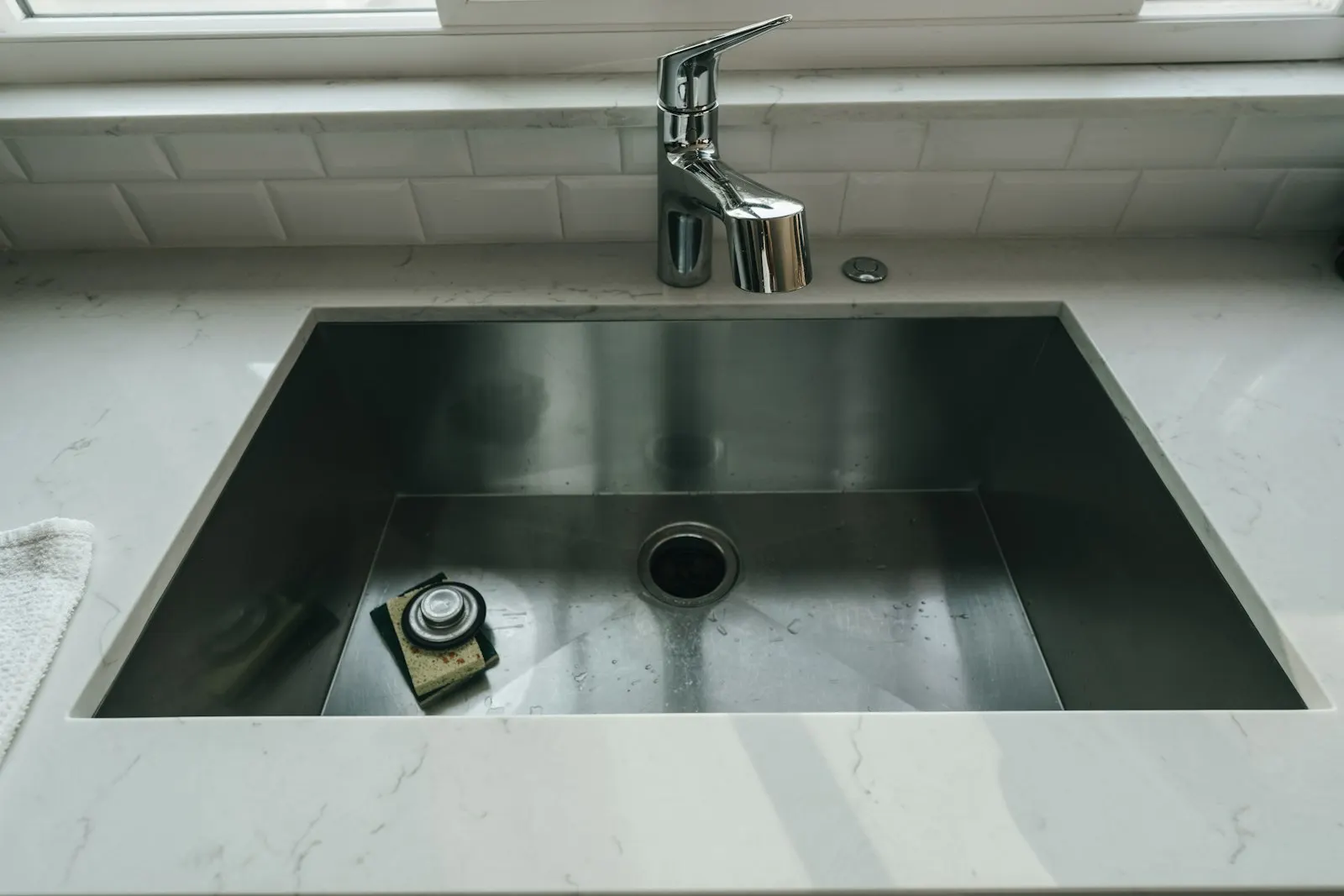
Drain guidance for Englewood's bungalow belt
Drain Cleaning Englewood CO
Drain Cleaning, Rooter Service & Clog Removal
The sink backing up on you tonight drains through pipe that predates your grandparents. Drain trouble in Englewood is mostly a story about cast iron, layered remodels, and alley cleanouts, and clearing these lines right takes more judgment than horsepower. Start here before anybody runs a cable.
- Cast iron cleared gently
- Alley cleanout access
- Camera-first on old lines
- Kitchen remodel drain math
One original drain under four kitchens
Drain cleaning in Englewood is mostly archaeology. The kitchen line that's backing up tonight was roughed in when Coolidge was president, and every remodel since has stacked new fixtures onto it: a dishwasher in the 60s, a disposal in the 80s, a deep farmhouse sink two owners ago. The pipe never changed. Its diameter never changed. The load quadrupled. That's the arithmetic behind half the slow drains between Broadway and the river, and no amount of boiling water down the sink is going to argue with it.
So a chronic slow drain here isn't a mystery and it isn't your housekeeping. A 1920s two-inch kitchen line wearing a hundred years of grease varnish will keep moving water right up until the day it won't, and that day likes to pick a holiday with a full house. The good news: these lines were laid by people who took pitch and venting seriously, so once they're properly cleaned they tend to behave for a long stretch.
And know what you're asking of the line. A garbage disposal on a 1920s kitchen run is a legal act with consequences: ground food doesn't clog pipe by itself, but it settles out in a line whose pitch was set for a farmhouse sink and one round of dishes a night. Scrape plates into the trash, keep grease out entirely, and run hot water a beat longer than feels necessary. Cheap habits. They buy years between service calls on pipe you can't easily replace.
Cast iron doesn't clog, it closes in
Plastic pipe clogs when something blocks it. Old cast iron closes in. The interior wall rusts and flakes, the flakes catch grease, the grease catches everything else, and the usable diameter shrinks year over year. A stack that started at four inches may be passing two. That's why an Englewood drain slows down over months instead of stopping overnight, and why the hardware-store bottle of caustic is the wrong answer: it sits in the low spots and eats the very pipe you're trying to save.
The flaking matters for how the line gets cleaned, too. Run an aggressive cutter head through iron that's rusted thin and you can punch a hole in a stack that had years left in it. These bungalows have earned gentler handling than a rented snake swung hard. Watch for the pattern of symptoms below, because which fixture complains first tells you where the problem lives.
- Tub backing up when the washing machine drains: main line, not the tub
- Kitchen sink gurgling after the dishwasher runs: branch line scale
- Rust flakes or black grit rising in a floor drain: the pipe itself is shedding
- Everything slow at once: time for the alley cleanout and a camera
- If one fixture is slowit's that fixture's branch, a small and cheap job
- If the lowest drain backs up firstit's the main line, open the alley cleanout
- If rust chunks come up with the waterthe pipe is failing, camera before more cabling
What drain cleaning in Englewood involves and costs
A straightforward mainline cabling through a good cleanout, along the Front Range, commonly lands somewhere between $150 and $450, and access decides which end you hit. No usable cleanout, so the work happens through a roof vent or a pulled toilet? Expect the high side, plus the time. A camera inspection usually adds a few hundred on top, and in a town running this much old iron and clay, I'd call that the best money on the invoice. You're not paying to clear a clog. You're paying to learn what your line actually is.
The judgment call is cable versus water. Hydro jetting cleans scale out of iron beautifully, but on pipe that's rusted thin it carries real risk, and a good plumber wants a camera look before aiming a jetter at a 1920s line. Anybody eager to jet your stack sight unseen is not your guy. In this housing stock, the careful sequence is look, then clean, then look again.
One more access note, because it's money: tell whoever quotes you where your cleanout is and whether it opens. A verified, reachable cleanout can knock real dollars off the visit and an hour off the clock. No cleanout at all? Say that too. Honest information in both directions is how a phone estimate survives contact with the driveway.
In Englewood, treat any main line backup as two questions: what's blocking the pipe, and what shape is the pipe in. Pay for the camera on the first visit. On lines this old, a few hundred dollars of looking regularly saves thousands of guessing, and it turns your next backup from an ambush into an appointment.
Dealing with this in Englewood?
Start a quoteFind the alley cleanout before you need it
Englewood's alleys are a genuine gift here. Most of these houses drain out the back toward an alley main, and many have a cleanout on that run: sometimes beside the garage, sometimes buried under decades of lawn. Find yours on a dry Saturday. Probe gently, dig shallow, mark it. A known, accessible cleanout turns a Sunday-night emergency rooter call into a routine visit, and it spares you paying a stranger to hunt for a cap in the dark with a flashlight in his teeth.
While you're out there, check the cap itself. Old brass caps seize, and a cracked or missing one lets groundwater and roots into the line while letting sewer gas drift out by the garage. A replacement cap costs pocket change at the hardware store. And if the hunt turns up nothing at all, a plumber can locate the line and set a proper two-way cleanout, which pays for itself the first bad night.
And know when a drain conversation has become a sewer conversation. If backups repeat, if the camera shows roots waving at you, if the line holds water between cleanings, you've graduated to the Englewood sewer lateral guide. New to the house entirely? Start with the Englewood plumbing overview for the whole picture. Folks over in Littleton fight a similar era of pipe, but the alley access changes the play on this side of the line.
Keep exploring
More for Englewood and nearby
All Englewood plumbing guides Drain Cleaning across the Front Range Littleton Denver
Questions we actually get
Drain Cleaning in Englewood: quick answers
How often should drains be cleaned in an old Englewood house?
If a camera has shown roots or heavy scale, a maintenance cabling every year or two keeps you ahead of it, and it's cheap compared to a backup into the tub. If the line scoped clean, don't clean on a calendar. Clean on symptoms: gurgles, slow fixtures, smells. And keep the scope footage. The next plumber, and the next buyer, will both want to see it.
Is chemical drain cleaner safe on cast iron?
No, and I'll die on this hill. Caustic cleaner pools in the low spots of an old line, accelerates corrosion in pipe that's already thin, and burns the next person who opens the drain. On a hundred-year-old stack it trades a slow drain today for a hole in the pipe later. Hot soapy water and a proper cable beat it every time.
My cleanout is in the alley. Is that normal in Englewood?
Completely normal, and honestly lucky. Much of the town drains to alley mains out back, so cleanouts often sit near the garage or the rear property line. Keep yours found, uncovered, and openable. Plumbers quote tighter when access is easy, and in a backup, minutes spent hunting a buried cap are minutes sewage spends inside your house.
Slow drain in a fast-built town?
Describe the symptom and which fixture complained first, and we'll route you to someone who respects old iron.
Get My Free Quote