
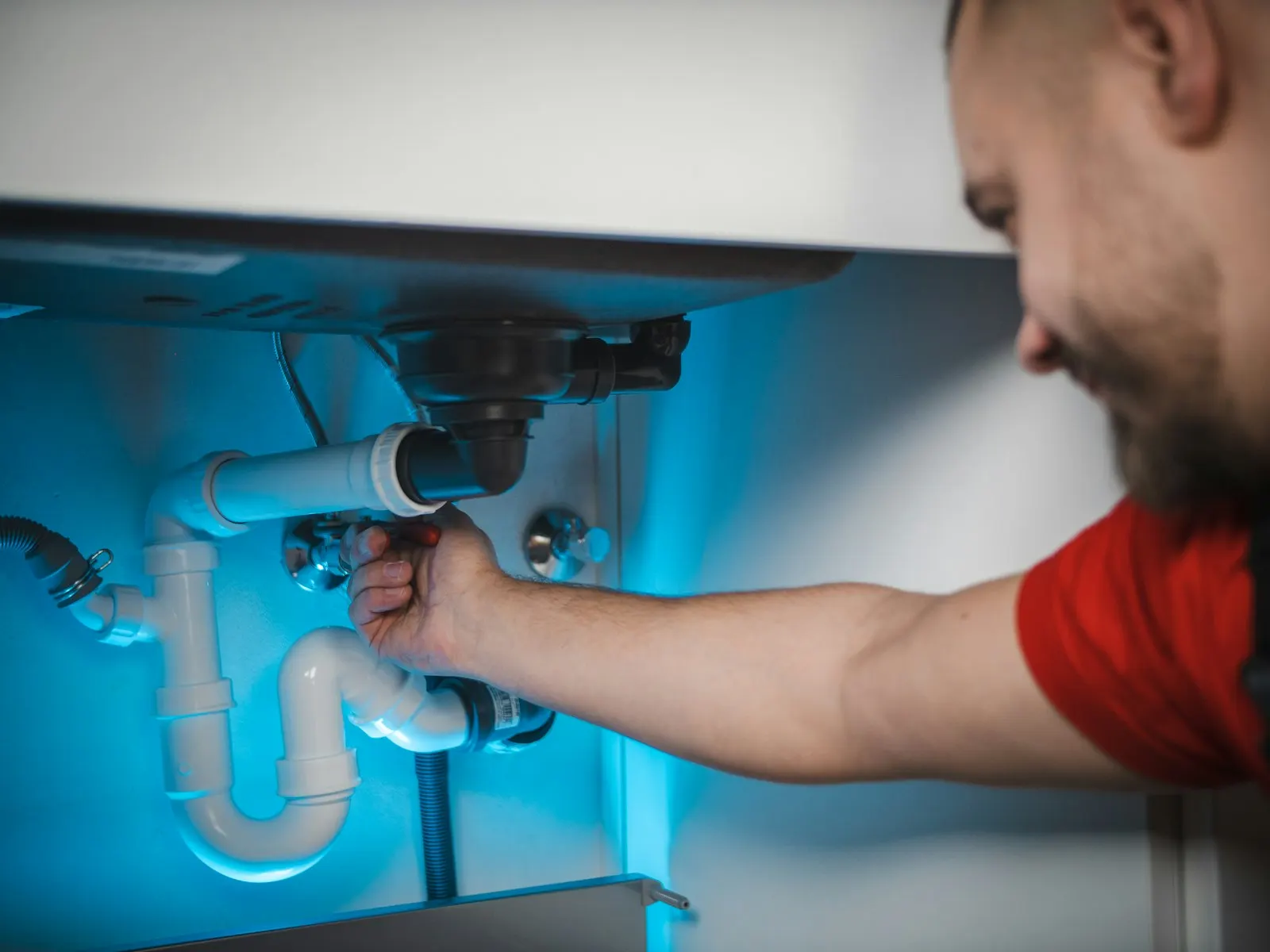
When water's moving and it shouldn't be
Emergency Plumbing Centennial CO
Burst Pipes, Active Leaks & Water Shutoff Help
A pinhole leak above a finished basement ceiling doesn't schedule an appointment. And in Centennial's older houses the emergency carries a twist: the original shutoff might not close. This page covers what to do right now, in order, and what the fix usually looks like once the water stops.
- Shutoff maps for split-levels
- Pinhole copper triage
- Honest after-hours cost talk
- Requests read fast, by people
Find the shutoff before the ceiling finds the leak
Emergency plumbing in Centennial has one complicating detail the newer suburbs don't share: the hardware you need most in the worst five minutes is often the oldest hardware in the house. The main shutoff in a 1960s or 70s split-level is usually a gate valve on the lower level, street side, frequently hiding behind storage shelves or a sheet of 1978 paneling. After fifty years untouched, a gate valve does one of three things when you finally grab it. It closes. It closes halfway. Or it spins uselessly in your hand while the ceiling keeps dripping.
So do this on a calm Saturday, not during the flood. Find the valve. Close it gently and reopen it. If it weeps from the stem, sticks, or freewheels, put replacing it at the top of the list, because a working main shutoff costs a few hundred daylight dollars and is worth many times that at midnight. While you're down there, put a tag on the water heater's cold-side valve and check the washing machine supplies, which fail more often than anything else their size.
Split-levels scatter their plumbing across half-floors, so take the full tour once. Main valve, lower level, street side. Water heater in its closet behind the garage. Laundry stops, irrigation shutoff, and the curb stop out near the sidewalk under its small round lid. Ten minutes with a flashlight and a few hardware-store tags, and everyone in the house knows where off lives. That tour is the cheapest emergency plumbing anyone in this city will ever buy.
- Close the nearest fixture stop first, the main valve second
- Neither works? The curb stop belongs to your water district: call them
- Kill power or gas to a leaking water heater before touching it
- Open low faucets to drain pressure off the system
- Photograph everything before cleanup starts, for insurance
Pinholes: how fifty-year-old copper announces retirement
The signature Centennial emergency isn't a dramatic burst. It's a pinhole. Original copper from the 60s and 70s has been carrying moderately hard water for half a century, and pinhole corrosion works from the inside out: a pit forms, thins the wall over years, and one day a needle of water starts hissing into a joist bay above the family room somebody proudly finished in 1998. The brown dinner-plate stain on the drywall is usually the first anyone hears of it, and by then the insulation above has been wet for a while.
The honest repair conversation, once the bucket is placed: a spot repair (cut out the bad section, solder or press in new copper) settles most single leaks for a modest bill. But a second pinhole on the same run within a year or two is the pipe voting to retire, and repiping that stretch during business hours beats meeting it again at 2 am. It's also the moment to swap the crusted valves nearby while the wall's already open, the same logic our water heater guide applies to aging tanks.
What emergency plumbing in Centennial costs
After-hours work carries a premium everywhere on the Front Range. Expect the trip plus first hour to commonly land between $150 and $400 before parts, with holiday nights at the high end of that. A simple burst or pinhole spot repair often totals a few hundred to $1,500 depending on access. Note what's missing from those numbers: the drywall, flooring, and drying-out afterward, which regularly cost more than the plumbing did. That's why speed on the shutoff matters more than speed on the phone, every single time.
The judgment call in the moment is simpler than it feels at the time. Water you can fully stop with a valve is a today-or-tomorrow problem: stabilize it, sleep, and book daytime rates in the morning. Water you can't stop, sewage rising in the lower-level drains, or anything wetting an electrical panel is a right-now problem, whatever the clock says. And a leak inside a wall that a shutoff has silenced still wants eyes on it within a day. Wet framing and fifty-year-old insulation don't dry themselves, and mold doesn't wait for your schedule.
Stop the water first, with a valve you already know works. Everything after that is logistics. In a Centennial split-level the valve's age is the wildcard, so test the main this weekend and replace it if it fails. Do that one chore and you've downgraded most future emergencies to inconveniences before they ever happen.
Dealing with this in Centennial?
Start a quoteSpring startup, the self-inflicted emergency season
Every April, sprinkler backflow preventers across Centennial come out of winter, and a percentage fail the moment the system pressurizes. Bonnets cracked by a freeze that found trapped water. Poppets stuck after five months idle. Unions left hand-tight back in October. The result is a geyser beside the house, or, quieter and worse, water sheeting down the foundation wall all day while everyone's at work. So stand at the vacuum breaker for the first pressurization each spring. Sixty seconds of watching, with a hand on the valve, prevents most of it. And when one does fail, the fix is usually a rebuild kit or a swap priced in the low hundreds: annoying, survivable, and far better caught at startup than discovered through a wet basement wall.
The autumn version of all this (charged evaporative cooler lines, missed blowouts, hoses left on bibs) fills our frozen pipe guide, and it's worth the read in September rather than January. For the universal kit that should live next to any main valve, flashlight to meter key, the corridor-wide basics sit on the Front Range emergency hub. Local detail lives here. The stuff that's true everywhere lives there. Between the two, the next emergency in your house should be a much shorter story.
Keep exploring
More for Centennial and nearby
All Centennial plumbing guides Emergency Plumbing across the Front Range Parker Highlands Ranch
Questions we actually get
Emergency Plumbing in Centennial: quick answers
Who do I call if my main shutoff won't close?
Your water district can shut the curb stop at the street. That valve is on their side of the meter and it's their hardware, so don't wrench on it yourself. Centennial addresses fall under several different districts, so find yours on a water bill today and save the emergency number. Then replace the failed house valve, because the district shouldn't be your only off switch.
Is a ceiling stain an emergency?
Treat a growing stain as urgent and a stable one as an appointment. Touch it. Soft or damp means active water, and the supply lines above should be shut off now. Dry and unchanged for weeks points to an old healed event, or a drain leak that only runs when a fixture is used. Either way, on 1960s or 70s copper, assume the leak has siblings until someone looks.
What do I shut off for a leaking water heater?
Three things, in order: the cold water valve on top of the tank, then the power (breaker for electric, gas valve for gas), then the house main if the leak is heavy. Don't drain the tank until power is off, because electric elements exposed by falling water burn out in seconds. After that it's a replacement conversation, not a repair one.
Water moving in Centennial right now?
Shut off what you can, then send the details: quote requests get read by a real person, fast.
Get My Free Quote