
Freeze guidance for Erie, Colorado
Frozen Pipe Repair Erie CO
Pipe Thawing, Burst Repair & Freeze Prevention
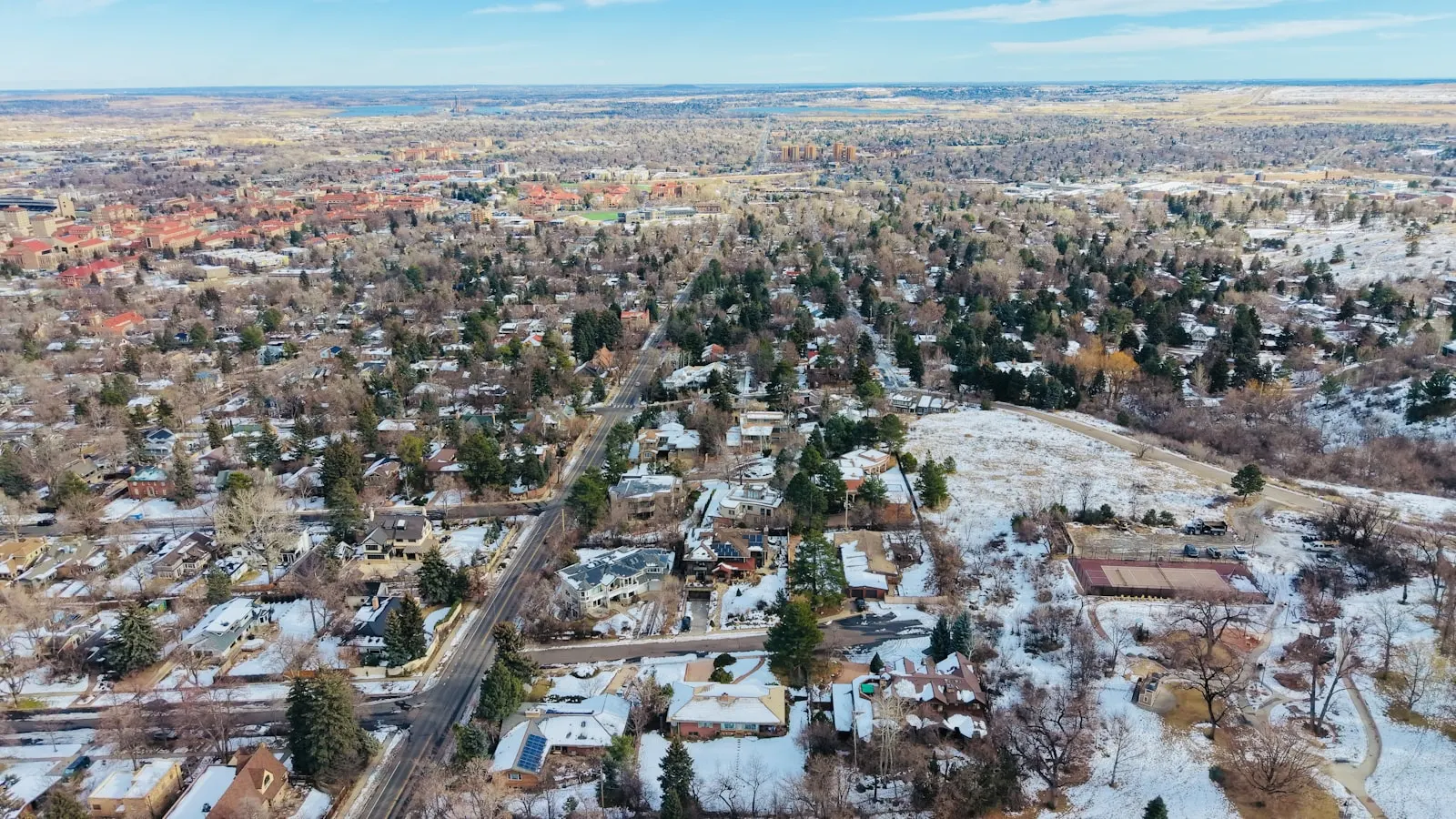
The temperature on your phone is not the number that breaks pipes in this town. Wind is. Erie sits on open plains with no mature windbreak, so a gusty twenty-degree night does more damage here than a still five-degree one does ten miles west.
- Wind exposure beats raw cold
- October 2 first freeze, historically
- Safe thawing without a torch
- September checklist that works
Erie freezes by wind, not by thermometer
Frozen pipe repair in Erie follows a rule that catches transplants off guard. Erie spreads across open high plains at 5,130 feet, east of the foothills, which means downslope windstorms accelerate off the Front Range and arrive at these rooftops carrying full speed. There is no mature cottonwood belt to break them. No seventy-year-old grid of dense trees and close-packed houses. Just new fence lines and young trees that are, if we are being honest, still sticks.
A still five-degree night is survivable for a moderately protected pipe. A twenty-degree night with sustained forty mile-an-hour gusts is not, because moving air strips heat out of a rim joist, a garage wall, or an uninsulated cantilever far faster than still air can. Your neighbor's identical floor plan may come through fine while yours splits, and the variable is almost always which way that wall faces and what the wind does at that particular corner.
Timing, from the historical record: Erie's first freeze typically arrives around October 2, first snow follows near October 14, and freezing nights keep showing up through the first days of May. Seasonal snowfall commonly runs in the 40 to 55 inch range. That is a long exposure window, and the nights that actually cause damage are usually not the deepest cold. They are the windy ones in early October and late April when nobody is thinking about it. Neighboring Broomfield sits close to three hundred feet higher and runs a slightly different calendar.
The gaps builders leave, and the wind that finds them
PEX is the material in most of these walls and it deserves credit. It expands when water freezes inside it and frequently survives what would split copper open. What does not expand: brass fittings, crimp rings, valve bodies, and the hose bib itself. So the burst here is rarely mid-run. It happens at a connection, at a valve, or right at the sillcock, where the assembly is a foot of unprotected metal reaching through an exterior wall.
The recurring soft spots in this town's housing stock are consistent enough to list.
- South-facing hose bibs that thaw in afternoon sun and refreeze hard after dark, cycling all winter
- Rim joist insulation that runs neatly along the long walls and gets vague in the corners
- Powder rooms plumbed on a garage wall, with that garage door opening all evening
- Bonus-room baths above a garage, fed by lines crossing unconditioned space
- Kitchen island and wet bar runs routed through an exterior cantilever
The single highest-value freeze move in Erie costs about four dollars. Disconnect every garden hose before the first hard night in early October. A frost-free sillcock only works if it can drain, and a hose left screwed on holds water inside the assembly, right where it splits behind the wall and then stays quiet until you turn it on in April.
Thawing safely, and where frozen pipe repair in Erie gets expensive
Turn a faucet on a cold morning and get a trickle or nothing at all, and you probably have ice in that line. You have some time, but not a lot. Open the faucet and leave it open, because a path for meltwater relieves pressure and tells you the moment it clears. Then warm the pipe from the faucet side first and move gradually toward the ice, so meltwater has an exit instead of piling up behind a plug.
A hair dryer works. So does a heat gun on low, a heating pad wrapped around the line, or a space heater pointed at the cabinet or the joist bay. Never a torch. Open flame near framing, near PEX, near insulation, is how a frozen pipe becomes a house fire, and plumbers have strong opinions about this for excellent reasons. If the frozen section runs behind a finished wall or under a slab, that is where it stops being a homeowner job and starts being a phone call.
Cost, kept honest. A thaw call along the Front Range is usually priced as a service call plus labor, and it climbs after hours, which is exactly when most people discover the problem. Repairing a burst section in an accessible basement is often modest, in the low hundreds for the plumbing work itself. Repairing one inside a finished wall or ceiling costs far more in drywall, paint, and drying equipment than it ever does in pipe. The water damage is almost always the expensive half, and the meter runs from the second it splits until somebody closes the main.
| What you are seeing | What is happening | What to do |
|---|---|---|
| Trickle from one faucet during a cold snap | Ice forming in that branch line | Leave the faucet open, warm the line from the fixture back |
| No water anywhere in the house | Freeze near the service entry or meter | Shut the main and call, do not thaw blind |
| Water returns, then a ceiling goes wet | The split was there the whole time | Main off, power off in that area, document everything |
| Hose bib dripping after a thaw | Sillcock assembly split behind the wall | Close that branch and book the repair now |
Dealing with this in Erie?
Start a quoteA September afternoon that saves a February
Erie's first freeze historically lands around October 2, so build the list around late September rather than the first cold headline. Pull every hose off every bib and store them. If you have interior shutoffs for the exterior spigots, close them and then open the outside faucet so the run drains. Cover the bibs, particularly the ones on south and west walls that take sun and wind on the same afternoon.
Then go downstairs with a flashlight and look at the rim joist. In a lot of these builds the batts sit neatly across the long runs and get careless in the corners, which is exactly where wind pressure is highest and where the framing is coldest. Foam the gaps you can reach. While you are down there, note which supply lines run closest to an exterior wall, because those are the ones that will act up first and you will want to know where they are at midnight.
One habit for the bad nights. When a forecast pairs a hard freeze with real wind, open the cabinet doors under kitchen and bath sinks on exterior walls, run a pencil-thin trickle from the fixture farthest from the heater, and hold the thermostat steadier than you would like to. If you are leaving town in January, do not set the heat to fifty and hope for the best. Set it at sixty, close the main, and get somebody to walk the place in person. If something has already burst, our Erie emergency page starts with which valve to close, and the Front Range freeze guide lines this calendar up against towns sitting higher.
Keep exploring
More for Erie and nearby
All Erie plumbing guides Frozen Pipe Repair across the Front Range Lafayette Broomfield
Questions we actually get
Frozen Pipe Repair in Erie: quick answers
Do I need a faucet dripping every night all winter?
No. On the nights when a forecast pairs single digits with real wind, yes: run a pencil-thin trickle from the fixture farthest from your heater and open the cabinets under sinks on exterior walls. Doing it every night from October through May wastes a serious amount of water in a state that watches its supply closely. Pick the bad nights instead.
My pipe froze but did not burst. Am I fine?
Not necessarily. A freeze that did not split the pipe can still have stressed a fitting, a crimp ring, or a valve body, and those sometimes let go weeks later when nobody connects the two events. Keep an eye on that area. Watch for a stain, a soft spot in drywall, or a musty smell, and check the same spot again after the next hard windy night.
Why does my hose bib freeze when my neighbor's does not?
Wall orientation and wind, mostly. Erie has no mature windbreaks, so a bib on an exposed corner takes gusts that a sheltered one never feels, and a south wall that warms in afternoon sun refreezes hard at dusk in a daily cycle that works metal loose. Then there is the boring answer that turns out to be right half the time: somebody left a hose attached to yours.
Erie freeze trouble, sorted quickly.
Say which fixture stopped flowing and when you noticed, and we will hand it to plumbers who work Erie in January.
Get My Free Quote