
Freeze guidance for Frederick, Colorado
Frozen Pipe Repair Frederick CO
Pipe Thawing, Burst Repair & Freeze Prevention
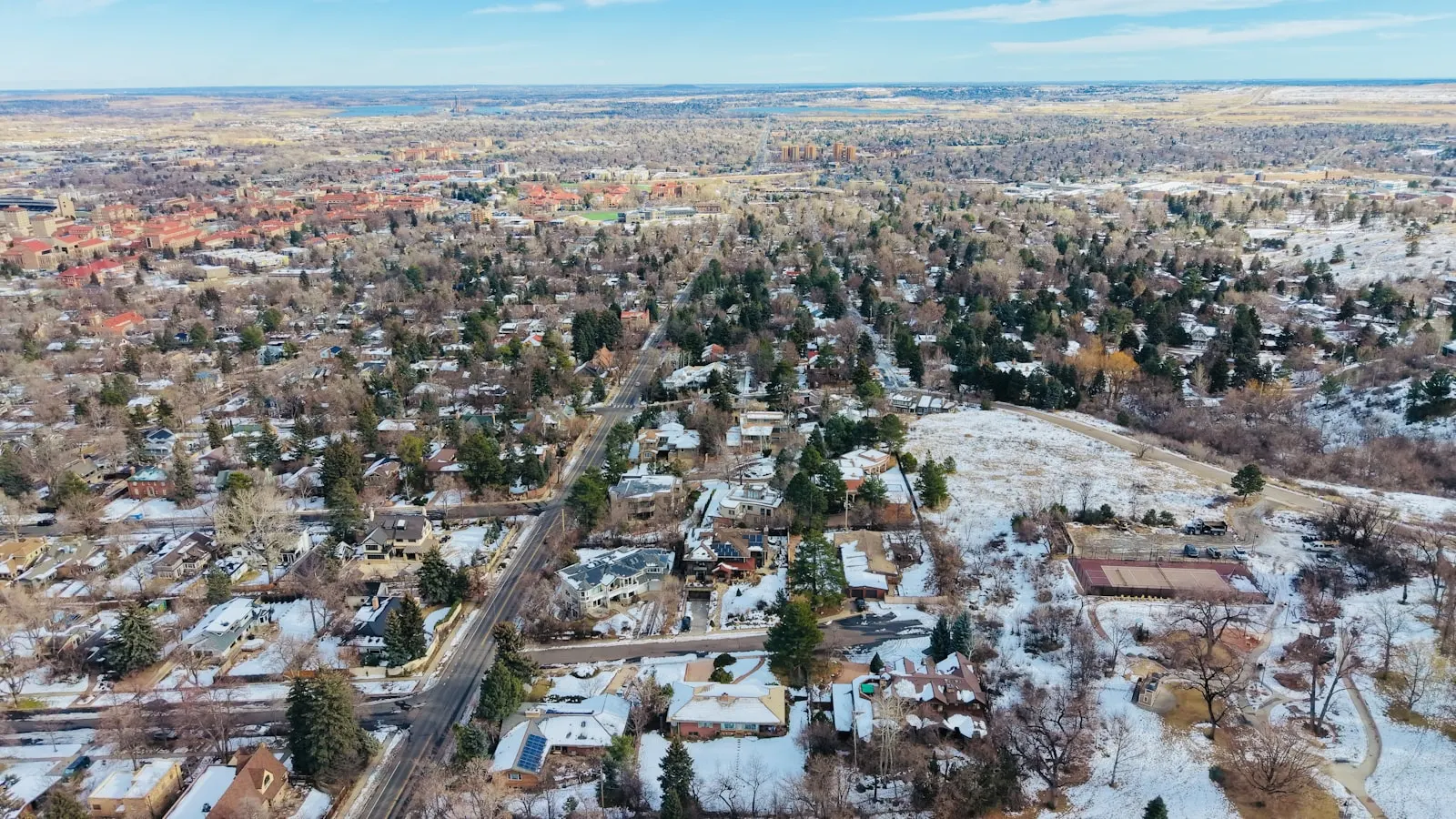
The thermometer undersells the risk out here. Frederick sits on open ground at 5,000 feet with the northwest wind running unbroken across the plains, and moving air pulls heat off a pipe far faster than still air at the same temperature. Exposure decides what freezes.
- Wind beats temperature
- Coal-era crawlspaces run cold
- New blocks have no windbreak
- First freeze near October 1
Wind decides what freezes in this town
Twenty-five degrees on a calm night is survivable for most plumbing. Twenty-five degrees with a hard northwest blow across open field is a different event entirely, because moving air strips heat off a surface continuously instead of letting a boundary layer form and insulate. So frozen pipe repair in Frederick ends up being a conversation about exposure more than about the forecast low. A hose bib on the windward wall splits while the identical one on the sheltered side of the same house comes through fine. Aspect matters here more than in towns with real terrain, since the Front Range steers our storms from a distance and blocks nothing at all.
Frederick's newest subdivisions carry the most exposure. Wyndham Hill and the blocks that came up with it have young trees, wide streets, and open ground upwind, so there's nothing between a north-facing wall and whatever comes off the plains. The old downtown grid has mature cottonwoods, close-set houses, and tight lot lines doing windbreak duty that nobody thanks them for. A century-old house downtown with an unheated crawlspace under an addition can still freeze, but the reason is different: it's not wind, it's the fact that the addition was built before anybody insulated a crawlspace on purpose.
Empty houses sit in their own risk category. A rental between tenants, a place on the market over the winter, a family gone to see relatives for two weeks with the thermostat dialed down to fifty: those are the addresses that generate February phone calls. No one is there to feel a room going cold, and nothing gets caught until water is already moving through a floor. If a house will be empty during a cold stretch, leave the heat at a real setting and ask somebody to walk through it.
Where frozen pipe repair in Frederick usually starts
The failure points repeat with real consistency, and they're almost all about a pipe running somewhere the heated envelope doesn't reach. Crawlspaces under old additions. Garage walls with a laundry hookup or a utility sink on the far side. Kitchen sinks on an exterior wall where the cabinet holds the cold air in overnight. Hose bibs with a hose still attached, which is the single most preventable burst on this list. And the vacant-house special: a heat setting turned down to save money in a place nobody is watching.
Where it splits and where it shows are rarely the same spot. Water freezes at the coldest point, ice expands and pushes pressure toward the closed faucet, and the pipe fails at whatever section is weakest, which may be several feet away. Then nothing at all happens until the thaw, when the water finds the crack and a ceiling stain appears in a room that seems unrelated. That delay is why a pipe that isn't flowing gets treated as a possible burst, not just an inconvenience.
| Where | Why it freezes | What helps first |
|---|---|---|
| Coal-era crawlspace | Uninsulated space under an old addition | Insulate the pipe, then seal the vents |
| New subdivision north wall | Open field upwind, no mature trees | Foam covers on bibs, check the rim joist |
| Attached garage | Unheated, and often left open | Keep the door closed, insulate the wall run |
| Kitchen sink on an outside wall | Cabinet traps cold air overnight | Open the doors on the coldest nights |
Thaw it right, or pay for the burst
If a faucet gives you nothing on a cold morning, open it first and leave it open. That gives melting ice somewhere to go and relieves the pressure that does the actual damage. Then find the main shutoff and be ready to close it, because if the pipe already split you'd rather learn that with your hand on the valve. Apply gentle heat from the faucet end and work backward: a hair dryer, a heat gun on low, warm towels, a space heater aimed at the general area. Never an open flame. Torching a frozen pipe is how houses burn down in January, and it also cracks the pipe you're trying to save.
If you can't reach the frozen section, or it's inside a wall, or the thaw brings water where water shouldn't be, that's the call. Along the Front Range, a thaw-and-assess visit commonly lands in the low hundreds. An actual burst repair depends entirely on access: an exposed basement run is a modest job, while a split inside a finished wall means opening drywall, and the water damage usually costs more than the plumbing does. Nobody can quote that honestly over the phone without knowing where the pipe runs.
Prevention is dull and it works. Foam covers on every hose bib, hoses disconnected by late September, pipe insulation in the crawlspace, a cabinet door left open on the coldest nights, and a thermostat that stays at a real temperature when you travel. If a line does let go while you're out, the emergency steps for this town are worth reading before winter, not during it.
- If one faucet won't runopen it, warm the line from the faucet back, watch for water
- If nothing runs anywheresuspect the main service line and call rather than experiment
- If the thaw starts a dripshut the main immediately, then find the split
Dealing with this in Frederick?
Start a quoteWinterizing on this town's calendar
Frederick's first freeze historically lands around October 1, with first snow following near the middle of the month, so the last week of September is when the outdoor work should be done. Hoses off and drained. Bibs covered. Sprinkler system blown out. Crawlspace vents closed. That week matters more than any single cold night in January, because the October freeze is the one that catches people who are still thinking about fall.
Then hold the line into spring, because the last freeze historically hangs on until about May 6. April here runs warm enough to be persuasive and cold enough to be expensive, and the split spigot in late April is a local tradition nobody wants. Keep the hoses off until the first week of May. Neighbors one town over run the same schedule, which is why the Firestone freeze guidance reads similarly, and the broader picture for this address sits on the Frederick guide.
Keep exploring
More for Frederick and nearby
All Frederick plumbing guides Frozen Pipe Repair across the Front Range Firestone Longmont
Questions we actually get
Frozen Pipe Repair in Frederick: quick answers
Why do pipes freeze here at temperatures that seem survivable?
Wind. Frederick sits on open plains at 5,000 feet with nothing meaningful upwind, and moving air pulls heat off a pipe far faster than still air at the same reading. A calm twenty degrees and a windy thirty are not comparable events for an exposed hose bib or a crawlspace run. Judge your risk by exposure and wind, not by the number on the thermometer.
Can I use a torch to thaw a frozen pipe?
No. Open flame is how frozen pipes turn into house fires, and rapid heating can also crack the pipe you're trying to rescue. Use a hair dryer, a heat gun on a low setting, warm towels, or a space heater near the area, and always start at the faucet end so melting water has an exit. Leave the faucet open the entire time.
When should I shut down outside water in Frederick?
Late September. First freeze historically arrives around October 1 and snow follows about two weeks later, so disconnect and drain hoses, cover the bibs, and get the sprinklers blown out before the month ends. On the spring side, wait until the first week of May to reconnect, since the last freeze historically holds until roughly May 6.
Beat the Frederick freeze, or fix what it broke.
Tell us which line stopped running and we'll get you to someone who can thaw or repair it.
Get My Free Quote