
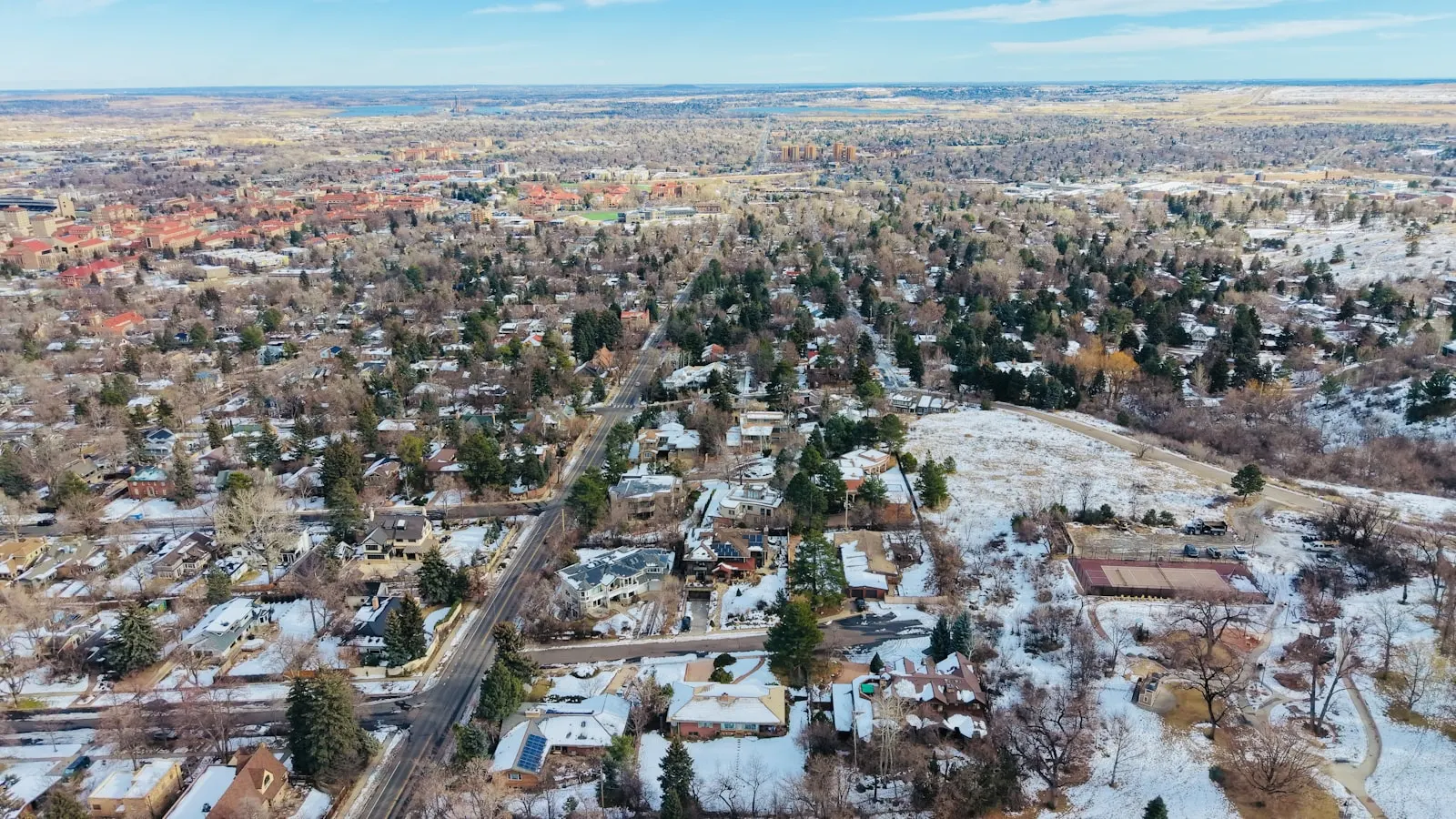
Freeze guidance for Longmont, Colorado
Frozen Pipe Repair Longmont CO
Pipe Thawing, Burst Repair & Freeze Prevention
Longmont gets less snow than almost anywhere else on this corridor and still freezes pipes with regularity. The reason is elevation and geography: cold air pools on this valley floor on clear nights, and old walls have very little in them to slow it down.
- Clear calm nights, not storms
- Old-core walls and crawlspaces
- Safe thawing, step by step
- Fixes that hold past February
Frozen pipe repair in Longmont has little to do with snow
Frozen pipe repair in Longmont confuses people who moved down from higher ground, because the snow totals promise an easier winter than this town actually delivers. Roughly 35 to 50 inches falls in a typical year, less than Boulder up the road and a good deal less than the towns south of here. And still the calls come, most of them after nights that never made the news at all.
Elevation explains it. At 4,979 feet this is the lowest ground on the whole corridor, sitting in the St. Vrain valley with Longs Peak filling the western horizon. On a clear, still night, air cools against the ground, turns dense, and slides downhill until it reaches the bottom. This valley is the bottom. That pooled air settles in and keeps cooling, so your crawlspace can spend the small hours in a colder night than the forecast ever promised.
So the nights to watch aren't the stormy ones. Snow is insulation, cloud cover is a blanket, and a windy storm mixes the air enough to keep the valley from stratifying at all. Clear, calm, and dry is the dangerous combination here, and this town gets plenty of those between the first freeze around October 1 and the last one near May 5.
Where a house in this town freezes first
The 1890s to 1920s core is the main event. Those houses went up before wall insulation was standard, and even the retrofitted ones often have supply lines running through cavities that got stuffed around rather than through. A kitchen sink on an exterior north wall is the classic local freeze, because the pipe sits in a cavity that's basically outdoors with siding on it. North walls never get the afternoon sun that rescues the south side of the house.
The tract belt freezes from below instead. Sixty-year-old crawlspaces with vents somebody opened one summer and never closed again let that pooled valley air right in under the floor, and the supply lines strung through the joists are hanging in it. Sealing crawlspace vents before the first hard freeze is the highest-value twenty minutes in this entire guide, and the materials cost about what lunch costs.
Newer houses east and south freeze at the edges: hose bibs left connected through October, tankless units mounted on exterior walls, and the garage line running out to a utility sink nobody uses in winter. All preventable with one fall walk-through. Every era in this city has its spot. Find yours in October, not in January.
- If one faucet drips down to nothing on a cold morningthe run in that exterior wall is frozen, so warm the room and open the cabinet
- If no fixture in the house has watersuspect the main or the meter side and call before applying heat anywhere
- If a thawed pipe shows a bulge or a splitshut the main now, because it will leak the second pressure returns
Thawing without turning a freeze into a flood
Thawing is patience with a heat source. Open the affected faucet first so melting ice has somewhere to push. Then warm the whole area gradually: cabinet doors open, room heat up, a hair dryer swept back and forth along the pipe rather than parked on one spot. Never an open flame, not once, not for a second. And go easy with a heat gun near old framing, because the pipe is not the only thing living inside that wall.
The moment to stay alert is the thaw itself, not the freeze. Ice frequently plugs the very split it caused, so a pipe can look perfectly intact until water starts moving again and finds the hole. Locate the main shutoff before you warm anything. In round Front Range numbers, a thaw call with no damage is usually a modest hourly visit, a single split section of copper repaired in an open basement runs a few hundred, and that same split inside a finished old-core wall costs considerably more, because the wall has to come apart and then go back together.
The judgment call is knowing when to stop and hand it off. If you can reach the pipe, the run is short, and you're confident about the shutoff, gentle warming is a reasonable homeowner job. If the frozen run sits inside a wall, under a slab, or on the meter side of the house, call. Nobody in this valley has ever regretted paying for a thaw. Plenty have regretted the water damage from a wall they opened at exactly the wrong moment.
| House era | Freezes where | Best prevention |
|---|---|---|
| 1890s-1920s core | Exterior wall cavities, north-side kitchen lines | Insulate the pipe itself, open cabinets on cold nights |
| 1960s-1985 tract | Vented crawlspaces and the lines strung through them | Close vents in fall, insulate crawlspace runs |
| 2000s and newer | Hose bibs, garage lines, exterior tankless units | Disconnect hoses in September, heat-tape the exposures |
| Any era, any block | Unheated additions and converted porches | Add heat or drain those lines for the winter |
Dealing with this in Longmont?
Start a quoteThe October list that prevents the January call
Do this in the last week of September, because the first freeze historically shows up around October 1 and an average has never been obligated to wait for you. Hoses off and drained, bib valves shut where you have interior shutoffs for them. Crawlspace vents closed. Pipe insulation on any run you can reach in a cold space, which is cheap foam and ten minutes with a utility knife. And walk the basement slowly looking for daylight, because the gaps that let light in let that valley air in right behind it.
During a cold snap, keep it simple. Leave a pencil-lead trickle running on the fixture served by your most exposed line, open cabinet doors under sinks on exterior walls, and hold the thermostat steady rather than setting it back overnight. If you're leaving town in January, either shut the main and drain the system or leave the heat at a real number and have somebody check the house. The hardest freezes here arrive on calm nights when nobody is paying attention.
If a pipe has already let go and water is moving, that's the emergency page, and it starts with the main shutoff. To see how the same weather behaves on higher ground a few miles west, we cover frozen pipes in Boulder. The whole local picture starts on our Longmont guide.
Keep exploring
More for Longmont and nearby
All Longmont plumbing guides Frozen Pipe Repair across the Front Range Boulder Firestone
Questions we actually get
Frozen Pipe Repair in Longmont: quick answers
We get less snow than Boulder. Why do pipes still freeze?
Snow totals and freeze risk are two different measurements. This is the lowest ground on the corridor at 4,979 feet, and on clear calm nights cold air drains off the foothills and settles right here. Snow actually helps, insulating the ground and putting cloud cover overhead. The dangerous nights are quiet, cloudless, and dry, and this valley collects a lot of them.
Can I use a space heater to thaw a pipe in the wall?
Carefully and indirectly, yes: warming the room and opening the cabinet is the safe version of that idea. What you should not do is aim high heat at old framing or use anything with a flame. In a 1910 house you're working beside dry lumber and possibly old wiring. If gentle room heat hasn't done it after a few hours, call somebody.
Should I leave a faucet dripping all winter?
Only on the nights that call for it, and only on the fixture with the exposed run. A steady trickle keeps water moving and relieves pressure if ice does form, but running it all season wastes water and does nothing about the cold cavity causing the problem. Trickle on hard clear nights, then spend the fall insulating so you need it less.
Frozen line in Longmont?
Tell us which fixture went dry and how old the house is, and we'll route it to plumbers who know these walls.
Get My Free Quote