
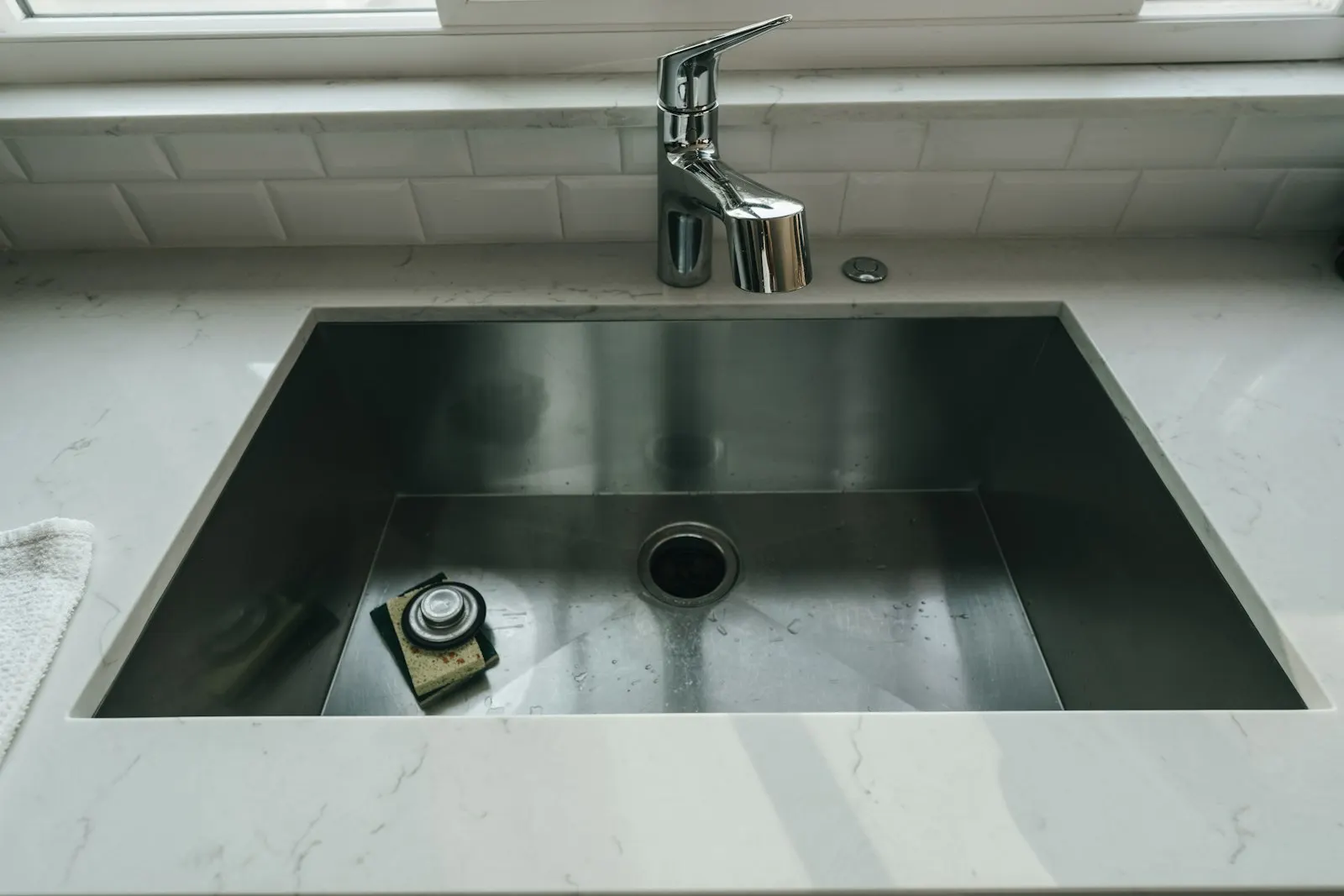
Drain help for builder-grade kitchens
Drain Cleaning Castle Rock CO
Drain Cleaning, Rooter Service & Clog Removal
A 2015 house in The Meadows shouldn't need a drain snake, and yet the kitchen line backs up every few months. Low-flow fixtures, long horizontal runs, and a builder-grade disposal add up. We'll explain the mechanics, then get you a quote from someone who clears these weekly.
- Low-flow homes, underfed drains
- Builder disposals named honestly
- Roots in young laterals
- Quotes routed same day
Why drain cleaning in Castle Rock skews young
The classic drain cleaning call in Castle Rock isn't a 1950s cast iron stack. It's a 2012 two-story in The Meadows where the kitchen line backs up every few months and the owner can't square that with a nearly new house. The mechanics are simple, and your builder set them in motion. Modern low-flow fixtures move far less water than drain lines were historically fed by, and a big suburban footprint means long, nearly flat horizontal runs between the kitchen and the street.
Less water pushing waste through more pipe: that's the underfeed problem. Solids that would once have ridden a strong flush all the way to the city main now strand halfway, dry out, and become the ledge the next clog builds on. Nothing is broken. The system is just running on a thinner margin than the one it was drawn for, and grease finds thin margins fast. Basement bathrooms sharpen the effect, since their fixtures tie in low and far from the stack, which is why the guest bath downstairs is so often where trouble surfaces first.
So the fix isn't shame about what went down the sink. The habits advice you'll read everywhere assumes a failing old line; yours is young and merely underfed. That distinction changes what you should buy: less rooter-of-the-month subscription, more one good diagnosis. And it starts with the piece of equipment your builder cheaped out on first.
The disposal your builder picked was a line item
Production builders buy disposals the way they buy doorknobs: by the pallet, at the lowest spec the model home could tolerate. A builder-grade unit doesn't liquefy food, it chops it coarse and passes the problem downstream to that long kitchen run. Add a household that actually cooks, and you get a grease-and-grounds paste settling in the pipe right about where it crosses under the basement ceiling. Swapping in a stronger unit helps, but it doesn't shorten the forty-odd feet of nearly flat pipe between your sink and the main, so treat the disposal as one lever among several, not the cure.
Run hot water for a beat before and after the disposal works, feed it gradually, and keep fibrous scraps and coffee grounds in the trash. That shifts the odds in a house like most of the Castle Rock housing stock, where the plumbing is young enough to respond. But some symptoms mean the game has already moved past habits. They're worth knowing cold, because each one points at a different spot in the system and a different size of bill:
- Gurgling from a basement bath when the kitchen sink drains
- Clogs that return on a schedule, every two or three months
- More than one slow fixture at the same time
- Water rising at the lowest drain in the house
- If one fixture drains slowIt's a local clog, likely hair or grease near that trap
- If the lowest drain gurgles when others runThe main line's involved, stop guessing and get it scoped
- If clogs return every few monthsThe line is underfed or sagging, clearing alone won't end it
What clearing actually involves, and the honest cost question
For a first-time kitchen clog, a cabled machine run from a cleanout is usually the whole job, and along the Front Range that visit commonly lands between one and a few hundred dollars, with access and the hour on the clock deciding which end you hit. Recurring clogs earn a camera. A scope shows if the enemy is grease buildup, a sagging section, or roots, and that distinction decides whether cleaning is a cure or a subscription. Ask for the footage on a drive or a link. You paid for it, and the next plumber will want to see it.
Hydro jetting costs more, commonly several hundred, and it's the right call for greased-up kitchen mains because it scours the pipe wall instead of punching a hole through the middle of the blockage. It's also safe for the PVC and ABS in Castle Rock's young housing stock when the operator meters pressure properly. What you shouldn't do is pay jetting prices on a line nobody has scoped. Diagnosis first, firepower second.
And if the camera shows the line itself has settled, you've left drain cleaning territory and entered structural territory. Clearing a bellied line buys weeks, not years, because the low spot refills on schedule no matter how clean the pipe walls are. Our sewer line guide for Castle Rock covers what sagging laterals mean in this soil and what fixing one honestly costs.
Clogs in new Castle Rock homes are usually a design margin problem, not an abuse problem. Clear the first one cheaply, but if it comes back on a schedule, spend on a camera before you spend on a third snaking. The footage settles arguments a plunger never will.
Dealing with this in Castle Rock?
Start a quoteHOA trees versus ten-year-old laterals
New subdivisions come with landscaping plans, and landscaping plans come with street trees planted on a schedule, often within easy reach of the sewer lateral trench. Young roots don't smash through intact pipe. They follow moisture to a joint that separated a hair as backfill settled, then move in and get comfortable. Castle Rock's newer filings were landscaped all at once, which means their root problems will mature all at once too, a few springs from now. The older sections are already there.
The early signal is subtle: a floor drain that gurgles, a downstairs toilet slow to clear in spring when trees wake up thirsty. Annual maintenance cabling knocks fine roots back cheaply if you catch the habit early. Neighbors a few miles up the corridor run the same arithmetic on similar-aged streets, which is why our Parker drain page reads like a cousin of this one. Late fall is the cheap season to book that kind of maintenance, after the trees go dormant and before holiday cooking loads every kitchen line in town at once.
If your house predates the HOA's current tree map, walk the parkway strip and see what's growing over the path between your cleanout and the street. Ten minutes of looking beats an afternoon of digging. That line is the one to protect.
Keep exploring
More for Castle Rock and nearby
All Castle Rock plumbing guides Drain Cleaning across the Front Range Parker Lone Tree
Questions we actually get
Drain Cleaning in Castle Rock: quick answers
Why does a nearly new Castle Rock house keep clogging?
Usually it's the underfeed problem. Low-flow fixtures send less water down lines that run long and nearly flat across big footprints, so solids strand and build ledges. Builder-grade disposals make it worse by passing coarse scraps into the kitchen run. The house isn't defective, it's operating on a thin margin, and better habits plus an occasional maintenance cleaning usually manage it fine.
Is hydro jetting safe for the plastic lines in newer homes?
In competent hands, yes. PVC and ABS handle jetting fine when the operator matches pressure to the pipe and scopes first to confirm what's actually down there. The scope matters more than the machine: jetting a line with a separated joint or a heavy sag wastes money and can turn a small problem into an excavation conversation. Diagnosis, then pressure.
What does drain cleaning cost around Castle Rock?
For a straightforward clog with decent access, Front Range pricing commonly lands between one and a few hundred dollars, with after-hours calls running higher. Jetting a greased kitchen main commonly runs several hundred. If someone quotes big numbers before a camera has been down the line, slow down and ask to see footage first. Honest outfits are glad to show their work.
Kitchen line down in The Meadows?
Two minutes to describe the clog, and we'll route it to a drain pro who works Castle Rock's subdivisions every week.
Get My Free Quote