
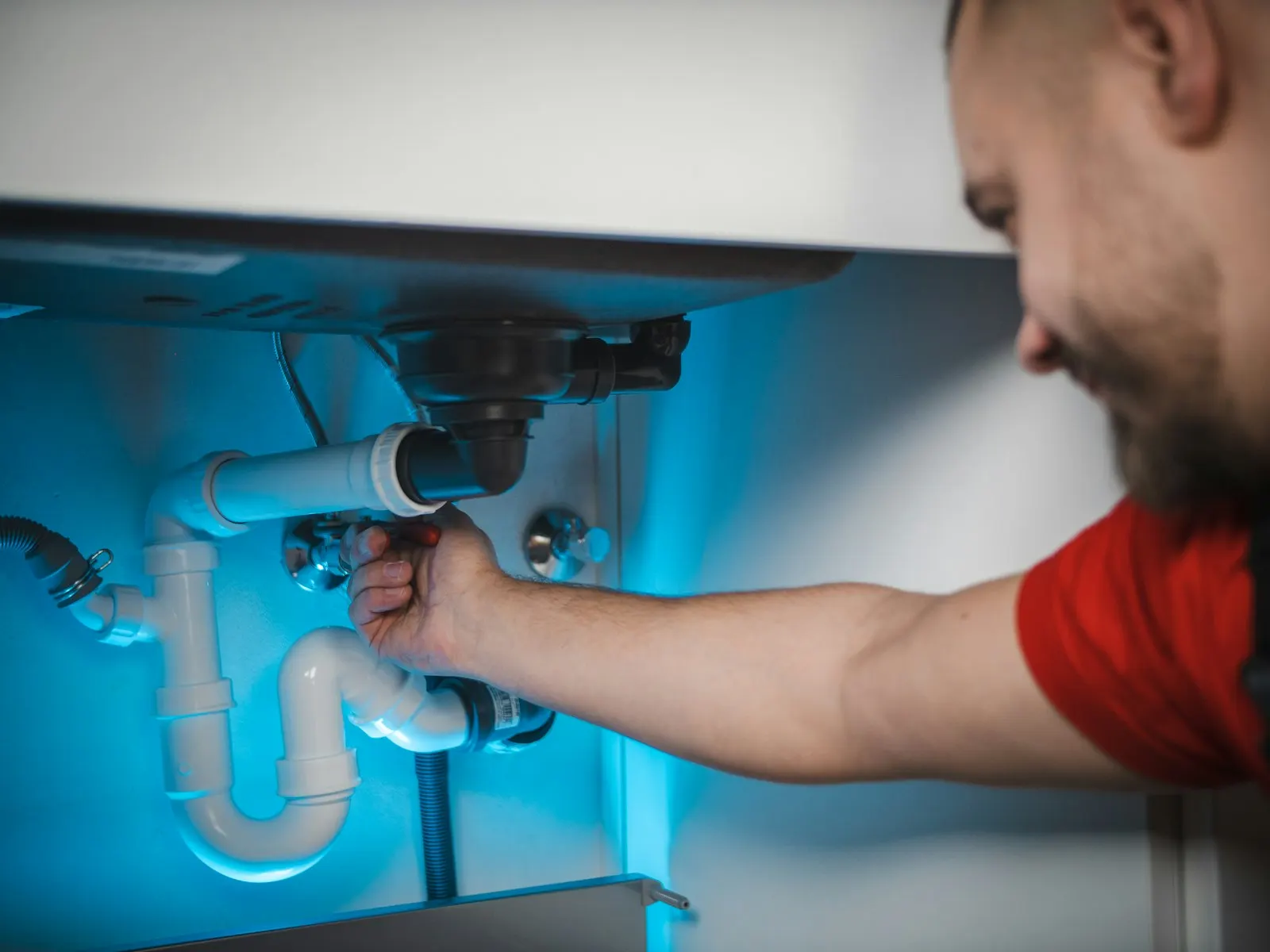
Emergency triage for Lone Tree homes
Emergency Plumbing Lone Tree CO
Burst Pipes, Active Leaks & Water Shutoff Help
The emergencies here are quiet ones: a recirculation loop weeping under a slab for a week, a wind outage killing the sump mid-melt, a house sitter opening the door to a warped floor. Fast triage, clear shutoff steps, and quote routing that keeps pace with the water.
- Silent leak detection
- Shutoff map first
- Outage failure planning
- Traveling household protocols
The leak nobody hears
The classic emergency plumbing call in Lone Tree doesn't start with a bang. It starts with a house sitter, a traveling household, and a floor that looks slightly wrong. The family's been gone nine days. The recirculation loop, which moves hot water through the house around the clock, developed a pinhole under the slab or inside a wall, and it's been weeping quietly the whole time. No burst, no spray, no sound. Just a warm stripe on the floor and baseboards starting to swell.
Recirculation leaks are uniquely sneaky because the system is designed to mask them. The pump keeps water moving, the heater keeps replacing the lost heat, and the pressure-managed supply keeps feeding the line without any drama a homeowner would notice. In a town where travel is routine and houses sit empty for stretches at a time, that combination produces some of the most expensive water damage in the south metro, all of it silent.
Speed still matters here, it's just measured in days of dampness rather than minutes of flooding. The difference between day two and day nine of a slab leak is the difference between a plumbing repair and a flooring, drywall, and remediation project with a plumbing repair attached.
Learn the shutoffs before the water does
Every minute of an active leak is bought back in advance by knowing three valve locations cold: the main shutoff, the water heater's cold inlet, and the isolation valves on the recirculation pump. In most Lone Tree homes all three live within six feet of each other in the mechanical room, which is convenient, provided you've actually looked before the night you need them. Tag them if you like; future-you, or your house sitter, will appreciate the labels.
The power grid belongs in this section too, because wind takes it down here more often than snow does. A hard gust event across the open ridges can drop power exactly when the March melt is loading your sump pit, and it takes the heater's electronics, power-vented or tankless, down with it. The house doesn't just lose hot water; it loses its defenses. Battery backup on the sump is the cheapest insurance this city's geography offers.
One habit worth stealing from commercial buildings: exercise the valves. A main shutoff that hasn't turned in fifteen years may not turn when it matters, and builder-grade gate valves in the older filings are notorious for seizing open. Turn each critical valve gently closed and back open once a year. If one fights you or weeps afterward, replace it on a calm Tuesday, because it just told you it would've failed during the real thing.
| What's happening | Kill this first | Then |
|---|---|---|
| Supply line burst, water moving | Main shutoff in the mechanical room | Open the lowest faucet to drain the system down |
| Water heater leaking from the tank body | Cold inlet valve above the heater | Gas control to off, and clear the area around the pan |
| Warm floor, no visible water | Recirculation pump isolation valves | Shut the main too, then get a leak locate scheduled |
| Power out, sump idle in a melt | Nothing to shut; this one's electrical | Backup power for the pit, and move what's stored down there |
What emergency plumbing in Lone Tree costs, and what can wait
After-hours emergency service along the Front Range commonly carries a premium of $150 to $350 over standard rates before any repair is priced, and holiday nights push the top of that. Which is why triage is worth money. Water actively moving that you can't isolate is a call-now situation, no math required. But a contained drip with the main shut off, or a heater weeping into its pan with the inlet closed, will cost meaningfully less at 8 a.m. than at midnight, and the damage outcome is identical.
The rule that holds up: pay the premium when water is winning, skip it when the valves already won. Shutting the right valve converts most emergencies into appointments, and appointments get quoted like work instead of like rescue. That's the entire case for learning the mechanical room now, while it's boring and nothing is dripping on anything.
Costs on the repair itself vary too widely to promise much. A pinhole in accessible copper is a modest fix, while a slab leak on a recirculation loop can involve leak location work, concrete, or rerouting the line overhead, and those paths price very differently. The honest sequence is contain, locate, then quote. Any firm number offered before the leak is even found is fiction.
- If water's flowing and you can't isolate itshut the main and make the call now
- If the tank body leaks but the inlet is closedyou've contained it; book the morning slot
- If an outage killed the sump during a meltthat's a now problem, and it's electrical: backup power first, plumber second
Dealing with this in Lone Tree?
Start a quoteEngineer the house to fail loudly
Silence is the enemy, so buy noise. Leak sensors under the water heater, behind the refrigerator, at the recirculation pump, and in the sump pit cost less than one drywall patch, and they text you from anywhere. A smart shutoff valve on the main goes further, closing the line automatically when flow looks wrong at 3 a.m. For traveling households, the low-tech version still works: water off at the main whenever the house sits empty more than a few days. The whole kit prices like one insurance deductible, and unlike the deductible, you only buy it once.
Leave your house sitter a one-page sheet: a photo of the main shutoff, the heater's inlet valve, and a plumber-ready description of the mechanical room. Add one instruction that sounds paranoid and isn't: walk every floor once a day and put a hand on the slab near the mechanical room, because warmth underfoot is data. Pair it with the freeze protocols in winter, since the two failure modes overlap from October through May. If the heater turns out to be the culprit, the water heater page covers the repair math, and the metro emergency hub has the general playbook.
Keep exploring
More for Lone Tree and nearby
All Lone Tree plumbing guides Emergency Plumbing across the Front Range Highlands Ranch Parker
Questions we actually get
Emergency Plumbing in Lone Tree: quick answers
Where's my main shutoff?
In most Lone Tree homes: the mechanical room or the basement wall facing the street, on the pipe coming up through the floor, near the pressure regulator. It's a lever or a wheel valve. Find it today, turn it gently once so you know it moves, and photograph it for anyone who watches your house. Sixty seconds now buys a lot of calm later.
Is a warm spot on the floor really an emergency?
Treat it as one until proven otherwise. A warm strip on a slab floor is the classic signature of a hot-side leak below it, often on a recirculation loop that runs around the clock. It won't flood the house today, but it's pouring heated water under your foundation and running the heater constantly. Isolate the loop, shut the pump off, and get eyes on it fast.
What should I set up before traveling?
Three things, in order: a person or sensor that checks daily, water off at the main if nobody's home for more than a few days, and heat holding the house at a sane floor temperature. Add written shutoff instructions with photos for the house sitter. Most of the ugly discoveries we hear about were preventable by any one of those steps.
Water's winning? Move now.
Shut the main, then send the request, and we'll route it fast to Lone Tree plumbers who answer.
Get My Free Quote