
Hot water guidance for Longmont, Colorado
Water Heaters Longmont CO
Water Heater Repair, Installation & Replacement
Soft mountain water from a utility this city runs itself is easy on a tank, which means age rather than scale usually decides when yours goes. Here's how to read the warning signs, and how to think about repair versus replacement in a town full of same-year houses.
- Soft water, long tank life
- Old-core basement venting
- Tract belt replacement waves
- Fuel math on your own bill
Water heater repair in Longmont is mostly an age question
The first thing to understand about water heater repair in Longmont is what you don't have to worry about. The city runs its own water utility on mountain supply, and it comes out soft. In hard-water country, scale lays down on the bottom of a tank until the burner is heating rock instead of water, and tanks die young for it. Not here. Yours has a real shot at twelve years or better.
Which shifts the whole question. If scale isn't the thing killing your heater, then age, sediment, and a spent anode rod are, and those follow a schedule you can plan around. A tank that's eight and working is not a problem. A tank that's fourteen and working is a countdown, and the difference between swapping it on a Tuesday in October and swapping it after it lets go across a finished basement floor is roughly the cost of that basement.
The other local wrinkle is the neighborhood effect. Thousands of houses in the tract belt north and west went up between 1960 and 1985, and their heaters have been replaced in waves ever since, usually within a few years of each other on any given block. If two of your neighbors have had a truck in the driveway this year, treat it as a forecast rather than a coincidence.
Where the tank lives changes the whole job
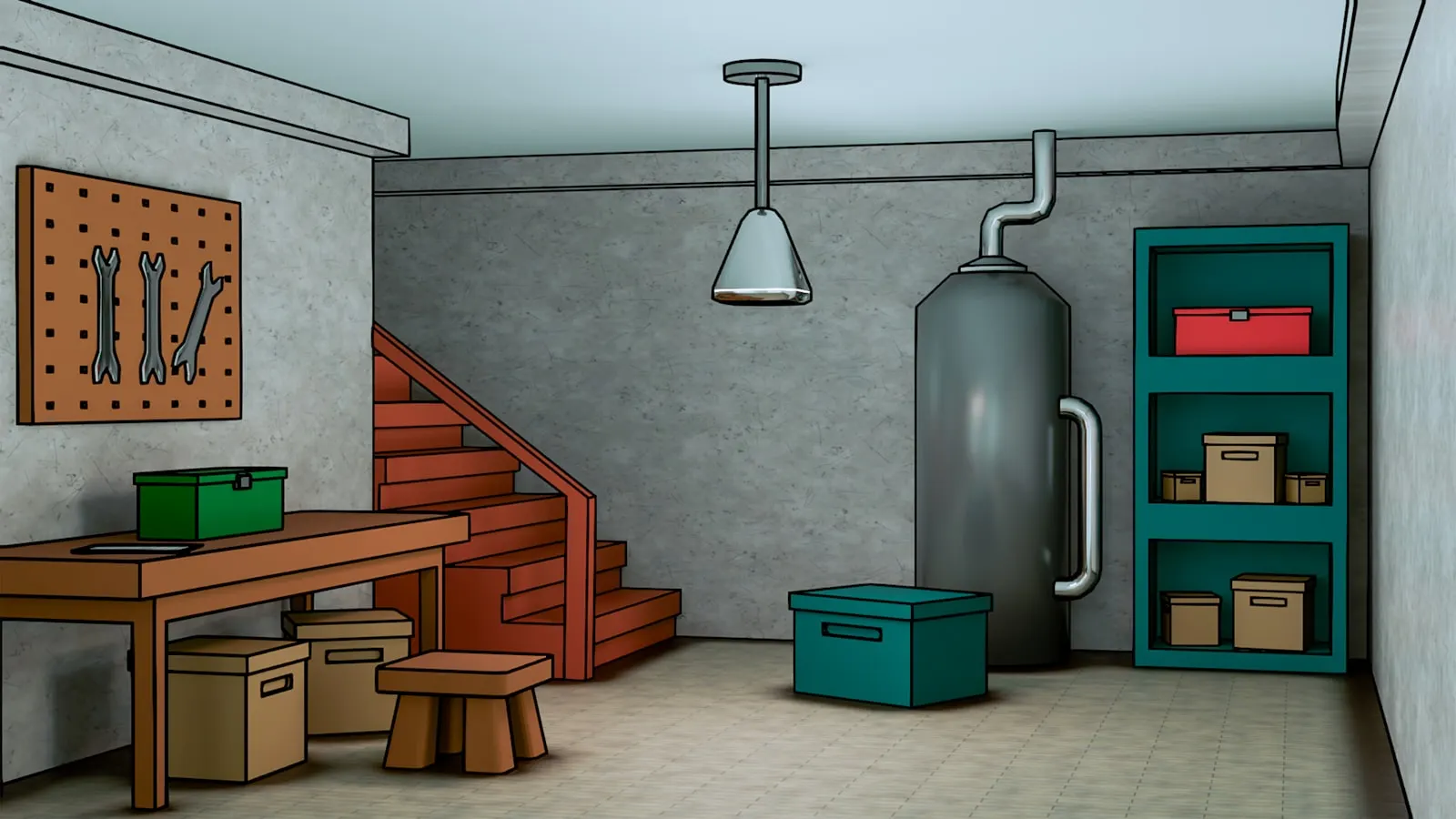
In the 1890s to 1920s core, the heater almost always sits in a basement that was never designed around it. Low headroom, a stairway with a turn in it, sometimes a hatch instead of a door. Venting into an old masonry chimney is common down there, and that detail is what turns a simple swap into a long afternoon, because what a modern heater needs from a flue rarely matches what a 1912 chimney was built to do. Ask about venting before anybody quotes you a number.
Tract-belt houses generally put the heater in a utility closet or the garage, which is the easy case: room to work, a floor drain within reach, a straightforward flue. Out east and south, newer builds increasingly run tankless units on exterior walls, and that changes the maintenance conversation entirely. Tankless doesn't age out the way a tank does, but it wants servicing on a schedule, and it sits in the coldest part of the building.
One note on altitude. At 4,979 feet this is the lowest ground on the corridor, so gas appliances have an easier time here than they do up in Monument or Castle Rock. Easier, not exempt. Any combustion appliance installed in this valley should still be set up for the altitude it's actually running at, and an installer who shrugs at that question is telling you something useful about the rest of their work.
| Location | Typical era | What complicates the job |
|---|---|---|
| Old-core basement | 1890s-1920s houses | Tight stairs, masonry chimney venting, no floor drain |
| Utility closet or garage | 1960s-1985 tract | Usually simple, watch tired shutoffs and old flex lines |
| Exterior-wall tankless | 2000s and newer | Annual servicing, freeze exposure, altitude setup |
| Crawlspace install | Scattered, any era | Access, drainage, and slow leaks nobody spots |
Repair it, replace it, or change fuel entirely
The repair-or-replace line is less blurry than people expect. Thermostats, thermocouples, igniters, and heating elements are repairs, usually inexpensive ones, and worth doing on any tank under about ten years old. A leaking tank is never a repair. Once water is coming through the steel, that unit is finished, and anybody offering to patch it is selling you a few weeks. Everything between those two poles comes down to age and what else on the unit looks tired.
On price, in broad Front Range terms: a service call for a thermostat or thermocouple lands in the low hundreds, a straightforward tank replacement generally runs into the low four figures once you count the unit, the labor, and hauling the old one out, and a tankless conversion sits well above that because it usually brings new venting and gas line work with it. Those ranges are wide on purpose. Old-core basements push you toward the top of every single one.
Fuel is the question actually worth running numbers on here, because this city runs its own electric utility instead of buying from a regional provider, and that changes the arithmetic compared to towns down the corridor. Pull your own bill. Look at what you pay per kilowatt hour and per therm, then compare against a heat pump water heater's efficiency rather than a plain electric tank's. A national rule of thumb is not your bill. Your city's numbers are your numbers.
Under ten years old with a parts failure, repair it. Leaking from the tank itself, replace it today rather than Friday. Between ten and fifteen with something acting up, replace on your own schedule and pick the fuel deliberately, because that one decision follows you for the next decade of utility bills.
Dealing with this in Longmont?
Start a quoteSmall habits that buy you years
Flushing a tank once a year takes twenty minutes and a garden hose. Soft water still leaves sediment behind, just less of it, and sediment on the bottom of a gas tank is a layer of insulation between the burner and the water it's supposed to be heating. If your heater rumbles or pops when it fires, that's sediment boiling underneath, and it has been building for a while.
Two parts nobody thinks about until they matter. The anode rod corrodes on purpose so the tank doesn't, and it's worth checking around year five and replacing if it's mostly gone. Then there's the drain pan under a basement heater with a line running to a floor drain, which is cheap insurance in a town where plenty of finished basements sit under original joists. If your old-core basement has no floor drain at all, that pan matters more, not less.
If you wake up to a cold shower and a wet floor, that's a different page entirely. Our Longmont emergency guide covers what to shut off first and in what order. For the wider view of how altitude and water chemistry shift these decisions across the metro, start at the Front Range water heater hub, then come back and price yours.
Keep exploring
More for Longmont and nearby
All Longmont plumbing guides Water Heater Repair across the Front Range Boulder Firestone
Questions we actually get
Water Heater Repair in Longmont: quick answers
How long should a water heater last in Longmont?
Longer than in hard-water country, which is one of the quiet benefits of the city's soft mountain supply. Twelve years is a reasonable planning number for a standard tank, and plenty here run past that with annual flushing and a replaced anode rod. Beyond fifteen you're on borrowed time no matter how well it's behaving right now.
Is a heat pump water heater a good fit here?
Often, with two conditions. It needs a space that stays reasonably warm with some air volume around it, which an old-core basement may or may not offer, and it has to pencil out against your actual electric rate. Longmont runs its own electric utility, so pull a recent bill and do that comparison with local numbers instead of a national average someone quoted you.
Hot water runs out faster than it used to. Is the tank failing?
Usually that's sediment, a bad lower element, or a broken dip tube rather than the tank itself, especially on a unit under ten years old. Flush it first and see what changes. If recovery is still short afterward and the heater is past twelve, treat the shrinking shower as the tank giving notice and start pricing replacement on your terms.
No hot water in Longmont?
Send the age, the fuel type, and what it's doing, and we'll get it in front of plumbers who work this town.
Get My Free Quote