
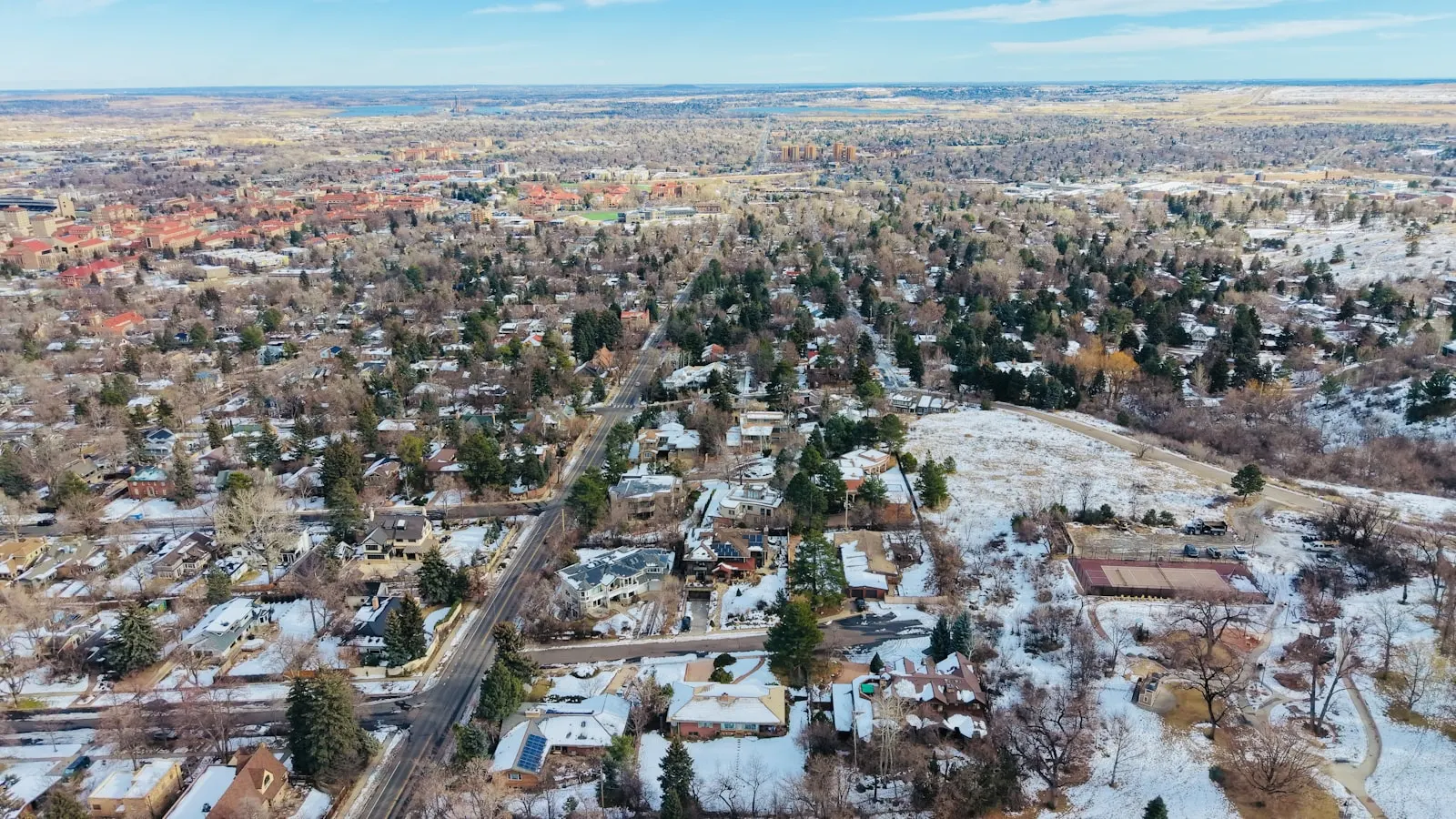
Freeze defense for Westminster, Colorado
Frozen Pipe Repair Westminster CO
Pipe Thawing, Burst Repair & Freeze Prevention
The same northwest exposure that gives Westminster's ridge homes their Flatirons view points their walls straight into the coldest wind the Front Range makes. Pipes in those walls freeze first, often during fast October squalls nobody dressed for. Here's how to thaw one safely, and how to cancel the rematch.
- Northwest wall risk mapping
- Safe thawing, no torches
- Early-October squall prep
- Terrace sprinkler blowouts
The view has a price, and it's collected in October
Frozen pipe repair in Westminster clusters in a specific kind of house: the ridge-top build with the big northwest view window, the one the whole floor plan was designed around. The kitchen sink sits under that window, its supply lines run through the exterior wall, and that wall faces the exact direction winter arrives from. When the first hard squall clears the Flatirons, historically possible by early October, that house loses water at the kitchen sink while the neighbor one terrace down and east never notices.
Wind is the mechanism, and it's worth being precise. Moving air doesn't make the wall colder than the actual temperature, but it strips heat out of the wall cavity many times faster than still air would, so the pipe inside reaches the danger point hours sooner. A calm 15-degree night and a windy 15-degree night are entirely different events for a northwest wall. Treat the forecast low as a floor number. The wall's number arrives sooner.
And the calendar is unkind here. First freeze around early October means the exposure season opens while sprinklers are still charged, hoses are still connected, and half the block is still thinking about patio furniture. So this page assumes an early-season ambush rather than a February siege. Both happen. The October version does more damage per degree, because nothing was ready for it.
Where Westminster pipes actually freeze
The map is fairly short. Supply runs in northwest-facing exterior walls, especially under view windows on the west-side ridges. Lines crossing unheated garage ceilings in the split-levels of the middle terraces. Hose bibs on the 50s and 60s southeast originals, many of them still the old non-frost-free pattern that holds water right at the wall. And crawlspace runs in the post-war ranches, where a vent left open past September aims October air directly at fifty-year-old copper.
The defenses are cheap and unglamorous. Open the cabinet doors under that view-window sink on wind nights so room heat reaches the wall. Foam covers on every bib, and hoses off by late September, no exceptions. Close crawlspace vents in the fall. If a wall run has frozen twice, it will freeze again, and that pipe has earned insulation, heat cable, or rerouting to an interior chase before winter number three.
Worth noting what's absent from that map: interior plumbing in the 90s ridge builds generally behaves, since PEX and inside chases arrived with the era. The exceptions are the show-off runs. A wet bar plumbed along the view wall, a pot filler on an exterior kitchen wall. Any pipe routed for looks instead of warmth carries its own private winter risk, and it usually reveals that during the first real squall.
Thawing frozen pipes in Westminster without making it worse
If a fixture quits on a freezing morning, start gently. Open the faucet it feeds, both handles, so melting ice has somewhere to relieve pressure. Warm the space around the suspect run: cabinet doors open, room heat up, a hair dryer worked slowly from the faucet back toward the cold section. Never open flame, not once, not on any pipe. And check the meter area first, because if the whole house is dry the freeze may be at the service entry, which changes where you aim the heat. Patience is the entire skill here. Most do-it-yourself thaw disasters are speed disasters wearing a disguise.
Call for help when the frozen section sits inside a finished wall you can't reach, when you can't find the ice plug at all, or when you spot a bulge, frost line, or hairline split. Old copper splits under ice pressure where PEX often stretches and survives, and those 50s southeast homes and 90s ridge builds sit on opposite ends of that gamble. A straightforward professional thaw commonly lands in the low hundreds along the Front Range. A split that soaked drywall and flooring is a different invoice entirely, routinely in the thousands once mitigation joins the party. If insurance ends up involved, photograph everything before cleanup starts. Adjusters believe cameras.
One more thing: a pipe that froze but didn't burst isn't a win, it's a warning shot with excellent aim.
Thaw slow, from the open faucet back, and skip flame entirely. Then treat the freeze as a diagnosis instead of bad luck: that pipe froze because its wall or cavity loses heat, and the next squall will find it again. Spend the follow-up money on insulation, heat cable, or rerouting, or plan on meeting the same problem later with worse timing.
Dealing with this in Westminster?
Start a quoteSprinklers on a slope don't drain themselves
Westminster's steep-terrace sprinkler systems are the other October casualty. On a stepped yard, zone piping rides the slope, and low heads hold water even after the system is nominally drained, so gravity alone doesn't finish the job. A proper compressed-air blowout does, and with first freeze historically arriving around early October, the smart window is late September, earlier if you irrigate a west-facing slope that takes the wind head-on. The backflow preventer standing above grade near the house is the most freeze-exposed fitting on the entire property, so wrap or foam it the same week the hoses come off. And mark your system's drain and manifold locations now, in daylight, while everything still works.
If a line does let go, inside or out, water shutoff comes before diagnosis, and our emergency page walks that first five minutes. For freeze tactics across the whole metro, elevation by elevation, the Front Range frozen pipe hub has the wider view, and the Westminster overview explains why the west side of this particular city winters harder than the east.
Keep exploring
More for Westminster and nearby
All Westminster plumbing guides Frozen Pipe Repair across the Front Range Northglenn Broomfield
Questions we actually get
Frozen Pipe Repair in Westminster: quick answers
At what temperature do pipes freeze in Westminster?
Exposure decides more than the thermometer. A sheltered interior pipe shrugs off a zero-degree night, while a line in a northwest wall on a ridge lot can freeze in the low twenties if the wind is working the house. The rule worth keeping: any sustained hard freeze with northwest wind puts view-window walls, garage ceilings, and hose bibs at risk, and Westminster sees those conditions from early October into May.
When should sprinklers be blown out here?
Late September is the honest target, since Westminster's first freeze historically lands around early October and fast Flatirons squalls can arrive ahead of the average. Steep terrace systems hold water at low heads even after draining, so compressed-air blowouts matter more here than on flat lots. If a cold snap beats you to it, insulating the above-grade backflow preventer buys time. It's the first fitting to die.
Can I thaw a frozen pipe myself?
If you can see and reach the frozen section, usually yes: open the faucet it serves, warm the area gradually with room heat or a hair dryer working from the faucet backward, and be patient. Never use a torch or any open flame. Call a pro when the ice sits inside a finished wall, when nothing flows anywhere in the house, or when you see a bulge or split, because thawing a burst line just turns it on.
Frozen line in Westminster? Move now, gently.
Open the faucet, start the warm-up, and send us the details so the right help is moving while you work.
Get My Free Quote