
Freeze and burst help for Aurora, Colorado
Frozen Pipe Repair Aurora CO
Pipe Thawing, Burst Repair & Freeze Prevention
Between Aurora and the Kansas line there isn't much to slow the wind, and wind is what turns a cold night into a burst pipe. This guide covers safe thawing, the walls that freeze first, and the October-to-May calendar this city actually runs on.
- Wind exposure, taken seriously
- Safe thawing, step by step
- East-side new-build weak spots
- Seven-month freeze calendar
A north wind and a dead kitchen tap
January, an east-side build near Southshore, three years old. The overnight low was cold but not historic. What was historic was the wind, a steady hard push out of the north with nothing between the Wyoming line and your siding to slow it down. By 6 a.m. the kitchen tap, on an exterior north wall, gives you a trickle and then nothing. The furnace never blinked. The pipe froze anyway, because the wind spent all night stripping heat out of that wall faster than the house could put it back.
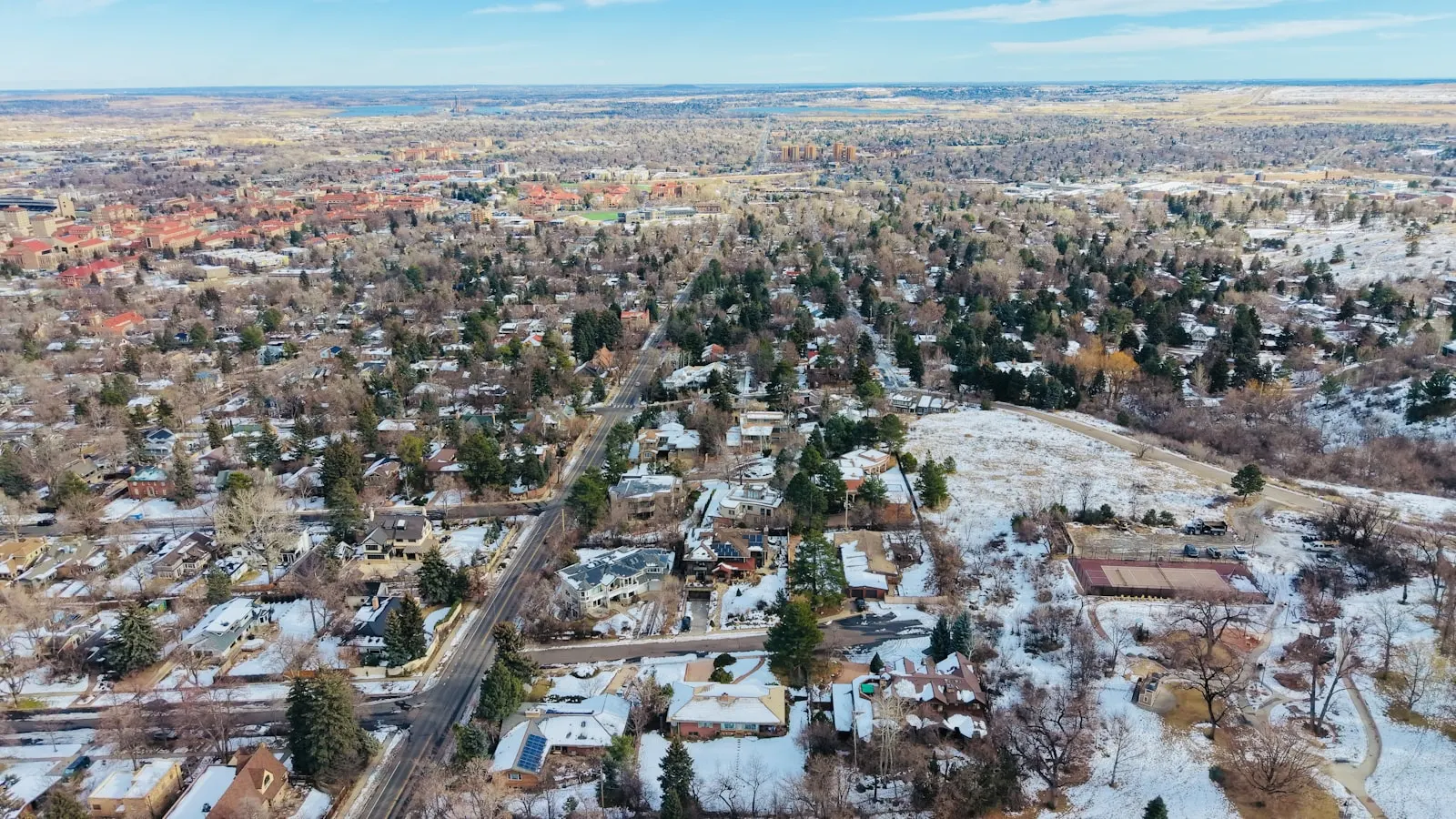
This is the Aurora pattern. Frozen pipe repair in Aurora is less about record cold than about exposure: the city stands on open plains at 5,403 feet with no foothill shelter, so an ordinary cold front does extraordinary work on any line a builder ran tight to an outside wall. Newer east-side houses fail this test surprisingly often. Fast construction sometimes skips insulation behind sink cabinets, and nobody finds out until the first real wind event finds it for them. The fix is rarely expensive. The discovery usually is.
Where this city freezes first
Make a mental map of your risk. North- and west-facing walls take the wind head on, so supply lines in those walls, especially behind kitchen and bathroom cabinets, top the list. Garage walls come next: an uninsulated garage door is a giant cold radiator sitting a few feet from your water lines. In original Aurora's older blocks, garage conversions deserve special suspicion, because plenty of them wrapped living space around pipes that were never insulated for it, and a converted room can hide a line freezing quietly inside a wall. If your house has one of these rooms, find out where its water comes from before winter does.
Hose bibs are the annual casualty. A hose left connected holds water against the valve, and the first week of October cold, historically arriving around the 4th, splits the pipe inside the wall where you can't see it. The split waits patiently until spring, announcing itself the first warm day you water something and the wall goes soft. Two minutes of unscrewing a hose in late September prevents the whole story. Frost-free bibs help, but only if the hose actually comes off. Leave it connected and they split like anything else.
- If water still tricklesLeave the tap open and warm that wall, the line is winning
- If flow has fully stoppedShut the main off before you thaw anything at all
- If you find a split or a bulgeKeep the water off and get repair help, thawing comes second
Thawing, repairs, and the price of waiting
Safe thawing is patient thawing. Open the frozen tap so melting water has somewhere to go, then warm the pipe from the faucet end back toward the freeze with a hair dryer, a heat gun on low kept moving, or a space heater aimed into the open cabinet. No torches, ever, and nothing with a flame near a wall cavity. If the frozen section sits inside a finished wall, warming the room and waiting beats cutting drywall in a panic, and a plumber with a thermal camera can find the blockage without exploratory demolition.
The reason you shut the main first: ice can split a pipe while everything looks fine, and the ice plug itself is the only thing corking the leak. Thaw a split line with the water on and you trade a frozen pipe for a flood. With the main off, the worst case of a successful thaw is a repairable pipe and a wet towel, which is a trade you'll take.
On cost, thawing calls along the Front Range commonly land in the $200 to $500 range when the pipe survived, while a burst that soaks drywall and flooring runs into the thousands before the plumbing line item even starts. That gap is the entire argument for the calm version of this: main off, patient heat, and a call for help the moment you're past your depth. The judgment call isn't whether professional help is worth it. It's how sure you are that the pipe is whole, and if you're not sure, you're not sure. Uncertainty about a wall cavity full of water is not a place to economize.
Dealing with this in Aurora?
Start a quoteFreeze-proofing on Aurora's real calendar
Aurora's freeze window historically runs from about October 4 to about May 3, with 45 to 60 inches of snow scattered through it. That's seven months, and the edges are the trap: the first week of October and the last week of April catch more people than January, because January cold is expected and shoulder-season cold shows up behind a 60 degree afternoon. So work the calendar. Hoses off and bibs drained by late September. Cabinet doors open and a pencil-thin drip running on exposed lines any night the forecast pairs single digits with wind. It's a five-minute evening routine, and it beats every gadget sold for this problem.
The permanent fixes are unglamorous and cheap compared to one burst. Insulate the garage, or at least the wall its water lines share. Foam sleeves on everything in crawl spaces and unheated corners. If a wall line has frozen twice, that's the house telling you to reroute or insulate it properly, not to buy a better hair dryer. If a freeze has already turned into spraying water, go straight to the Aurora emergency page and start with the shutoff. For the wider playbook, the metro freeze guide goes deeper, and Commerce City's page shows the same wind problem one town north.
In Aurora, wind is the freeze multiplier, and exposure beats thermometer readings. Strip hoses by late September, insulate the garage and windward walls, and treat any forecast pairing single digits with a north wind as an action item. If a line does freeze, main off first, patient heat second, and professional help the moment a split is even possible.
Keep exploring
More for Aurora and nearby
All Aurora plumbing guides Frozen Pipe Repair across the Front Range Denver Centennial
Questions we actually get
Frozen Pipe Repair in Aurora: quick answers
At what temperature do pipes freeze in Aurora?
There's no single number, and that's the point here. A sheltered pipe can shrug off a zero-degree night while a line in a windward wall freezes in the teens, because wind strips heat from wall cavities far faster than still air. In Aurora's open exposure, treat any single-digit forecast with sustained wind as pipe weather, whatever the thermometer alone says.
Should I let faucets drip on cold nights?
On the right nights, yes. A pencil-thin stream from faucets on exterior walls keeps water moving and relieves pressure, which is what actually bursts pipes. Pair it with open cabinet doors so room heat reaches the lines. Aurora nights that earn the drip: single digits or below with wind, especially out of the north. The pennies of water are the cheapest insurance in this guide.
My house is nearly new. Why did a pipe still freeze?
Fast-built houses on Aurora's east side sometimes leave gaps: missing insulation behind a sink cabinet, a supply line run tight against an exterior wall, an unsealed penetration letting wind into the cavity. The house passed inspection; the detail just never got tested until the right wind event. One targeted fix, insulating or rerouting that line, usually ends the problem for good.
Frozen line in Aurora? Move now, calmly.
Shut the main, then tell us what's frozen and your cross streets, and we'll route it to thaw-and-repair help that works your side of the city.
Get My Free Quote