
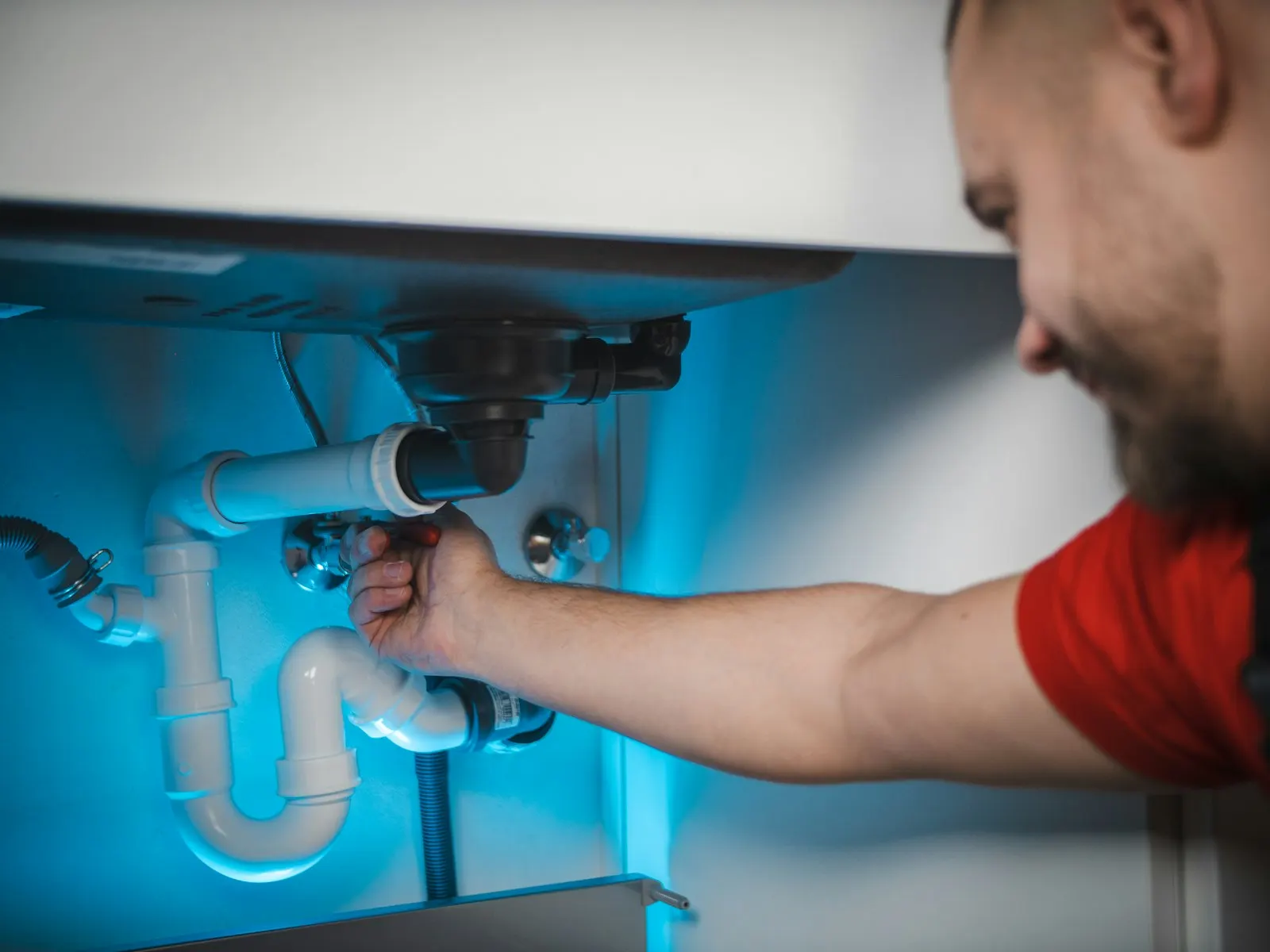
Emergency guidance for Boulder, Colorado
Emergency Plumbing Boulder CO
Burst Pipes, Active Leaks & Water Shutoff Help
Boulder homeowners take water seriously, and 2013 is why. The useful version of that instinct is boring and specific: know where your main shutoff is, know which valve controls what, and know what actually earns an after-hours rate. Read this before the night you need it.
- Go find your shutoff tonight
- August move-in triage
- What earns after-hours money
- Free quotes, honest ranges
Find the shutoff tonight, not at 2 a.m.
Emergency plumbing in Boulder almost always comes down to how fast you can stop the water, and that's a question you answer in advance or answer badly. In a pre-1930 house on Mapleton Hill or in Whittier, the main shutoff usually sits in the basement on the wall facing the street, often behind the furnace, frequently painted over. In a mid-century Martin Acres ranch it's more likely in a utility closet or the garage. In a rental near CU it might be in a locked common area you've never seen, which is a conversation to have with your landlord on a calm afternoon.
Go find it now. Turn it, at least partway, because an old gate valve that hasn't moved in twenty years will seize on the night you need it and a quarter-turn ball valve will not. If it's stuck or weeping, that's a scheduled repair rather than an emergency, and it's one of the highest-value hundred dollars you will ever spend on this house.
Then label everything. A strip of masking tape and a marker on the water heater valve, the boiler feed, each toilet stop, and the main. Photograph the labeled valves and drop the picture in a shared album so anybody in the house can find it. In a shared rental, tape a printout inside a kitchen cabinet. Sounds excessive. Costs nothing, and it's the difference between a mopped floor and a ruined one. While you're down there, note where the meter and the curb stop sit outside too, because a main valve that fails on you is a problem somebody has to solve from the street.
August is Boulder's roughest plumbing week
Move-in season around CU concentrates a year of plumbing failures into about ten days. Houses that sat empty and hot all summer get their water turned back on at full pressure, and that's exactly when a supply line that had been quietly weeping decides to open up. Washing machine hoses that have been under pressure for a decade pick that week. Toilet fill valves left running in a vacant unit pick that week, and nobody notices for days.
If you own rental property here, the checklist is short and the payoff is out of proportion to the effort:
Cold snaps are the other seasonal spike, and they arrive earlier here than in most of the metro. Boulder's first freeze historically lands around October 1, and mountain weather rolls in from zero miles away. A hose left connected into early October is one of the most common preventable emergencies we read about in quote requests from this city.
- Retire the rubber washing machine hoses in favor of braided stainless. Rubber fails on a schedule, and that schedule is shorter than owners expect.
- Turn the water back on slowly in a house that's been shut off, then walk every fixture and listen.
- Check toilet stops and supply lines in every unit before tenants arrive, not after.
- Put a cheap leak sensor under each water heater and behind each washer.
- Hand every tenant a photo of the main shutoff on day one.
- Water is coming through a ceiling or a wallMain off first, then find the source, then call
- One fixture is leaking and its stop valve holdsClose that stop and it waits for business hours
- Sewage is rising in a floor drainNobody flushes, nobody showers, and you call tonight
What after-hours actually costs, and when it's worth it
An emergency call is priced on the clock, not on the crisis. Along the Front Range, nights and weekends commonly carry a real premium over daytime rates, and the trip or diagnostic charge usually rises with it. That isn't a scam, it's somebody's Saturday night. The question is whether your situation earns it.
Water actively escaping that you can't stop at a fixture stop earns it. Sewage in living space earns it. No water at all during a hard freeze earns it, because a line that's frozen but not yet split still has a cheap ending available. A dripping faucet does not. One clogged toilet in a two-bathroom house does not. Neither does a water heater that quit at 9 p.m. in July, because a cold shower is unpleasant and not expensive.
The middle case is the one worth thinking about tonight. If you can isolate a single fixture and the rest of the house still works, you've converted an emergency into an appointment and you'll pay daytime rates for the identical repair. That's the entire reason to know your valves. It's also fair to ask any plumber on the phone what the after-hours charge is before they roll, and the ones worth hiring will tell you plainly.
Dealing with this in Boulder?
Start a quoteThe prep that pays for itself exactly once
Everything on this page stays cheap right up until the night it isn't. Braided stainless supply lines at every sink and every toilet. Wi-Fi leak sensors, which run under fifty dollars now, tucked beneath the heater, behind the washer, and in the lowest corner of a finished basement. A working sump pump with a float somebody has actually tested, if you're anywhere near the creek corridor. Not one bit of that is interesting. All of it is cheaper than a single drying-out contract.
If you leave town in winter, and Boulder empties out over the holidays in a way most cities don't, do the whole ritual. Heat stays at 55 or better, someone physically walks the house every few days, and if you can't arrange that, close the main and drain the taps before you back out of the driveway. Freeze damage in an empty house is the most expensive plumbing outcome there is, and the frozen pipe guide spells out where Boulder houses give up first.
Once the immediate crisis is handled, the diagnosis still matters. Water from a burst supply line is a different investigation than water that came up out of the lateral, and the sewer line guide covers the second one. The Boulder plumbing overview ties the housing eras together.
Keep exploring
More for Boulder and nearby
All Boulder plumbing guides Emergency Plumbing across the Front Range Superior Louisville
Questions we actually get
Emergency Plumbing in Boulder: quick answers
My main shutoff won't budge. Is that an emergency?
Not tonight, but put it near the top of the list. Old gate valves seize from disuse, and the moment you discover it is the moment before you needed it, not after. A plumber can replace it with a quarter-turn ball valve during business hours for a modest bill. Doing it now is much cheaper than discovering the problem with water running across a finished floor.
There is water coming through the ceiling. First move?
Close the main. Then cut power to that part of the house at the panel if water is anywhere near wiring, cans, or outlets. Set buckets under the worst of it and punch a small hole at the low point of a bulging ceiling so it drains in one spot rather than letting go all at once. Then call, and photograph everything before you clean up.
Should I call after hours or wait until morning?
Ask one question: can you stop the water and still live in the house? If yes, wait and pay daytime rates. If water keeps moving, or sewage is in living space, or a freeze is threatening a line you can't isolate, call now. The premium is real, and it's still small next to the cost of drying out a Boulder basement.
Something going wrong in Boulder right now?
Get the water shut off, then send us what failed and where in town you are. We'll put the request in front of plumbers who know these basements.
Get My Free Quote