
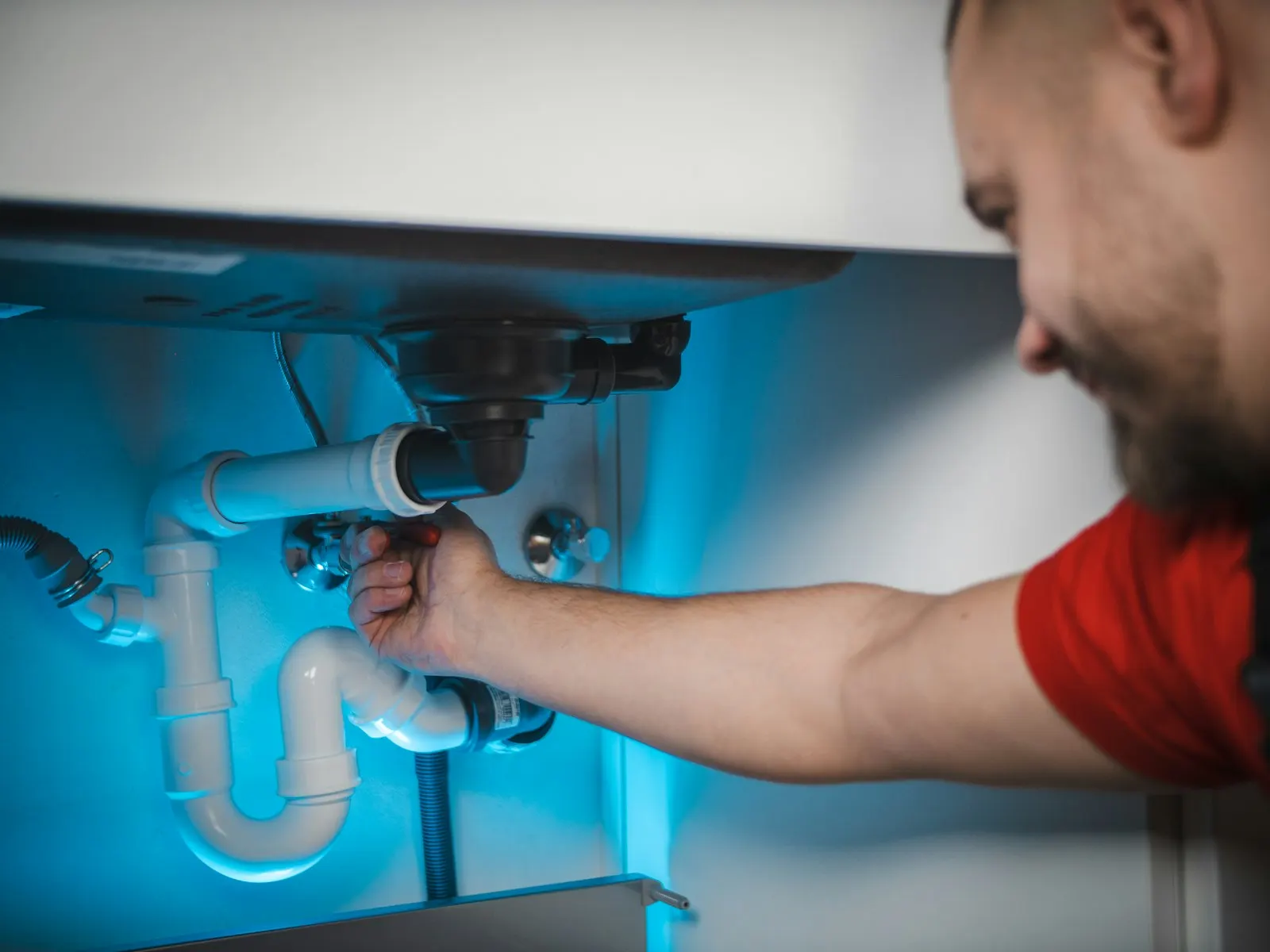
First moves for Castle Rock emergencies
Emergency Plumbing Castle Rock CO
Burst Pipes, Active Leaks & Water Shutoff Help
In a commuter town, plumbing failures get a ten-hour head start before anyone's home to notice. This page covers the first five minutes: where your shutoff is, what a warm slab floor means, why PRVs fail, and how to get a plumber moving without losing your head.
- Find your main shutoff
- Slab leak warning signs
- PRV failures explained
- Urgent quotes routed fast
Emergency plumbing in Castle Rock has a schedule problem
This is a commuter town. Households roll north on I-25 before 7 am and get back twelve hours later, which means a supply line that lets go at breakfast runs all day with nobody home to hear it. The classic Castle Rock emergency isn't discovered at the moment of failure. It's discovered Friday evening, shoes off, when somebody crosses the kitchen and the floor is warm underfoot.
A warm patch on a slab floor plus a water meter spinning with every fixture off is the signature of a slab leak, and expansive soil flexing under this town's slab-on-grade homes makes that a local specialty. The damage clock started hours ago. What you do in the next five minutes matters more than how fast anyone can drive, because water has been finding its favorite paths through the house since morning. Baseboards wick, carpet pad soaks, and the subfloor keeps a diary of every hour you weren't there.
This page exists for that moment: what to shut, what the symptom means, and how to get help moving while you mop. Read it once now, calm, so Friday-you already knows the drill. It pairs with the rest of our Castle Rock guides, which cover the slower disasters.
Shut it down before you pick up the phone
Every adult in the house should know the main shutoff. In most Castle Rock homes it's a lever or wheel valve where the service line enters: the front basement wall in homes with basements, a garage or mechanical closet on slab plans. Turn it off, then open the lowest faucet in the house to bleed pressure out of the lines. Tag the valve with a zip tie this week so nobody hunts for it mid-flood, and turn it once a year, because a valve that hasn't moved since 2006 often won't move when it matters. If it's seized, or the leak is on the street side, the curb stop belongs to the utility and Castle Rock Water is the right call for that piece.
Electricity is the second shutoff people forget. Water in a ceiling fixture or tracking down a wall with outlets means the breaker panel comes before the mop does. And if the water heater is the thing leaking, close its dedicated cold-side valve and turn its gas control off; the house main can usually stay open, so the rest of the family isn't rinsing toothbrushes with bottled water. Then triage by symptom:
- If water's coming through a ceilingKill the main, cut power to that room, then make the call
- If the floor's warm and the meter spinsSuspect a slab leak, shut the main, and stop guessing
- If the water heater is the sourceClose its cold inlet and gas, the main can stay on
What after-hours help involves, and what it tends to cost
After-hours work carries a premium everywhere on the Front Range, commonly a trip charge plus steeper hourly rates. So the honest question is what needs a 2 am truck versus what needs the first morning slot with the main left off. Active water you can't stop is a night call, full stop. A contained leak with the main closed and towels holding the line can usually wait for daylight, day rates, and a plumber choosing parts from a stocked supply house instead of a truck at midnight. The plumber you'd reach at midnight will run the same triage, so running it yourself first saves both the premium and the pacing around.
Slab leaks specifically get rerouted now more often than jackhammered. Electronic detection pinpoints the failed run, then a plumber abandons that loop in the concrete and routes new PEX overhead through walls and ceilings. It's far less brutal than opening the slab and commonly lands in the four figures, with access and patch-up work driving the spread. Insurance often helps with the resulting damage even when it won't touch the plumbing repair itself, so photograph everything before cleanup starts.
Sewage coming up a floor drain plays by different rules: stop running water anywhere in the house, keep people and pets clear of the wet area, and treat it as a mainline blockage until a camera proves otherwise. In this town's finished basements, the carpet pad usually finds out before you do, so check the floor drain room first when something smells wrong.
| Emergency | First move | The fix usually looks like |
|---|---|---|
| Slab leak | Main off, listen for hissing | Overhead reroute beats breaking concrete |
| Burst supply line | Main off, open low faucets | Section replacement, then find the why |
| Failed PRV | Main off if fixtures sputter | New regulator, set and pressure-tested |
| Sewage backup | Stop all water use, don't flush | Mainline clearing, camera afterward |
Dealing with this in Castle Rock?
Start a quoteThe PRV: the part your builder set once and forgot
Castle Rock's terrain forces the utility to run multiple pressure zones, pushing water up and over ridgelines to reach the town's newer benches and mesas. Every home takes that pressure through one pressure-reducing valve, set during construction and rarely touched again. Twenty years on, PRVs fail in two directions: drifting high, which hammers fixtures, strains supply connections, and quietly shortens a water heater's life, or failing erratically, which shows up as banging pipes, faucets that sputter and spit, and a toilet fill valve that hisses all night.
A failing PRV is the quiet emergency that schedules the loud one. If your fixtures have started making new noises, or a hose bib blew a fitting for no obvious reason, get the static pressure tested. It's a cheap gauge check at an outdoor spigot, and swapping a tired regulator commonly costs a few hundred dollars, a small fraction of the burst line or flooded ceiling it would have prevented. Homes in the higher pressure zones should check sooner rather than later, since they lean on the valve hardest. In deep winter the same watch-it-early logic applies to freeze exposure, which gets its own treatment in our Castle Rock frozen pipe guide. The cheapest emergencies are the ones you schedule as maintenance, on a Tuesday, at your convenience instead of the water's.
Keep exploring
More for Castle Rock and nearby
All Castle Rock plumbing guides Emergency Plumbing across the Front Range Parker Lone Tree
Questions we actually get
Emergency Plumbing in Castle Rock: quick answers
Who do I call first, a plumber or Castle Rock Water?
Depends which side of the meter the trouble is on. Anything inside the house, or between the meter and your foundation, is plumber territory. If the main shutoff is seized, the leak is out by the curb, or water is surfacing in the parkway strip, that's the utility's side and Castle Rock Water can kill flow at the curb stop. When in doubt, shut off what you can reach and make both calls.
Is every slab leak a middle-of-the-night emergency?
The discovery is urgent; the repair usually isn't a 2 am job. Shut the main, kill power to any wet areas, and you've stopped the damage clock. Detection and reroute work goes better in daylight at day rates. The mistake isn't waiting until morning with the water off. It's leaving the main on overnight because the puddle looked small.
Can you actually get someone to me tonight?
We won't promise what we don't control. What we do: read your request as it comes in and route it to Castle Rock area plumbers who take urgent work, flagged as urgent. For an active flood, shut the main first, then submit and start calling around; minutes matter much less once the water's off. We'd rather be straight about that than sell a guarantee nobody keeps.
Water off? Now get help moving
Flag your Castle Rock request as urgent and we'll push it to plumbers who take emergency work.
Get My Free Quote