
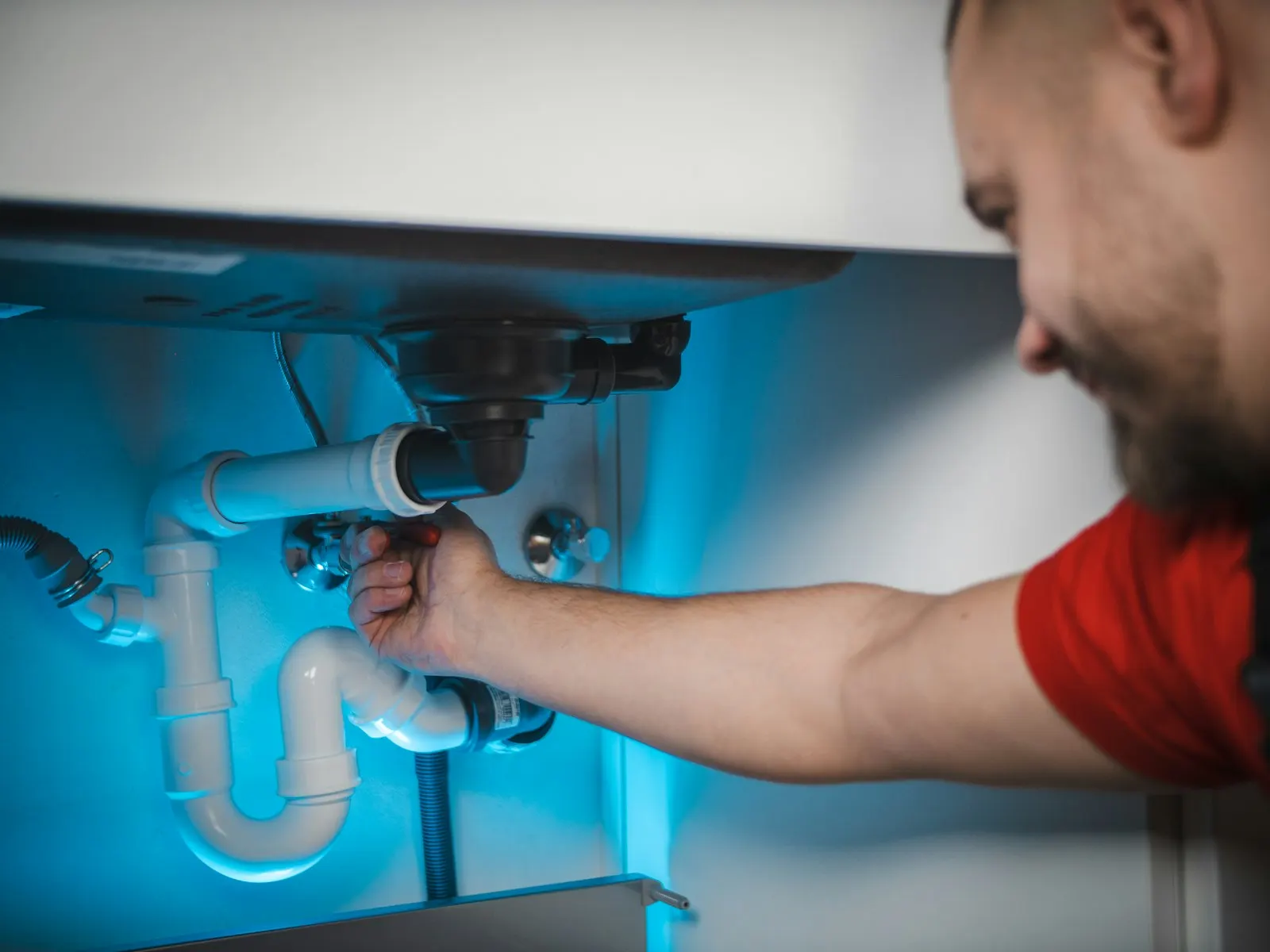
When it can't wait until Monday
Emergency Plumbing Golden CO
Burst Pipes, Active Leaks & Water Shutoff Help
Water moving where it shouldn't doesn't care what time it is. In Golden it usually happens after a chinook, on a lot where the driveway is steep and the shutoff sits somewhere a previous owner hid it. The first five minutes are yours. Here's how to spend them.
- Find the main shutoff fast
- Stop damage before help arrives
- After-hours cost expectations
- Steep-lot access planning
The first five minutes belong to you
Nobody reaches your house instantly. Not on a steep street, not at 2 a.m., not during a storm. So the question that matters is what you do while you wait, and the answer is almost always the same. Stop the water, then stop the spread.
Main shutoff first. In most Golden houses it's inside the wall facing the street, often in a basement or crawlspace, sometimes in a utility closet. Turn it clockwise until it stops. A ball valve is a quarter turn. An old gate valve with a round handle may take many turns, it may fight you, and if it won't seat, head for the curb stop at the street and call the water utility.
Then kill power to anything the water can reach, open the lowest faucets in the house to bleed pressure out of the lines, and start moving things off the floor.
If it's a water heater dumping, close the cold inlet valve on top of the tank. If it's a toilet, the stop sits behind it near the floor. Fixture stops are faster than the main when they work, and they seize more often than anybody would like.
Write the order down somewhere you'll find it in the dark. Main off, power off, low faucets open, photos, then call. Panic scrambles sequence, and sequence is the thing that limits the damage. Everything past that point is somebody else's job.
Golden's bad nights follow the warm days
Look at when calls cluster and you learn something about this town. It isn't the coldest week that fills the schedule. It's the week after a chinook. Wind pours out of Clear Creek Canyon, the temperature jumps 40 degrees in an afternoon, everything thaws, and then it drops back overnight with water sitting in places it hadn't reached in weeks.
That's the whiplash. A hose bib that froze in December and quietly split doesn't announce itself until a warm day lets water back into the line. Then the split opens and the water runs down inside whatever wall it's attached to. People call it a burst pipe, and it is one, but the crack happened weeks earlier.
Slopeside crawlspaces work the same way. Wind-driven cold gets under a house through a vent facing the canyon, the pipe nearest that vent freezes solid, and the ice plug protects you from the leak until it melts. The failure and the flood are days apart.
Historic buildings add their own category. A downtown storefront basement can hold a supply line somebody abandoned in place decades ago, still charged, still tied to the main, freezing behind a wall nobody heats. Those turn up about once a winter, always at a bad hour.
- If water is spraying or pouringMain shutoff first, then call, then photograph everything
- If a pipe is frozen but hasn't burstLeave the water off and thaw slowly, never with a torch
- If sewage is backing into a floor drainStop all water use in the house and get a main line crew out
- If you smell gas near a water heaterLeave the building and call the gas utility, not a plumber
What after-hours help actually costs and takes
Two things drive an emergency bill: the hour and the access. After-hours, weekend, and holiday rates are real and they run higher than daytime, usually with a trip or diagnostic charge that stands on its own before any repair starts. Along the Front Range that first charge commonly lands in the low-to-mid hundreds at night, and the repair prices on top of it.
Access is where this town adds its own tax. A truck that can't back up an icy hillside driveway means gear gets carried in by hand. A crawlspace entered through a hatch behind the furnace means the working space is a foot and a half tall. A downtown building with a shared basement can mean finding the right shutoff before anyone starts. None of that is padding. It's time, and time is the bill.
What you can do about it is describe the situation precisely when you call. Say the water is coming from a supply line under the kitchen, that the main is already off, that your driveway is steep and unplowed, and that the crawlspace hatch sits in the back bedroom closet. That call gets a truck loaded with the right things the first trip.
And take pictures before you clean up. Adjusters ask, and a timestamped phone photo of standing water is worth more later than any paragraph of description.
Dealing with this in Golden?
Start a quoteOld buildings hide their shutoffs
Downtown, the 1859 street grid came with buildings that have been divided, joined, and re-plumbed more times than anybody documented. Shutoffs end up behind panels, above ceilings, in a stairwell that technically belongs to the neighbor. If you own or rent in one of those, find yours on a calm day and photograph it with something recognizable in the frame.
Miner cottages are the other surprise category. Plenty have had a supply line rerouted around an addition, which means the valve you can see may control only part of the house. If turning it doesn't stop the water, keep looking instead of assuming the valve failed.
Renters have a shorter list, and it matters just as much. You may not own the valve, but you can find it, photograph it, and get the landlord's after-hours number into your phone before you need it. In a house near Mines with five roommates, whoever knows where the shutoff hides becomes the most useful person in the building at 1 a.m.
Keep a headlamp near the crawlspace hatch too. Every plumbing emergency in this town seems to happen in a dark, cold, awkward place, and holding a phone in your teeth while you wrestle a stuck valve is not a plan.
Most of what turns into an emergency here started as a freeze, so the prevention side lives on the frozen pipe page. If the failure was a tank instead of a pipe, water heater repair walks the decision tree, and the metro emergency guide covers the triage steps that hold anywhere.
- Photograph your main shutoff and the path to it
- Label the fixture stops under sinks and behind toilets
- Keep a meter key on hand if your shutoff is at the curb
- Know which crawlspace vents face the canyon
- Write down your cross streets and driveway conditions
Keep exploring
More for Golden and nearby
All Golden plumbing guides Emergency Plumbing across the Front Range Arvada Lakewood
Questions we actually get
Emergency Plumbing in Golden: quick answers
What counts as a real plumbing emergency?
Water you can't stop, sewage coming back into the house, or no water at all in freezing weather. Nearly everything else waits for daylight and costs you less. A dripping faucet at midnight is a Tuesday problem. A supply line spraying inside a wall is a right-now problem, because the damage compounds by the minute and drywall and framing cost more than the pipe does.
My driveway is too steep to plow. Will anyone come?
Yes, but say so when you call. Crews park where they can and carry gear in, and knowing that in advance changes what they bring and how much time they block out. On the hillside streets below Lookout Mountain that adds a real chunk of winter drive time. Clearing a path to your door and leaving a light on helps more than you'd guess.
Should I try to thaw a frozen pipe myself?
Gently, and never with open flame. A hair dryer or a space heater aimed at the cold section, working from the fixture end back toward the freeze, is the safe approach. Leave the faucet open so melting water has somewhere to go. And keep the main shutoff within reach, because if that section already split, the moment it thaws you'll want to close it fast.
Water where it shouldn't be?
Shut the main off, then tell us what happened and we'll get you to somebody who works Golden's hills after dark.
Get My Free Quote