
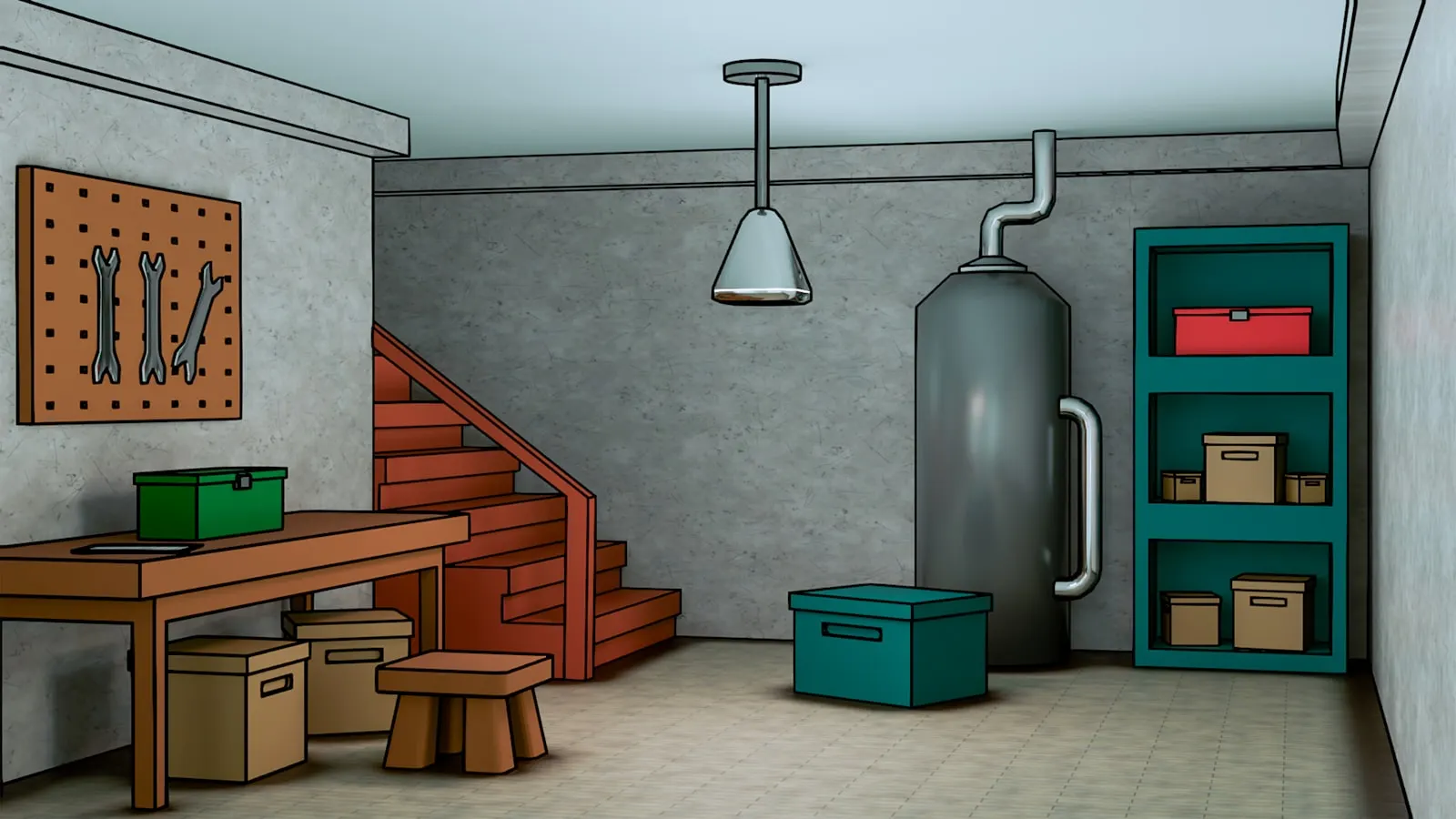
Hot water at 5,675 feet
Water Heaters Golden CO
Water Heater Repair, Installation & Replacement
A gas water heater at the canyon mouth fights two things flatland tanks don't: thinner air at 5,675 feet and a chinook that can shove wind straight down your flue. Add the tight mechanical closets in old downtown buildings and you get failures that look like part problems but aren't.
- Venting and backdraft checks
- Altitude-rated replacement sizing
- Repair or replace math
- Tight closet install realities
The wind can push your flue backward
A standard atmospheric gas water heater vents on nothing but heat and luck. Hot exhaust rises through the draft hood, up the flue, and out. It works because a column of warm gas is lighter than the air around it, which is a fine assumption in most towns. In Golden, when a chinook comes down Clear Creek Canyon and hits the roofline hard, that flue can pressurize and the exhaust comes back into the room.
Homeowners describe it as a smell. Hot, faintly metallic, near the heater on windy days, sometimes with condensation on the draft hood or rust streaks starting at the top and running down. Occasionally a pilot that won't stay lit. What's happening is combustion air and exhaust moving the wrong direction, and it's the one water heater symptom that isn't merely inconvenient.
Carbon monoxide is the reason to take it seriously. Detector on the same level as the heater, and if it sounds, everyone out of the house first and questions after.
Fixes run from small to structural: a correct draft hood, a taller or better-terminated flue, sealing an over-vented closet, or moving to a power-vent or direct-vent unit that doesn't depend on the weather. On slopeside houses where the flue exits low relative to the hill, that last option is often the only one that truly settles it.
Altitude already took part of your burner
At 5,675 feet there's less oxygen in a cubic foot of air than a manufacturer's sea-level rating assumes. Gas appliances get derated for it, and the practical result is that a tank rated for a certain recovery at sea level recovers slower here. That isn't a defect. It's arithmetic, and it matters most when you're sizing a replacement rather than fixing what you have.
So a family that never ran out of hot water in a Kansas house with a 40-gallon tank runs out sooner in a Golden house with the same 40 gallons, especially in January when the incoming water off Clear Creek is cold enough to hurt. The usual answer isn't a bigger tank. It's a correctly derated one, or a tankless unit specified for this elevation with a gas line behind it that can actually feed it.
Tankless deserves a caution locally. Good fit for a downtown building with no room for a tank. Poor fit if the gas line serving it is a half-inch run from 1970 that nobody has touched since.
- If the tank is under 8 years old and leaking at a fittingRepair it, and check the anode rod while somebody's in there
- If it's leaking from the tank body itselfReplace it, because no tank body ever seals back up
- If you smell exhaust on windy daysTreat it as a venting problem before anyone touches the burner
- If you're replacing anyway and the closet is tightPrice a power-vent or tankless unit specified for this elevation
Repair, replace, and what the money looks like
The honest split is simple. Thermocouples, gas control valves, igniters, elements, thermostats, and relief valves are repairs. A tank rusted through is a replacement, and no additive or weld changes that fact. The gray zone is a heater between 8 and 12 years old with a real repair sitting in front of it, and that's where the math turns personal.
Front Range pricing for common water heater repairs generally lands in the low-to-mid hundreds depending on the part and how long it takes to reach it. A straight tank swap with a comparable unit usually runs into the low thousands installed. Power-vent and tankless conversions sit higher, sometimes well higher, because they drag venting changes, electrical, and often gas line work along with them. Access shifts the number about as much as the equipment does.
That access point isn't a throwaway line in this town. A tank in a downtown brick basement reached by an outside stair, or in a mid-century slopeside utility room at the end of a narrow hall, adds real labor. Old heaters are heavy and awkward, and getting one out of a 1912 building sometimes means it leaves in pieces.
My rule of thumb: if the repair costs more than a third of a replacement and the unit is past 10, put the money toward the new one. Under 8 with a common part, fix it. In between, let the venting decide, because if you're going to have to solve the flue anyway, solve it once.
Age plus repair cost answers most of this. Under 8 years, fix it. Past 12, replace it. In between, let the venting break the tie: if canyon wind has been pushing exhaust back at you, a power-vent or direct-vent replacement handles two problems on one round of labor instead of two.
Dealing with this in Golden?
Start a quoteWhere these tanks live in Golden
Location tells you plenty about how a heater will age. Downtown, tanks sit in mechanical closets carved out of buildings that predate indoor plumbing, often sharing a small space with a furnace and not much combustion air. Those closets need a make-up air path, and plenty of them don't have one.
Slopeside mid-century houses put heaters in garages and low utility rooms on the uphill side. Garage installs need the burner up off the floor, and they take a beating all winter, because a garage on a north-facing slope below Lookout Mountain stays cold enough to drag recovery down for months.
Rental houses near Mines run the opposite way: tanks that never rest. Constant draw shortens life, and the sediment layer at the bottom of a hard-working tank insulates the burner from the water it's trying to heat. An annual flush helps more than people expect.
If your tank quits in the middle of a January night and there's water on the floor, that's an emergency call, not a morning call. If you're just weighing options, the Front Range water heater guide covers what's the same everywhere, and the Golden overview covers what isn't.
Keep exploring
More for Golden and nearby
All Golden plumbing guides Water Heater Repair across the Front Range Arvada Lakewood
Questions we actually get
Water Heater Repair in Golden: quick answers
Why does my water heater smell on windy days?
Because wind coming out of Clear Creek Canyon can pressurize a flue and push exhaust back into the room instead of letting it rise. That smell is combustion byproduct, and it belongs outside. Get a carbon monoxide detector on the same floor today, and have the venting looked at before anyone swaps parts. It's a draft problem, and a new gas valve won't touch it.
Does elevation really change which water heater I should buy?
It changes the rating you should shop by. At 5,675 feet there's less oxygen per cubic foot, so gas appliances are derated and recovery runs slower than the sea-level number printed on the box. Buy for the derated output, not the sticker. That's the difference between a tank that keeps up with a January morning of showers and one that runs cold on the third.
How long should a tank last here?
Ten to twelve years is a fair expectation, and hard use shortens it. A rental near Mines with constant draw, or a tank nobody has ever flushed, can fail years early. Sediment is the quiet killer. It settles on the bottom, the burner fires through it, and the tank floor cooks. One flush a year is a small chore that buys real time.
No hot water in Golden?
Tell us the age of the tank and what it's doing, and we'll route you to people who work these closets and slopes.
Get My Free Quote