
Hot water help for Littleton, Colorado
Water Heaters Littleton CO
Water Heater Repair, Installation & Replacement
Plenty of Littleton water heaters live where the coal used to: a converted basement room with a low ceiling, a tight door, and no floor drain in sight. Repairing there is one thing. Replacing there is a small engineering project. Here's how both actually go in this town's older housing.
- Coal-room closets understood
- Soft water, longer tank life
- Code catch-up, plain English
- Repair-or-replace math, honest
Where the coal went, the heater followed
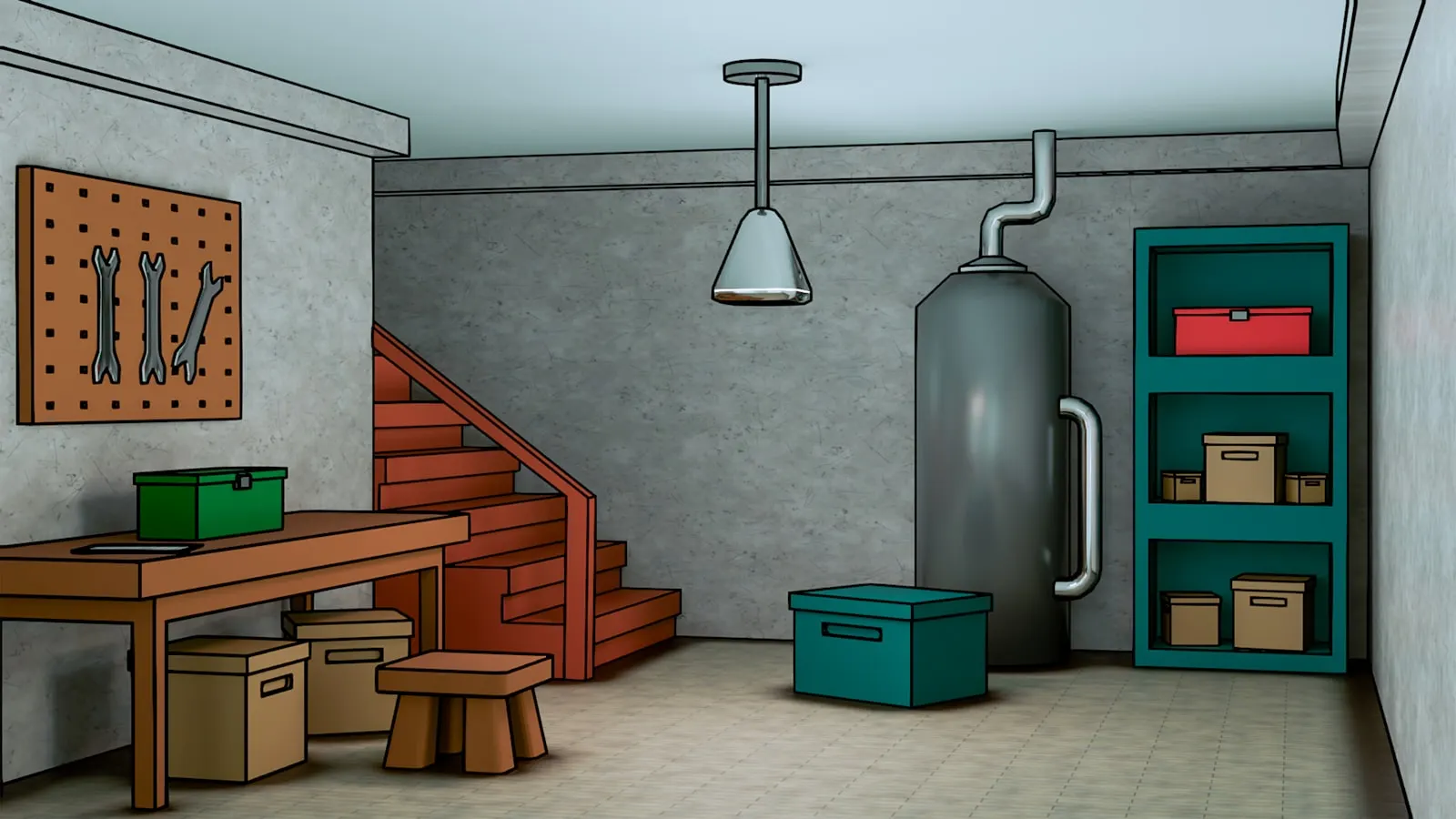
You can date a Littleton basement by what the mechanical room used to be. In houses from the 1890s through the 1930s, that little room with the odd concrete floor and the bricked-over hatch in the wall was the coal room, and when the coal furnace left, the water heater moved in. It made sense at the time. The chimney was right there. A century later, that same room is why water heater repair in Littleton runs differently than in newer suburbs: low ceilings, narrow doors, venting built for another fuel entirely, and clearances measured in optimism.
None of this means the heater can't live there. Thousands do, happily. It means the room shapes every decision: what size tank physically fits through the door, whether the old chimney flue can safely vent a modern unit, and how much of the bill is the appliance versus the venting and carpentry around it. A tech who quotes your swap without asking a single question about the room is guessing, and you'll pay for the guess either way.
The room itself will tell you most of it. A poured pad, a modern flue liner, and a louvered door mean somebody already did the catch-up work, and your swap should be routine. Original brick, a rusted cleanout door, and a flue shared with an old furnace mean the estimate deserves a longer visit and a flashlight.
Water heater repair in Littleton: fix or replace?
The good news arrives on the water side. Denver Water's soft mountain supply is kind to tanks: less scale, less sediment hardening into rock on the bottom, fewer of the popping and rumbling noises that plague hard-water towns further east. Tanks around here routinely outlive their warranties. So a single failed part on a middle-aged heater, a thermocouple, an element, a gas valve, is usually worth repairing rather than treating as a death sentence.
Age still wins eventually. Most tanks are engineered around a ten-to-twelve-year life, and the failure that finally ends them, a rusted-through shell, has no repair. Water on the floor around the base is the tank writing its own obituary. The table below is the short version of the judgment we'd apply, hedged the way honest advice has to be, because a symptom is a clue and not a verdict.
One old-house wrinkle worth naming: in pre-war basements, a dying heater sometimes gets blamed for what's really a galvanized supply problem. Weak hot-side flow at one faucet, with decent flow elsewhere, points at the pipes, not the tank. The hot side of galvanized rusts fastest, an old plumbers' observation that modern chemistry backs up, so pre-war houses often lose hot-water flow first and blame the appliance for it. Diagnose before you shop.
| Symptom | Likely story | Repair or replace? |
|---|---|---|
| No hot water, pilot won't stay lit | Thermocouple or gas valve | Usually repair |
| Lukewarm water from an electric unit | Failed element or thermostat | Usually repair |
| Water pooling under the tank | Tank shell rusted through | Replace, no repair exists |
| Rust-tinted hot water only | Tank or anode corroding inside | Replace soon, on your own schedule |
What a swap involves in a pre-war basement
A like-for-like tank swap along the Front Range commonly lands somewhere between $1,500 and $3,000 installed, with old-house complications pushing toward the high end. That range is wide on purpose. In a 1920s Littleton basement the heater itself can be the cheapest line on the invoice, because the install has to bring the surroundings up to modern standards: venting that actually suits the flue, an expansion tank the original system never had, a drain pan and discharge routing where no floor drain exists, and sometimes a door or stair problem that adds real labor before anyone touches a fitting.
That code catch-up surprises people, and it shouldn't be framed as an upsell, because mostly it isn't one. A 120-year-old building meeting current standards is the entire point of permitting the work. What you should push back on is vagueness. Ask what specifically has to change in your mechanical room and why, and expect plain-English answers about venting, combustion air, and relief-valve discharge. A good plumber explains without flinching.
Tankless conversions deserve one honest sentence: in tight pre-war basements they solve the space problem beautifully and create a venting and gas-supply project in exchange, so they commonly land a few thousand higher all-in than a straightforward tank swap here.
Repair the part when the tank is under ten years old and dry outside. Replace when the shell itself leaks. And in a pre-war Littleton basement, get the venting and clearance questions answered before you compare prices, because the room, not the appliance, decides most of the bill.
Dealing with this in Littleton?
Start a quoteAltitude, winter, and the other quiet variables
Elevation is a real input, not a sales line. At 5,351 feet the air is thinner, combustion behaves differently, and manufacturers publish altitude adjustments for a reason. Most modern units handle Littleton's elevation fine with a proper setup, but it's one more reason the install matters as much as the box. The other quiet variable is winter: a heater in an unheated corner works hardest during the exact valley cold snaps we cover in the frozen pipe guide, and incoming water near freezing stretches recovery times noticeably. If your morning shower runs short in January but fine in July, that's physics, not failure.
If you're comparing notes across the metro, the Front Range water heater hub covers the repair-or-replace math region-wide, and Centennial's guide shows how differently this all goes in a town built mostly after the materials settled down.
For your own house, the quote form works best with three facts attached: the heater's age, its fuel, and what the room it lives in used to be. That last one sounds like trivia. It isn't. It tells an experienced plumber the ceiling height, the venting era, and the likely surprises before anyone drives over, which is exactly the head start that keeps an old-house estimate honest.
Keep exploring
More for Littleton and nearby
All Littleton plumbing guides Water Heater Repair across the Front Range Englewood Highlands Ranch
Questions we actually get
Water Heater Repair in Littleton: quick answers
How long should a water heater last in Littleton?
Longer than average, honestly. Denver Water's soft supply spares tanks the scale buildup that kills them early in hard-water towns, so ten to fifteen years is common and outliers go further. Age alone isn't the trigger to replace. A dry, well-behaved thirteen-year-old tank can stay. Any tank leaking from the shell goes, whatever its age, because that failure only moves in one direction.
Why did my replacement quote include so much besides the heater?
Probably because your mechanical room predates the standards the new install has to meet. Expansion tanks, updated venting, drain pans, and discharge routing are normal catch-up items in older Littleton basements, especially converted coal rooms with legacy flues. Ask for each line item in plain terms. A good plumber can explain every one, and the explanations are usually reasonable.
Can I put a tankless unit in a pre-war basement?
Often yes, and the wall-mounted footprint is a gift in a cramped coal-room closet. The trade is infrastructure: tankless units typically want larger gas supply and their own dedicated venting, which is real money in a century-old building. Get both scoped in the quote up front, then weigh the total against how badly you want the floor space back.
Hot water shouldn't be a history lesson
Tell us the heater's age, the fuel, and what kind of room it lives in, and we'll route your Littleton quote accordingly.
Get My Free Quote