
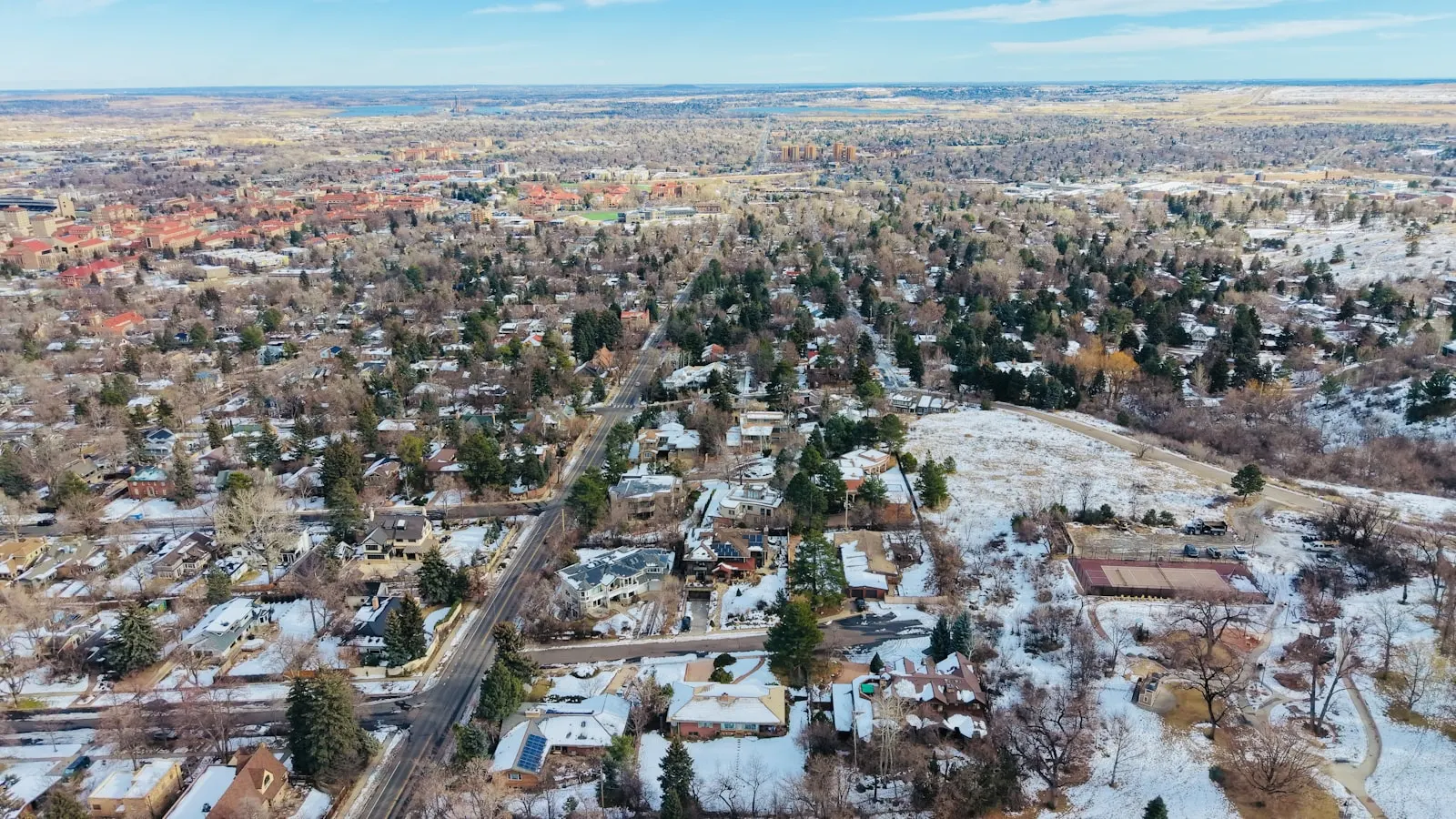
Winter comes here first
Frozen Pipe Repair Monument CO
Pipe Thawing, Burst Repair & Freeze Prevention
Monument's first hard freeze typically lands in late September, weeks ahead of the lower corridor, and the season runs into May. Well lines, crawlspaces, and buried hose bibs carry the risk on this ridge. This guide covers thawing safely and prepping on a Divide schedule, not a Denver one.
- Late-September prep deadline
- Well line protection
- Safe thawing steps
- Ski-weekend winterization
The freeze arrives before the woodpile does
Every town on this corridor freezes. Monument freezes first. The first hard freeze here typically lands in late September, when lower metro towns are still weeks out from theirs, and the last one hangs on until about mid May. Locals plan winter in cords of firewood for a reason: at 6,961 feet the cold season isn't an event, it's most of the calendar.
For pipes, that timeline is the whole story, and it's why frozen pipe repair in Monument is really a prevention story wearing a repair title. Freeze damage is overwhelmingly a first-cold-snap phenomenon: hoses still on bibs, crawlspace vents still open, heat tape still coiled in the garage, and this town's first snap arrives while the rest of the Front Range is still watering lawns. Prep on a lowland schedule and you're a month late.
The Divide's snow amplifies everything. Upslope storms that stall on the ridge drop snow in feet, and a deep pack is a mixed blessing: it insulates buried lines, but it buries the access you'd need in a failure and hides slow leaks completely until melt season tells the story.
So mark it simply. When the aspens on Mount Herman turn, the prep window is already closing. When Monument Lake starts skimming ice at the edges, it's shut.
| Marker | Historical timing | What it means for pipes |
|---|---|---|
| First hard freeze | Late September | Hoses off, heat tape on, before this |
| First measurable snow | Early October | Hose bibs and cleanouts start disappearing |
| Deep winter | December through February | Crawlspaces and well lines at highest risk |
| Last spring freeze | Mid May | Don't reopen outside plumbing early |
Where this town's pipes actually freeze
Start at the wellhead. Many properties here draw from private wells, and the vulnerable stretch is everything shallow or exposed: the wellhead itself, its connections, and any run where the original trench came up short of frost depth. A frozen well line doesn't drip a warning the way a frozen branch line might. The house just goes dry. If your wellhead sits in an unheated pit or well house, ask a well outfit about insulation and a small thermostatic heater before deep winter.
Then the crawlspace. Custom homes on this ridge often ride on crawlspace foundations, and an October wind through an open vent turns that space into an icebox with your supply lines strung across it. Pipe insulation helps. Sealing the vents for the season and insulating the perimeter helps more.
And the hose bibs. With historically 80 to 100 inches of snow, often in multi-foot upslope dumps, bibs don't just freeze here, they vanish. A leaking frost-free bib buried under a drift can feed a wall cavity for weeks unseen. Disconnect hoses in September, every one of them, and know where each bib hides once the drifts build.
Garages and outbuildings round out the list. A pressure tank in an unheated well house, a heater closet on an exterior garage wall, a laundry line strung along a rim joist: each has a winter failure mode, and most fail in the first real snap rather than the depths of January. The cold that gets you isn't the record-setter. It's the one you weren't ready for.
Frozen pipe repair in Monument: thaw, burst, decide
Frozen but not burst is a race you can win. Open the affected faucet, then warm the suspect section gently: hair dryer, heat gun kept moving, warmed air pushed into the crawlspace. Skip the propane torch entirely, on plastic pipe it's ruinous and near framing it starts house fires. Slow and boring wins. Water returning in a sputter is victory, but inspect the line afterward, because ice expands with enough force to split pipe that won't leak until everything thaws.
Costs, hedged honestly: a professional thaw commonly lands between $200 and $600 along the Front Range, more when the frozen section is a buried well line needing specialized equipment. Burst repairs start around a few hundred and climb with access, and water damage obeys no range at all. The comparison worth making is simpler than any of that: heat tape and one Saturday of prep cost less than any single one of those calls.
Active water emergency layered on top of the freeze? The Monument emergency guide carries the full shutoff drill for well systems, and it's worth reading before the season rather than during the flood.
- If a line froze but nothing's leakingThaw gently, then watch that section closely through the next thaw cycle.
- If a pipe has burstWater off, pump breaker off on wells, lines drained, then get help moving.
- If the whole house is dry in deep coldSuspect the well line or wellhead. That's a pro call, not a hair dryer job.
Dealing with this in Monument?
Start a quoteFreeze-proofing on a September deadline
Work the list before the equinox. Hoses off and drained. Heat tape checked and plugged in on the well line and any known cold runs, because tape does nothing unpowered, and a fall test beats a January discovery. Crawlspace vents closed and sealed. Cabinet doors open on cold-wall plumbing during snaps. Interior shutoffs for exterior lines closed and drained where you have them. And if you run irrigation, blow it out early, since the lowland habit of waiting for mid October doesn't survive this elevation.
Empty houses need the full treatment. Monument's ski-weekend rhythm leaves homes cold and unwatched exactly when the risk peaks, so treat every winter departure like a mini winterization: heat on, water off at the pressure tank, pump breaker down. Three moves, thirty seconds, and the burst-while-away story can't happen to you. Your firewood gets stacked before the snow flies. Your plumbing deserves the same courtesy.
New to the ridge? Read the Monument city guide for the full altitude picture, then the corridor-wide freeze hub to see how differently winter treats towns two thousand feet lower. Then stack your three cords and test your heat tape. In that order or not.
Keep exploring
More for Monument and nearby
All Monument plumbing guides Frozen Pipe Repair across the Front Range Castle Rock Parker
Questions we actually get
Frozen Pipe Repair in Monument: quick answers
When should a Monument home be winterized?
By mid September, honestly. The first hard freeze typically lands in late September, and the earliest snaps do the most damage because hoses are still connected and heat tape is still coiled in the garage. Beat the aspens: hoses off, vents sealed, tape tested before the color peaks. Lowland neighbors can wait until October. At this elevation, waiting is how the first freeze wins.
My pipes are frozen but nothing has burst. What now?
Open the affected faucet, then warm the suspect section slowly: hair dryer, heat gun kept moving, warmed air into a crawlspace. No torches, no open flame, ever. When flow returns, inspect the section and watch it through the thaw, since ice can split pipe in ways that only leak once everything melts. Whole house dry in deep cold? Suspect the well line and make that a pro call.
Can a buried well line really freeze?
If it was trenched shallow anywhere along its run, yes, and on large Monument lots there's a lot of run to trust. Frost reaches deep during long snaps, especially under driveways or wind-scoured bare ground, since snow cover actually insulates. A freezing well line usually announces itself as a whole-house outage rather than a drip. Heat tape at the wellhead and depth checks at known shallow spots are the countermeasures.
Frozen solid up here?
Tell us what's dry or dripping and if the house is on a well, and we'll route it fast.
Get My Free Quote